
Some transformations are subtle. The way a room shifts when you walk in. The way your reflection holds your gaze a beat longer than usual. The best hair extensions don’t announce themselves. They simply make you look undeniably, effortlessly like yourself.
New York sets a standard. And for discerning clients who refuse to compromise, finding a true hair extension specialist in NYC means more than a consultation and an appointment. It means expertise that’s earned, not marketed. It means extensions so seamlessly integrated, that no one can quite place what’s changed about your look, only that something has.
This is the resource for women who want their hair extensions done right. A guide to understanding your options, knowing what questions to ask, and recognizing the difference between a salon that does hair extensions and a salon that has mastered them.
Because in a city full of choices, the best hair extensions in NYC are the ones you’ll never have to think about again.
This guide covers:
- The different types of extensions
- Which method is best
- What luxury hair actually means
- How much hair extensions cost in NYC
- How to choose the right stylist
- What to expect from maintenance
- Common mistakes to avoid
Our aim with this guide is to answer every possible question that you have about hair extensions, so that you feel ready to book a consultation appointment with our founder, Christina. She can help you fully understand what hair extension method will be best for your hair type and lifestyle.
Table of Contents
- What Makes Hair Extensions “Luxury”?
- Types of Hair Extensions
- Which Hair Extensions Are Best?
- Hair Extensions for Thin Hair
- Hair Extensions for Volume
- Hair Extensions for Length
- Hair Extensions Cost in NYC
- How Long Hair Extensions Last
- How to Care for Extensions
- How to Choose a Hair Extension Specialist
- Common Hair Extension Mistakes and How to Avoid Them
- Frequently Asked Questions
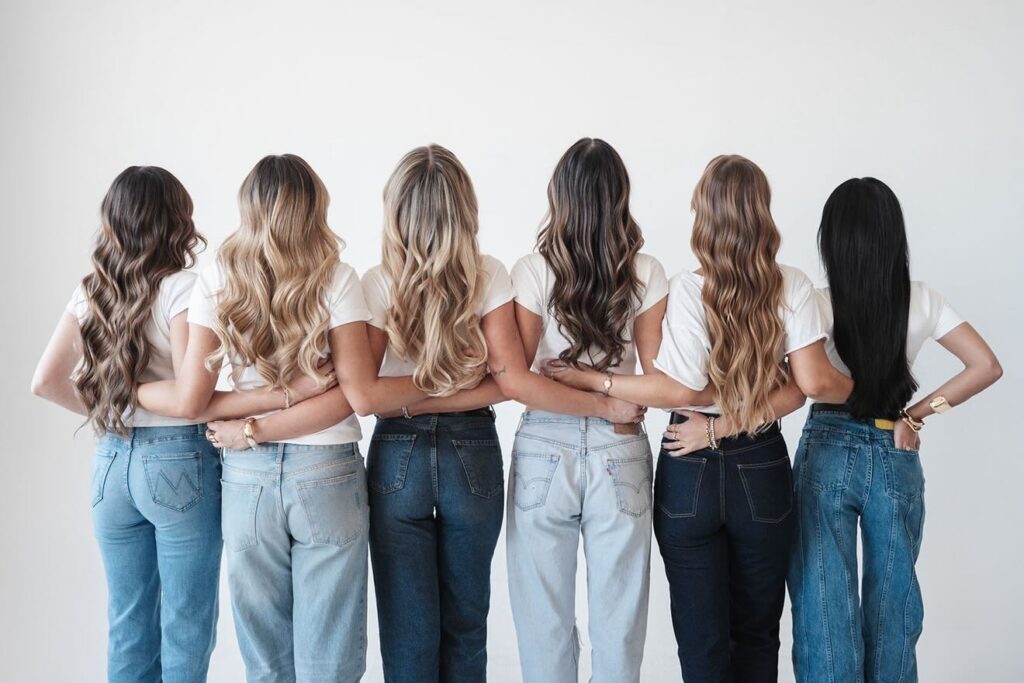
What Makes Hair Extensions “Luxury”?
Did you know that all hair extensions are not created equally? Since the rise in popularity of hair extensions around the world, there has also been a rise in the shady practices used to obtain the hair itself–which leads to a real difference in the quality of hair that you might be buying.
Too often salons, stylists and clients are unaware of the journey that the hair has taken to get to them. It doesn’t help that terms like “full-cuticle,” “real-human hair” and “remy” are tossed around in the hair extensions industry all the time.
But what do those terms actually mean? And how important are they for the client? Here’s what you need to know.
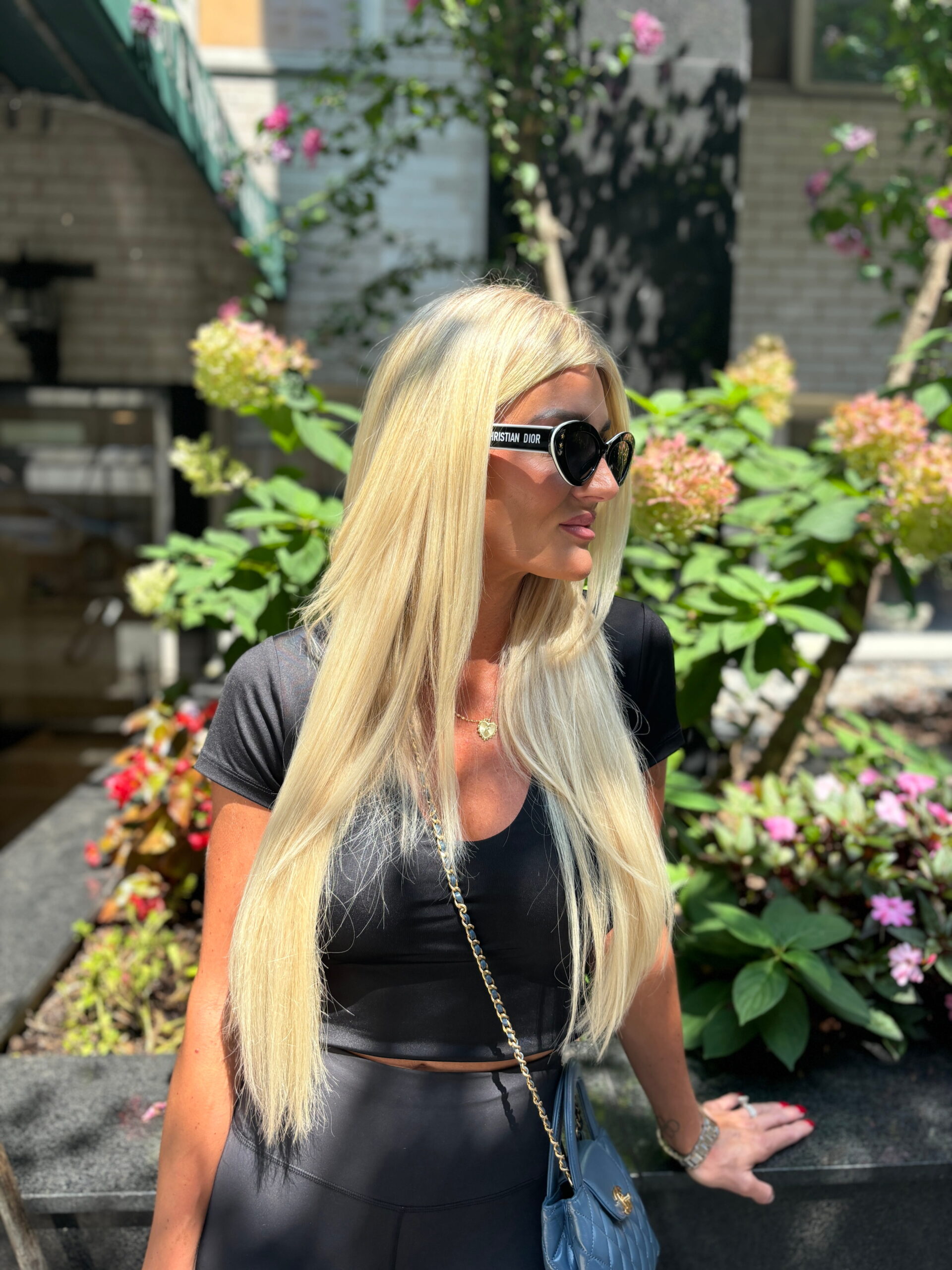
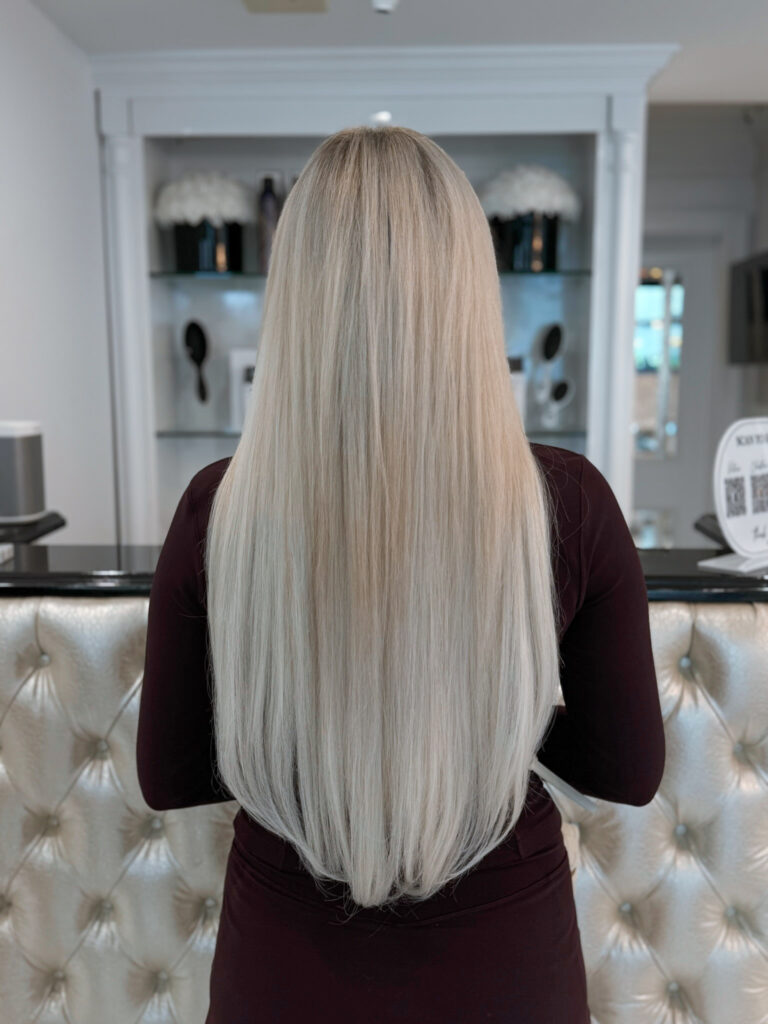
Human Hair vs Synthetic Hair
The majority of extensions on the market fall somewhere on the spectrum of compromise. This is simply because you can’t mass-produce human hair, so the industry has introduced compromised methods of creating hair extensions.
At the lower ends sits synthetic hair which is manufactured fibers that are designed to mimic the look of real hair. It can’t be easily heat-styled, it doesn’t move naturally, and it degrades quickly. For anyone seeking luxury hair extensions in NYC, synthetic hair extensions are simply not a consideration.
More common, and more deceptive, is mixed fiber hair. This is a blend of human and synthetic strands, marketed to soften the price point without full transparency about what’s inside. The result with mixed fiber hair is inconsistent texture, unpredictable behavior under heat and a short lifespan.
Then there is what the industry quietly calls floor hair. This hair is from sweepings and remnants collected on salon floors, often across multiple sources and donors. The hair is then processed, mixed in texture and origin, and has no reliable cuticle alignment.
Processed hair that’s been chemically stripped, acid-washed, and artificially smoothed, may look glossy in the packaging, but within weeks it tangles, dulls and tells on itself.
These are not fringe concerns. They are the industry standard at most price points.
If you want to learn more, read this article.
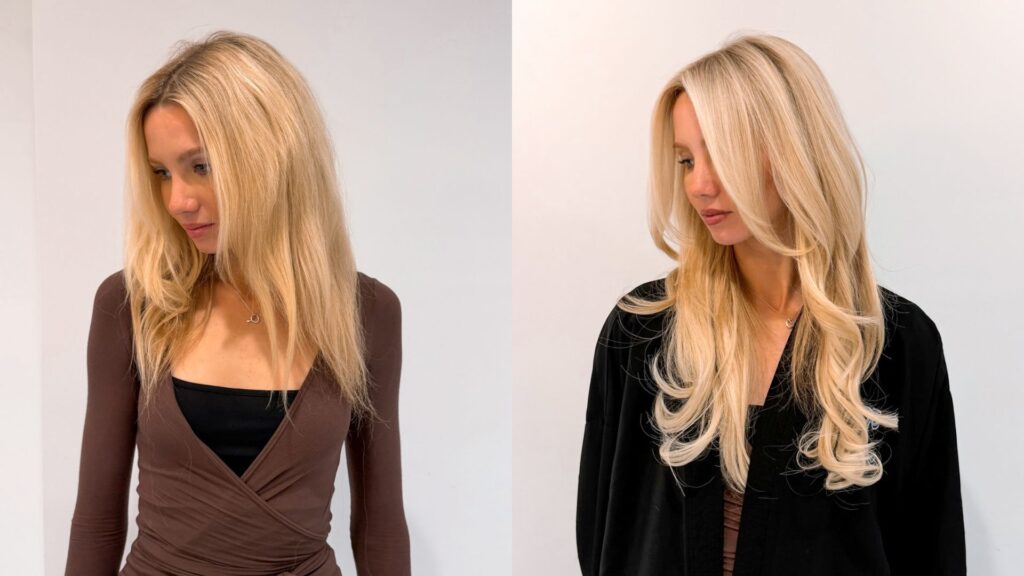
What Exceptional Hair Extensions Actually Are
For luxury hair extensions, the distinction begins at the source.
Ethically sourced hair means that the donor relationship is transparent. The hair has been voluntarily contributed, fairly compensated, and it is traceable in its origin. This is the baseline for any salon that takes both quality and integrity seriously.
Full cuticle hair goes one step further. The cuticle, which is the outermost protective layer of each strand, is kept intact and aligned in the same direction from root to tip. This is not a small detail. Cuticle alignment is what allows extensions to behave like your own hair: reflecting light consistently, laying smoothly, and resisting tangling over time.
Strip or reverse the cuticle, and no amount of silicone coating will be able to replicate that.
Then we have the pinnacle of all luxury hair extensions, virgin hair. This is hair that has never been chemically processed, colored, or altered in any way. It retains its full structural integrity, it accepts colors beautifully, and it lasts.
For clients seeking truly natural looking hair extensions in NYC, particularly those with fine or delicate hair, virgin hair is the only material that delivers a result worth the investment.
Now when you hear us say that we use full-cuticle, virgin real-human hair, you know that you’re getting the best.
Why It Matters for Your Result
The quality of the hair itself determines everything that follows.
- How the extensions blend with your natural hair
- How they respond to styling
- How long they hold their integrity
- And ultimately, how they make you feel
For custom hair extensions crafted to your specific texture, color, and lifestyle, the starting material isn’t a detail. It’s the foundation.
At this level of the craft, there is no meaningful shortcut.
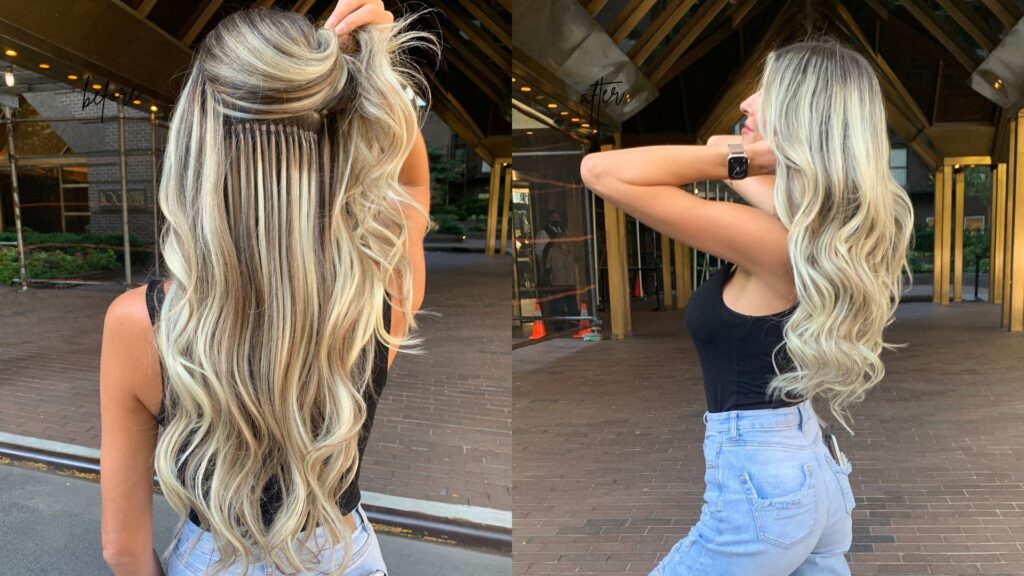
The “Birkin of Bundles” Philosophy
There is a reason the Birkin has never needed an advertisement. Its value is self-evident–in the quality of the leather, the precision of the craft, and the way it only becomes more itself with time.
That is the standard we hold for hair extensions.
The “Birkin of Bundles” philosophy is simple: true luxury should be invisible. Hair that moves naturally, blends seamlessly, and ages beautifully—not despite the passage of time, but because the foundation was right from the start. With proper care and regular maintenance appointments to preserve integrity and reposition the hair as it grows, our extensions are designed to last up to 12 months.
Because at this level, the highest compliment a client can receive is that no one can tell.

Types of Hair Extensions Explained
Not all hair is created equal, and not all extensions methods are built the same. The right hair extension method depends on your hair type, lifestyle, and the results you’re after. Understanding the differences is the first step toward a decision you won’t second-guess.
Here is an honest breakdown of every major method.
At a Glance: Extension Methods Compared
| Method | Application | Heat or Adhesive | Longevity | Best For |
| I-Tip | Strand-by-strand | None | Up to 12 months | Precision, longevity, fine hair |
| Weft | Track-based | Varies | 6–8 weeks | Volume, speed |
| Tape-In | Flat weft panels | Adhesive | 4–8 weeks | Short-term wear |
| Keratin Bond | Strand-by-strand | Heat at root | 3–5 months | Moderate precision |
| Clip-In | Temporary clips | None | Single-use | Occasional wear |
I-Tip Hair Extensions
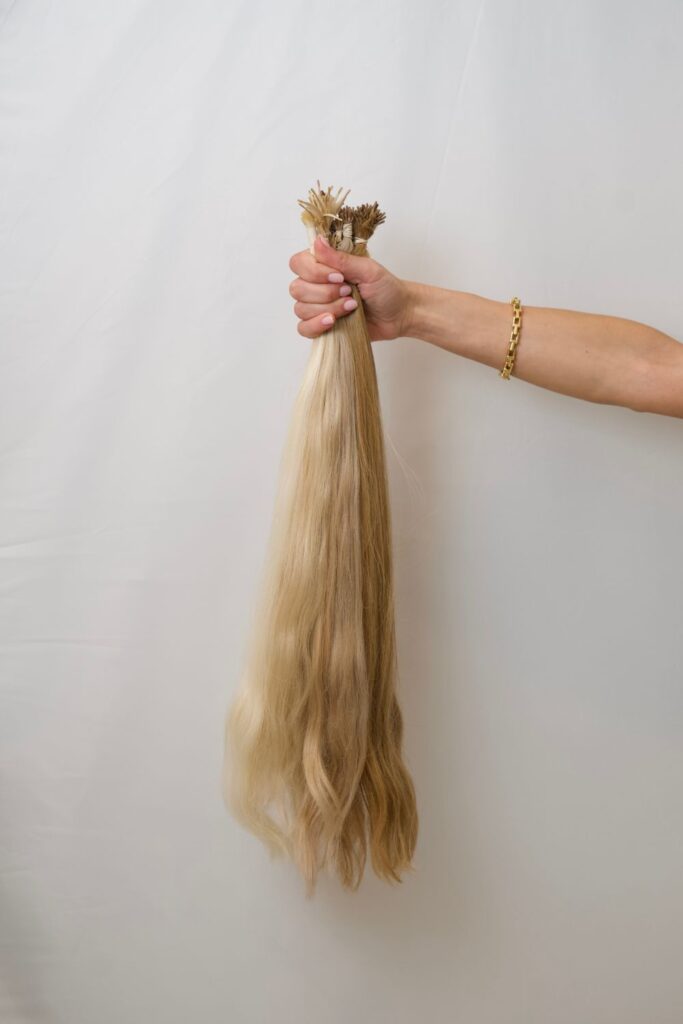
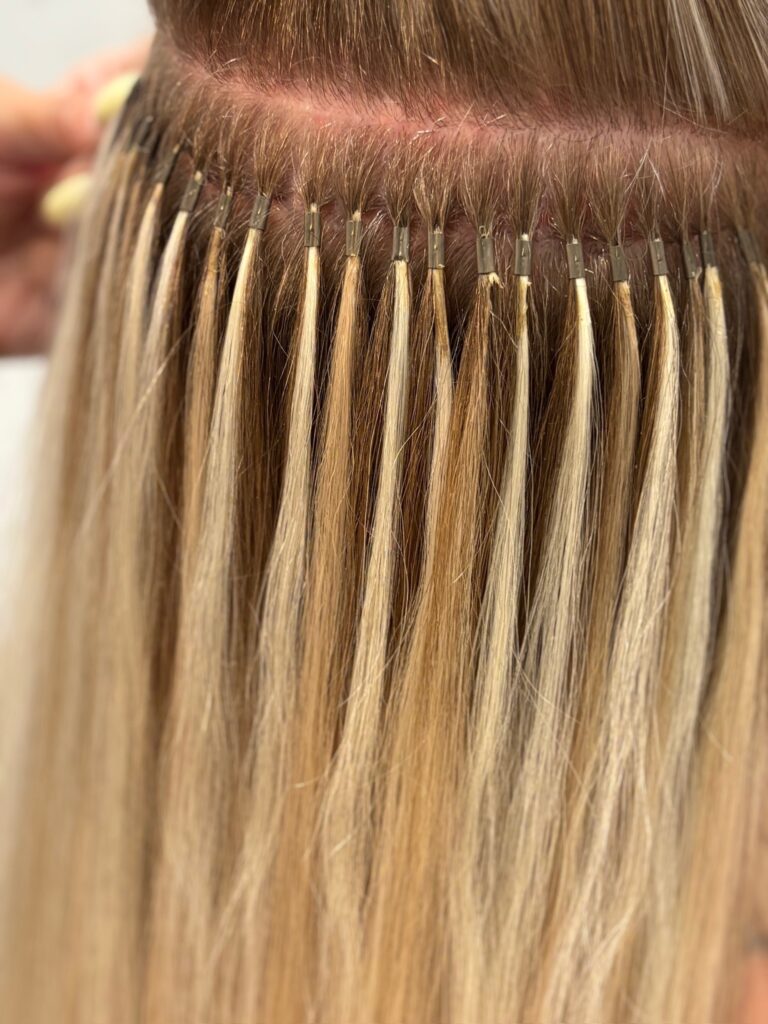
I-tip extensions–also called stick-tip or microlink extensions–are applied strand by strand using a small copper or aluminum micro-ring to secure each extension to a section of your natural hair. They require no heat, adhesive or chemicals to install.
The advantages are significant.
Because each strand is applied individually, i-tip extensions offer an unmatched level of precision. Your stylist can control placement, density, and direction with an exactness that other methods simply can’t replicate. The results is hair that moves, layers and behaves exactly like natural hair–because structurally, it is treated that way.
I-tips are also the only major method that is genuinely kind to the hair over time. The absence of glue, tape, or heat at the point of application means the integrity of your natural hair is preserved throughout the wear cycle. Maintenance appointments allow the bonds to be moved up as your hair grows, extending the life of the extensions without compromise.
For clients that have fine or thinning hair, i-tips are particularly well suited. The individual placement means weight and tension are distributed evenly, with no single stress point on the hair shaft.
The honest caveats: I-tip extensions require a skilled, experienced hand. The application is time-intensive and the results are entirely dependent on the expertise of the specialist. They are also an investment—in the hair, in the application, and in the maintenance. For clients who approach extensions the way they approach any considered luxury purchase, that is precisely the point.
I-tip extensions are best for: Clients seeking a long-term, natural-looking result. Those with fine, thin, or delicate hair. Anyone unwilling to compromise on quality or longevity. In short—the client who wants it done once, and done right.
Weft Extensions
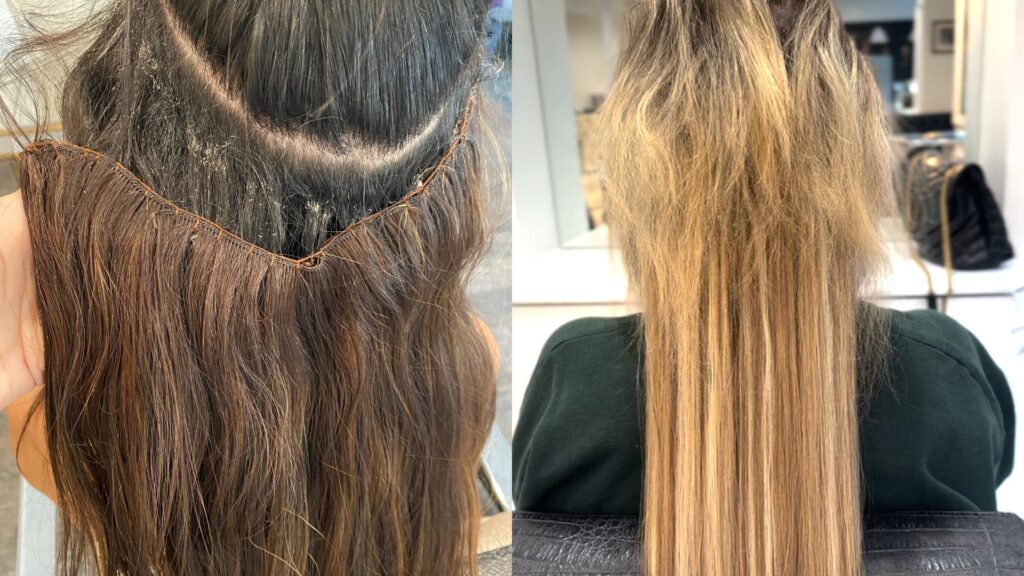
Weft extensions are applied in horizontal tracks–either sewn, glued, or beaded–running across sections of the head. They cover more surface area per application as opposed to individual methods, which makes them faster to install.
Pros: Efficient application time. A good option for clients adding significant volume across a large surface area. Generally lower cost at the application stage.
Cons: The track-based structure means less precision in placement. Bulk near the root can be visible in certain styles—particularly high ponytails or updos. Glued or sewn wefts in particular place concentrated tension on specific points of the scalp, which over time can stress the hair follicle. Movement and layering tend to be less natural than strand-by-strand methods.
We’ve helped women move from wefts to i-tips and one of the main things that they tell us during this process is how much lighter the i-tip extensions are. We’ve heard from several women that the wefts can make it feel like you’re wearing a wig.
Best for: Clients prioritizing speed and volume over seamless blending or long-term hair health.
Tape-In Extensions
Tape-ins are thin, pre-taped wefts sandwiched around sections of natural hair using a pressure-sensitive adhesive. They lie flat against the head and are among the most widely available methods on the market.
Pros: Relatively quick to apply. Flat against the scalp, which can work well for fine hair in certain configurations. A lower entry point in terms of upfront cost.
Cons: The adhesive is the method’s most significant limitation. Heat, oil, and product buildup all compromise the bond over time—which affects both longevity and the condition of the natural hair caught in the tape. Re-application requires a solvent to break the bond, a process that, repeated over time, introduces cumulative stress. Tape-ins also offer limited styling flexibility; the tracks can become visible in pulled-back styles.
We’ve often seen women with bald patches where the tape-ins were applied to their hair, especially for women with already fine or thinning hair.
Best for: Clients looking for a short-to-medium term option, or those new to extensions exploring their preferences before committing to a more permanent method.
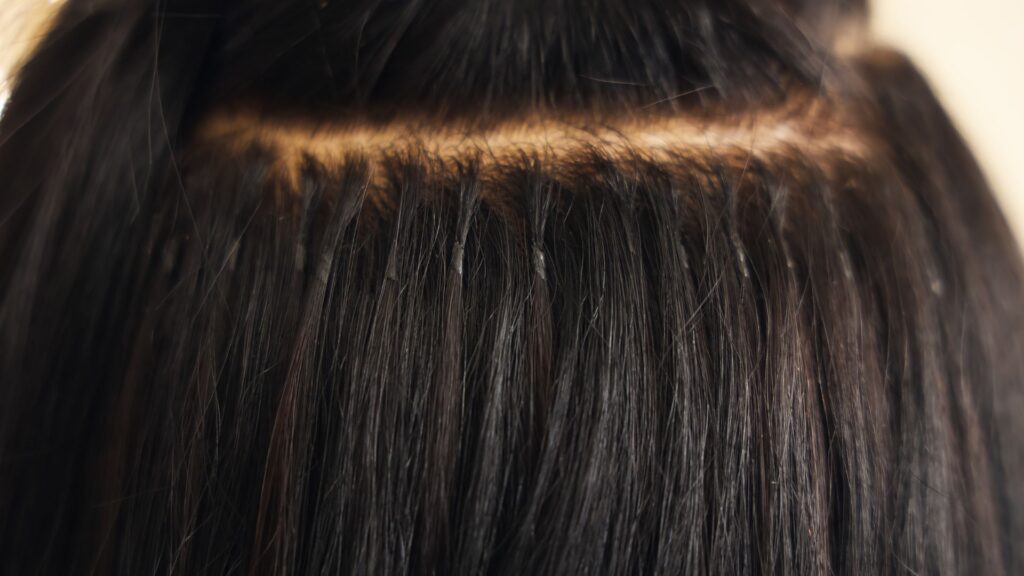
Keratin Bond (Fusion) Extensions
Keratin bond extensions–oftencalled fusion extensions–attach individual strands using a keratin-based adhesive that’s melted with a heat tool at the point of application. The bond fuses to the natural hair and hardens as it cools.
Pros: Individual strand application does allow for reasonable precision. The bonds, when applied correctly, can be discreet.
Cons: Heat at the root is the central concern. The application process introduces a thermal element directly at the hair shaft—an inherent compromise, particularly for clients with fine or previously processed hair.
Removal also requires heat or chemical solvents to break down the keratin bond, which adds a second point of potential stress. Over a long wear cycle, the cumulative effect on hair health is a meaningful consideration.
Women often hear the term ‘keratin-bond’ and they think it must be automatically better for their hair because keratin treatments are so popular, but the heat from the attachment of keratin bond extensions can still cause damage over time.
Best for: Clients whose hair can tolerate the heat application process and who are working with an experienced technician. Less advisable for fine, fragile, or chemically treated hair.
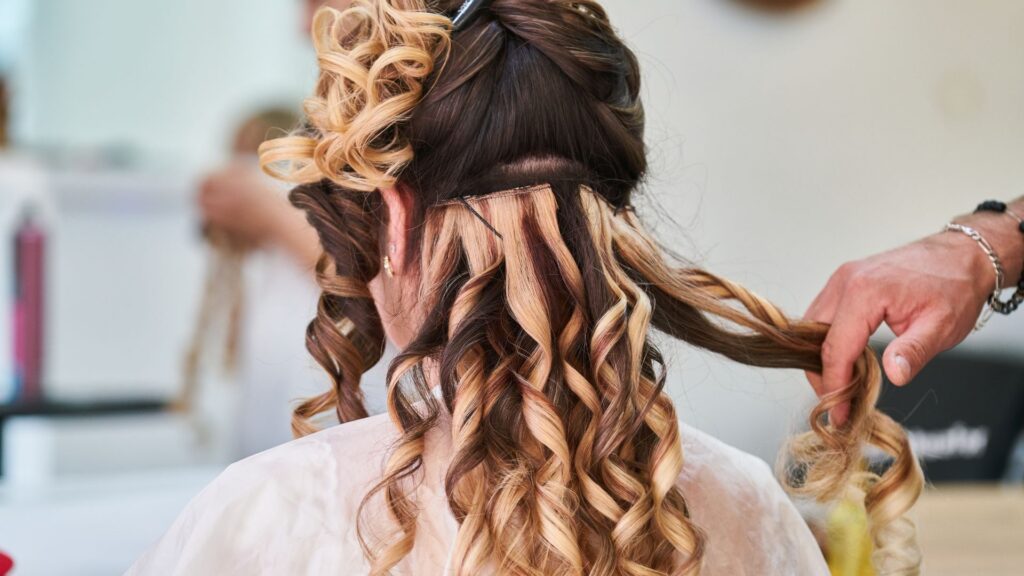
Clip-In Extensions
Clip-ins are temporary wefts with pressure clips that attach to sections of natural hair and are removed at the end of the day.
Pros: No commitment. No salon appointment for application. An accessible entry point for anyone wanting to experiment with length or volume for a single occasion.
Cons: Clip-ins are not a long-term solution, nor are they designed to be. Daily attachment and removal, and the repeated tension of the clips, can cause breakage and thinning along the hairline and mid-shaft over time. The finish—while workable for a few hours—rarely passes close scrutiny in natural light or movement.
Best for: One-time or occasional use. Events. Clients not yet ready for a permanent method. Clip-ins are a beginning, not a destination.
The Bottom Line
Every hair extension method has a place. But for clients who are seeking hair extensions that are genuinely indistinguishable from their own–that hold up to a New York life, that last, and that do not ask your natural hair to pay a price–i-tip extensions are in a category of their own.
We love this method because they are so easy to customize to each client depending on their hair type, color and lifestyle. The individual application. The absence of heat and adhesive. The precision of placement. The longevity.
There is a reason that hair extension specialists who care about results gravitate towards this method. And there is a reason that clients who have experienced this method rarely consider anything else.
Which Hair Extensions Are Best?
Given everything we’ve covered so far, which hair extensions are best? This is easily the most searched for question about hair extensions. And the most honest answer we can give you is another question: best for whom?
There is no universal method that suits every client. The right extension is the one that works with your hair, your life, and your definition of the result. Anyone who tells you otherwise is selling a method, not a solution.
Here’s a framework to help you decide which hair extensions are best for you.
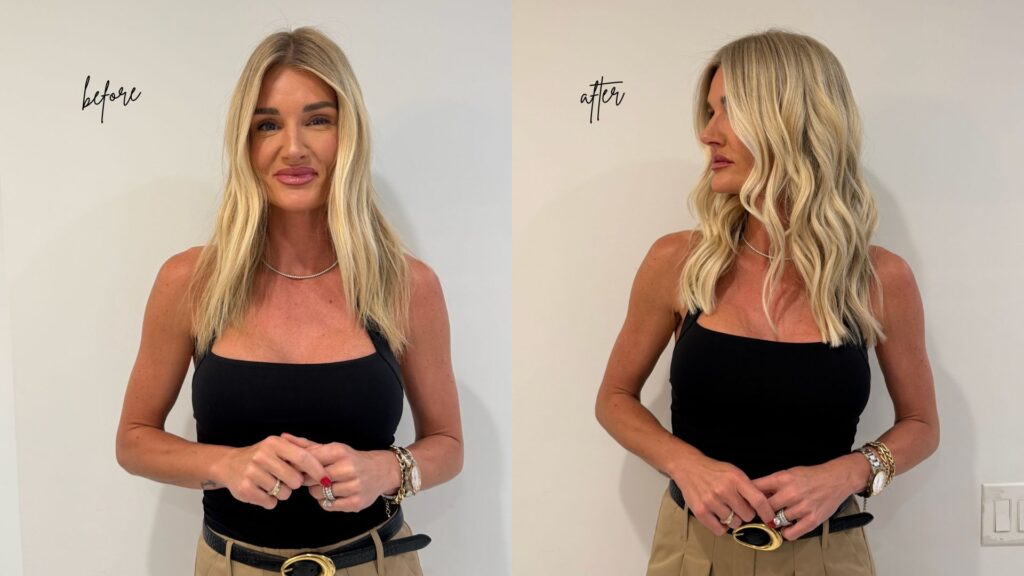
The Variables That Actually Matter
Hair Density
The weight and structure of the extension method must be proportionate to what your natural hair can comfortably support. Fine or low-density hair has a lower tolerance for bulk, tension, and concentrated attachment points. A method that works beautifully on thick hair can cause stress, slippage, or visible damage on fine hair—not because the method failed, but because it was the wrong match. This distinction matters more than most clients realize before their first set.
Lifestyle
Extensions that live in a New York City life need to perform accordingly. Daily blowouts, frequent styling, gym sessions, humidity, salt water—these are not edge cases, they are the reality. Some methods hold up. Others begin to compromise at the first sign of heat, oil, or sweat. The question is not whether you can have extensions with an active lifestyle—it is which method was designed for one.
Goals
Are you adding length? Volume? Both? Are you looking to blend a haircut growing out, fill in thinning areas, or achieve a dramatic transformation? The answer shapes everything—the method, the placement, the volume of hair ordered, and the approach your specialist takes. A client adding two inches of subtle length has different needs than one seeking a full, high-volume result.
Maintenance Preferences
Every method has a maintenance cadence. The real question is what level of upkeep fits naturally into your life—and what happens to the extensions, and your natural hair, if that cadence slips. Some methods are forgiving. Others are not. The best extension for your lifestyle is one whose maintenance schedule you will actually keep.
Finding Your Perfect Hair Extension Match
| Goal | Best Method |
| Fine or Thin Hair | I-Tips—individual placement distributes weight evenly with no concentrated tension |
| Maximum Volume | I-Tips or Wefts—depending on hair density and desired finish |
| Updos & Versatile Styling | I-Tips—strand-by-strand placement remains invisible in pulled-back styles |
| Lowest Maintenance Commitment | I-Tips—bonds move up cleanly at maintenance appointments without adhesive or heat |
| Temporary Length | Clip-Ins—no commitment, no appointment, no permanence |
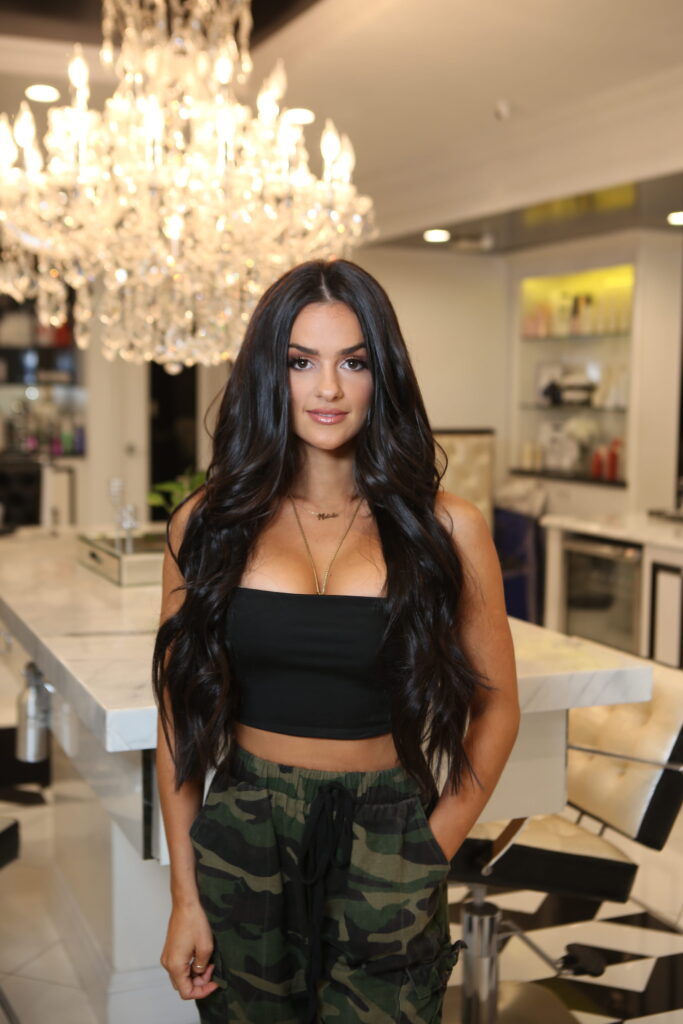
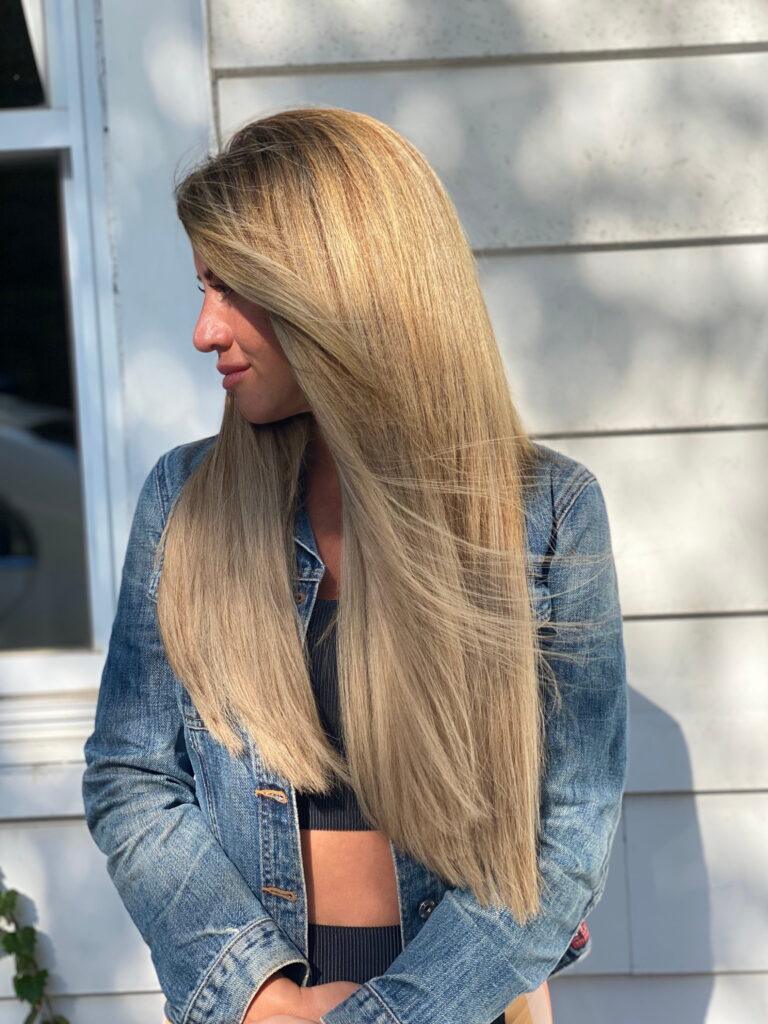
A Note on “Low Maintenance”
We need to address this directly, because it comes up in nearly every consultation. No semi-permanent extension method is truly maintenance-free–and any salon that suggests otherwise is setting expectations that the hair can’t meet.
What i-tip extensions offer is clean maintenance: scheduled appointments to move the beads up as the hair grows, with no adhesive to dissolve, no tape to re-press, and no heat reintroduced at the root. For clients whose lives don’t accommodate frequent salon visits, the longer wear cycle and straightforward upkeep of i-tips tend to fit more naturally.
The goal is never to minimize how much care your extensions need. It is to match the method to the client so that care feels effortless rather than obligatory.
Still Unsure What Hair Extension Method is Right for You?
The most reliable answer comes from a consultation with a specialist who will assess your natural hair in person—its density, condition, growth pattern, and what it can realistically support. No quiz or comparison chart replaces that conversation.
But if you are arriving at this page with fine hair, a full schedule, and a standard that doesn’t tolerate visible seams or compromised longevity—the answer is almost always the same.
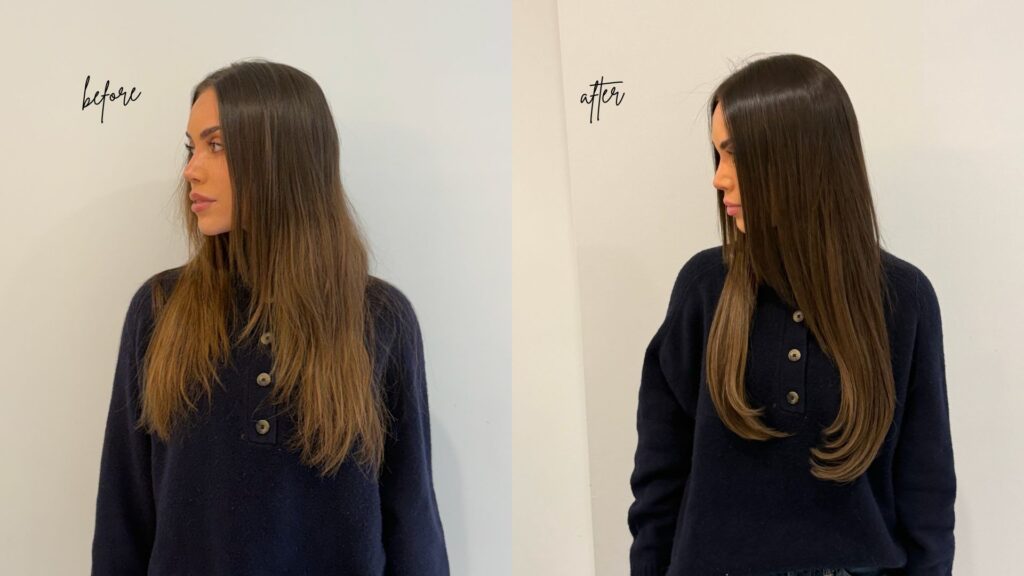
Best Hair Extensions for Thin Hair in NYC
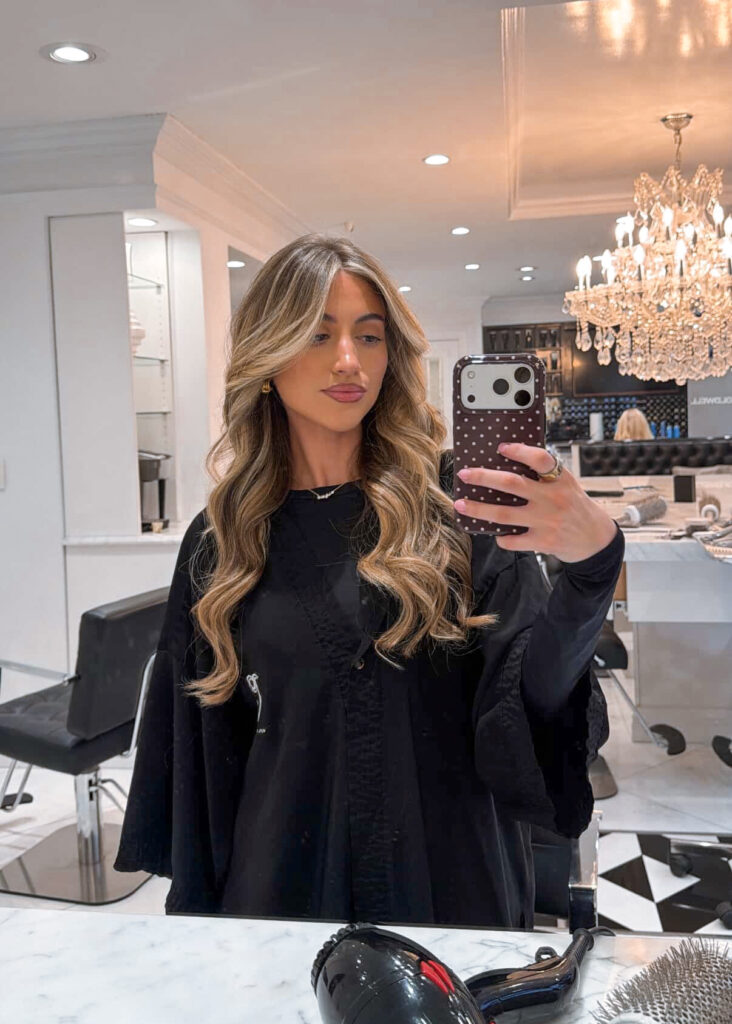
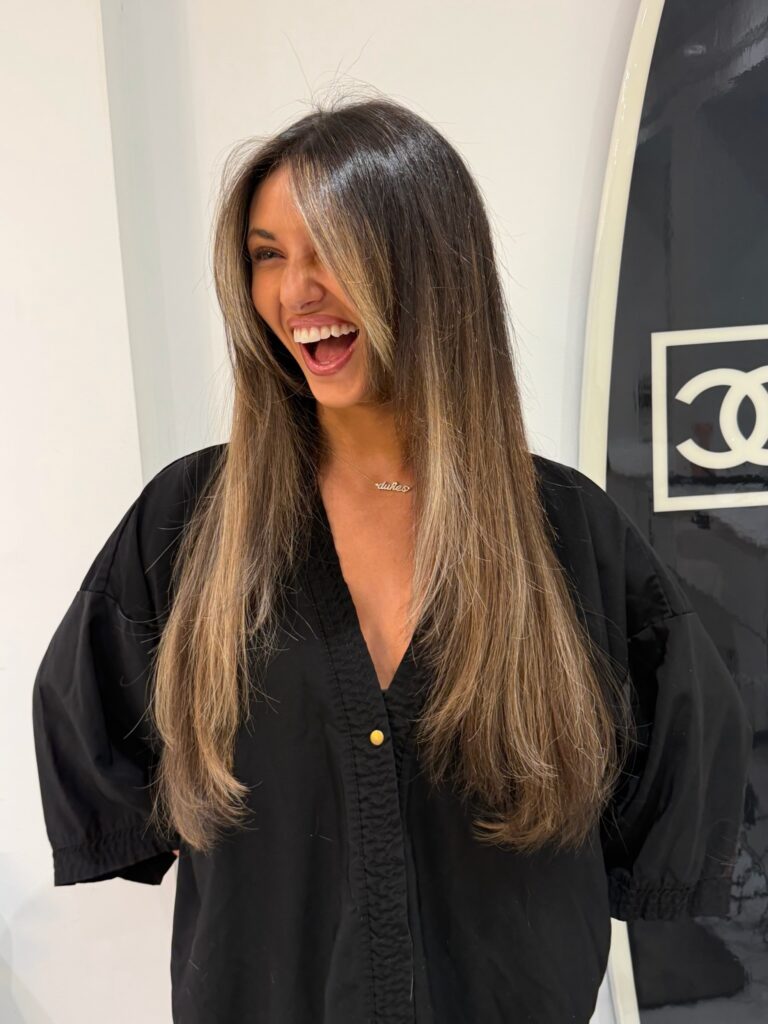
Thin hair requires a different conversation altogether, yet it’s one of the most underserved demographics in the hair extensions industry. Women with very fine or thin hair are handed the same methods, the same installation approach, and the same expectations as clients with double the hair density. The results, predictably, disappoint.
Not to mention this is what leads most women with fine or thin hair to believe the myth that hair extensions damage your natural hair.
Understanding the best hair extensions for thin hair starts with understanding what fine hair actually needs.
Why So Many Methods Fail Fine Hair
The failure is rarely dramatic. It is gradual. A little tension at the root that never quite resolves. A bond that becomes visible as the hair around it thins slightly from stress. A track that shifts because there simply wasn’t enough natural hair to anchor it properly.
Most extension methods were not designed with fine hair as the primary consideration. They were designed for efficiency, or volume, or accessibility—and fine hair clients are accommodated as an afterthought rather than a starting point.
The core issues come down to three things.
Weight
Fine hair has a limited load-bearing capacity. Heavy wefts, dense bonds, or thick panels of hair place a disproportionate amount of weight on strands that were never built to carry it. Over time, that weight manifests as breakage—most often at the points of attachment, which are also the most visible.
Tension
Any method that relies on a fixed anchor point—a sewn track, a glued bond, a tape sandwich—creates concentrated tension on a specific section of hair. For clients with normal to thick density, that tension is distributed across enough strands to remain negligible. For fine hair, the same tension is borne by far fewer strands. The result can be unforgiving.
Visibility
Fine hair offers less natural coverage over attachment points. Bonds, tracks, and tape lines that disappear into thick hair can sit visibly close to the surface in fine hair—particularly in styles that involve any movement, wind, or pulling the hair back. For clients at this level of the market, visible hardware is simply not acceptable.
Why I-Tips Are the Considered Choice for Fine Hair
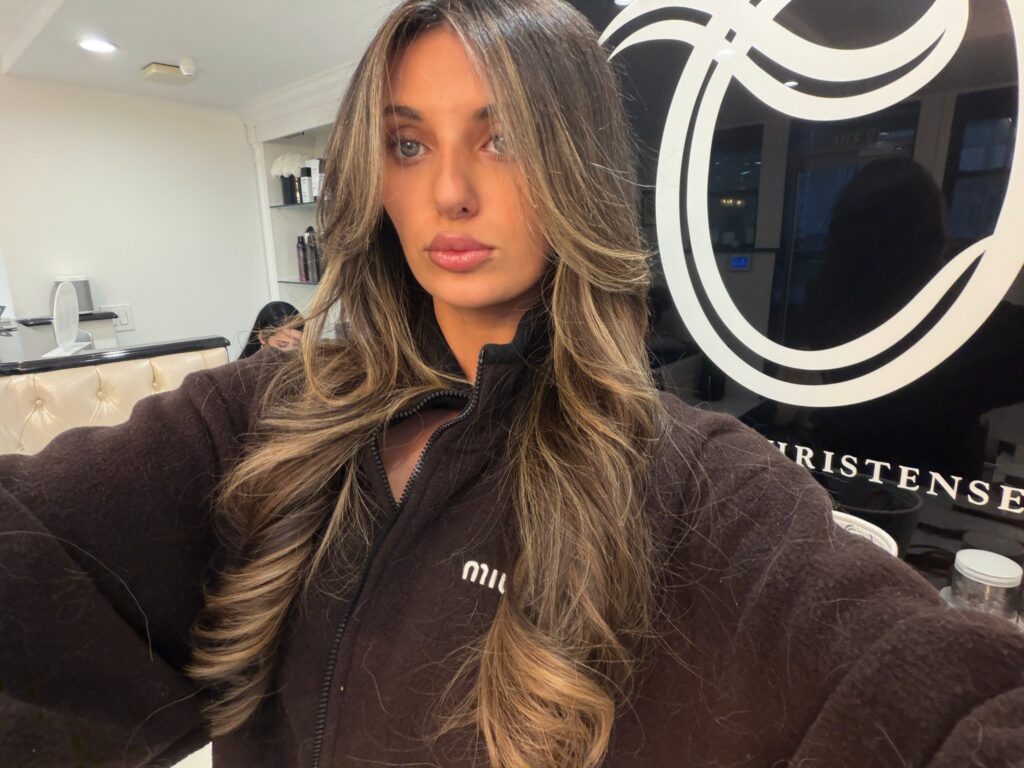
The i-tip method addresses each of these concerns structurally, not incidentally.
Because i-tips are applied strand by strand, the weight of each extension is distributed across an individual micro-ring attachment rather than concentrated along a track or weft. There is no single point carrying a disproportionate load. The cumulative weight is present, but it is spread in a way that fine hair can support without stress.
The absence of adhesive matters equally. Tape-in and keratin bond methods introduce a foreign substance directly at the root—one that must eventually be dissolved or melted away. For hair that is already fine, that removal process carries real risk. I-tips are secured and released mechanically, with no chemical or thermal intervention at the hair shaft.
Perhaps most importantly for thin hair clients: i-tip placement is fully customizable. A skilled specialist can work around areas of lower density, adjust the size of each section, and map the installation to the specific architecture of your hair rather than applying a uniform template. That level of precision is not available with track-based methods.
The result is extensions that add genuine volume and length without asking the natural hair to pay a structural price.
What to Look for in a Specialist
If you have fine hair specifically, the quality of the consultation matters as much as the quality of the hair itself. A specialist worth trusting will assess your hair’s density, elasticity, and the condition before recommending a method or a weight of extension. They will have a clear answer for how they approach thin hair differently–in terms of placement, section size, and the weight of hair ordered.
If a salon treats fine hair as a standard installation with lighter extensions, that is the wrong answer. Fine hair requires a bespoke approach from the first conversation.
We work exclusively with i-tip extensions and for thin hair clients in particular, that focus is not a limitation. That is precisely the point.
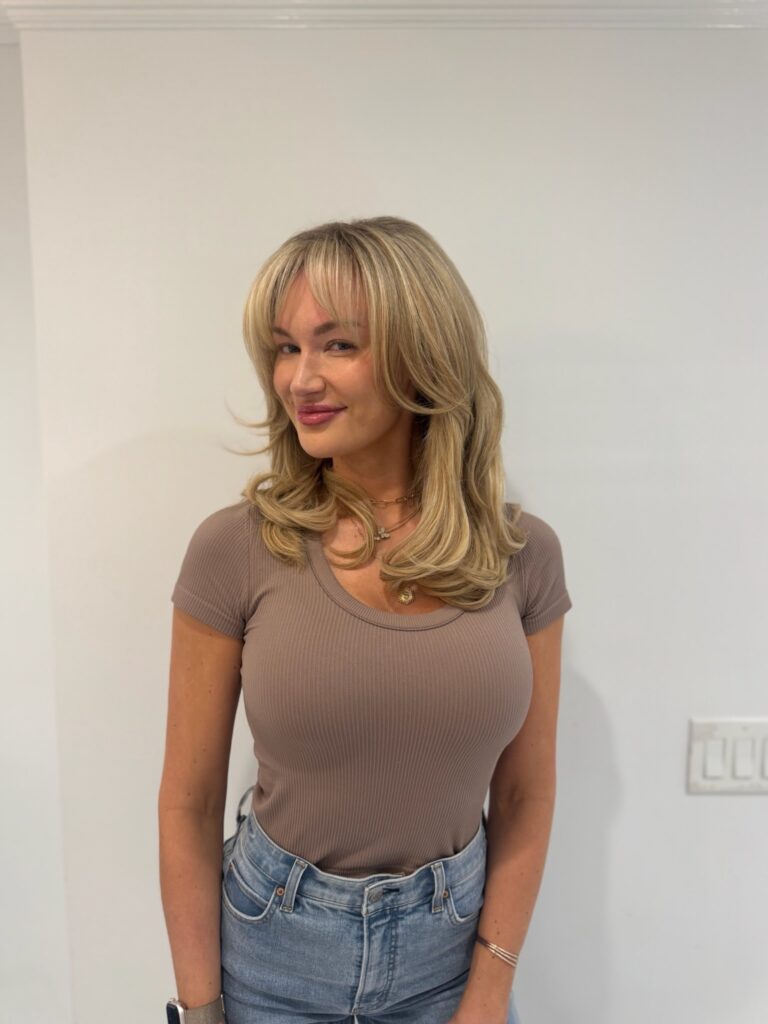
Best Hair Extensions for Volume in NYC
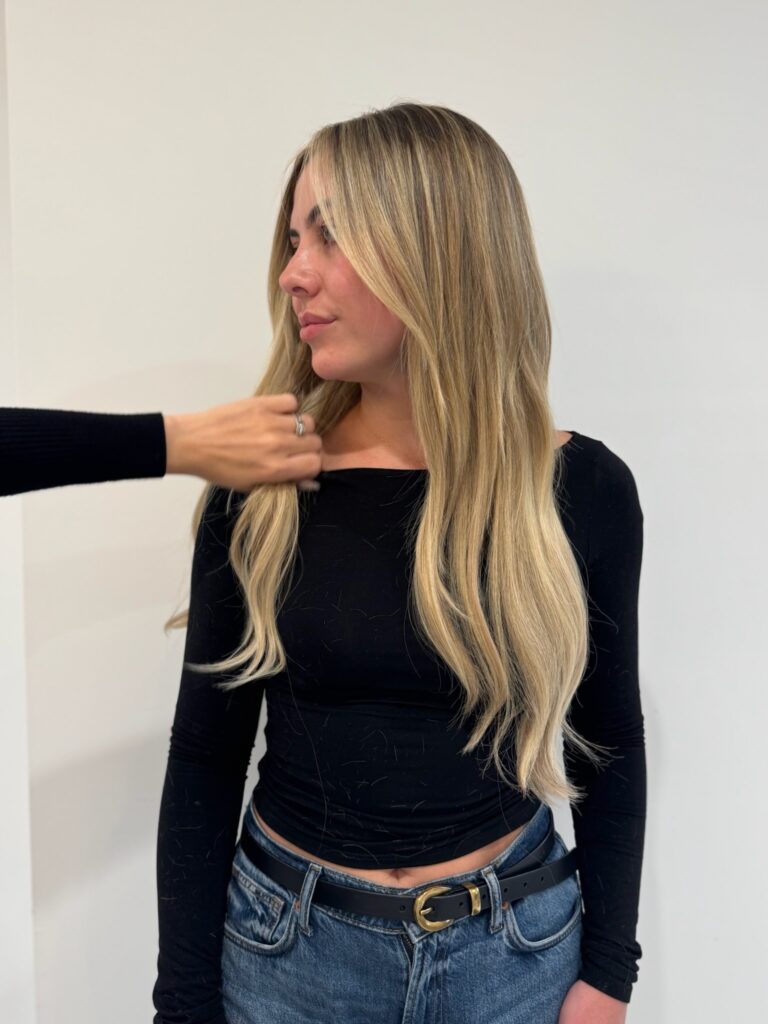
Most people think that hair extensions are just for added length, but volume is one of the most requested goals in an extensions consultation. It’s also one of the most misunderstood. That’s because volume is not a single thing. It’s actually three different and distinct outcomes that require three distinct approaches. Confusing or conflating them is where more clients end up with a result that is almost right, but not quite.
Before the conversation turns to method, it starts with a question: what kind of volume are you actually after?
- Fullness is about the overall body of the hair—the way it moves, holds shape, and behaves.
- Density is about coverage—filling in areas where the hair sits thinner or where the scalp is more visible than you’d like.
- Thickness is about the weight and presence of the hair itself–the feeling of having more to work with.
These goals often overlap, but they don’t always call for the same solution.
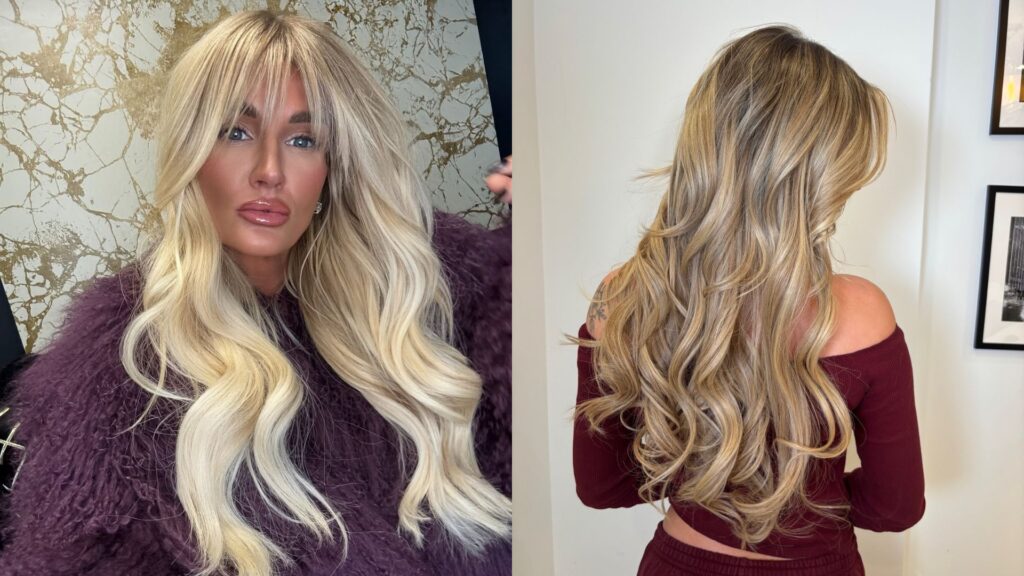
The Case for Wefts and Their Limits
For clients with naturally thick, healthy hair who want a significant, fast-coverage volume result, weft extensions are a reasonable conversation. Wefts cover a wide surface area per application, which can be efficient for clients who simply want more of what they already have.
But the limitations are real, and for most clients seeking volume, they matter.
The first is weight. Wefts are dense by design—that is the source of their coverage. For clients whose hair is already thick and heavy, adding wefts introduces a compounding weight that can feel uncomfortable at the root, restrict natural movement, and make the hair harder to style rather than easier. The volume is there, but it sits heavily rather than moving freely.
The second is styling. The track structure of weft extensions creates a fixed horizontal line through the hair. In everyday wear that line stays hidden—but it limits what is possible. Updos, high ponytails, braids, and styles that expose the back or sides of the head all risk revealing the weft. For clients in New York whose styling needs are varied and often spontaneous, that constraint is a meaningful one.
The third—and most important—is fine hair. If volume is the goal and fine hair is the reality, wefts are the wrong method. The bulk and weight of a weft track placed against fine hair creates visible tension at the root, compresses the natural hair underneath, and can accelerate thinning in the areas it was meant to enhance. It is a common mistake, and an expensive one.
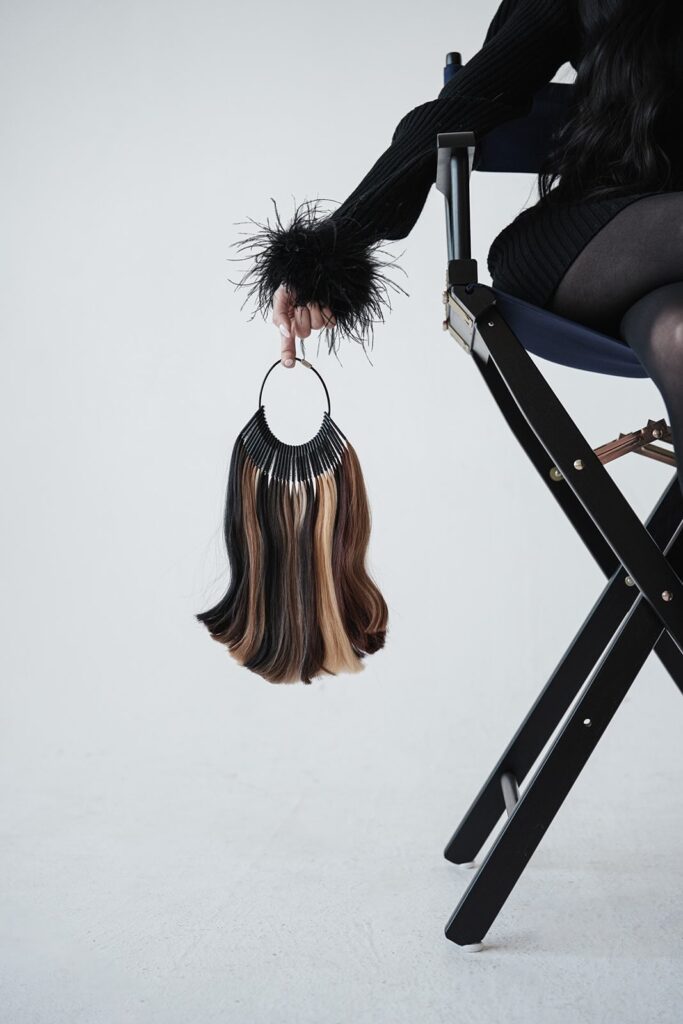
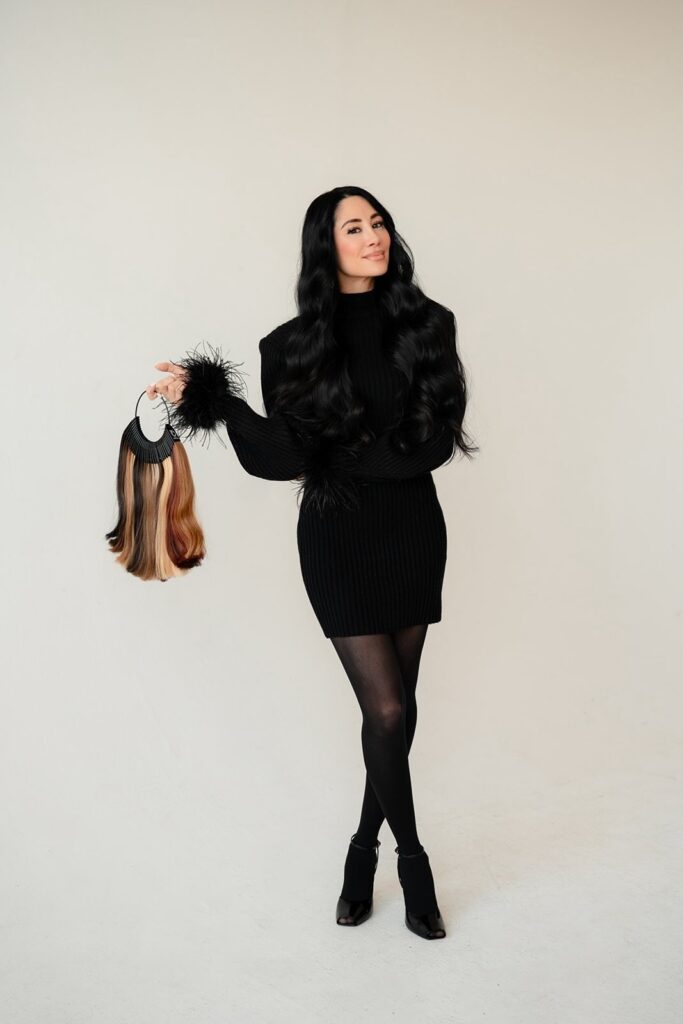
How I-Tips Build Volume Differently
The i-tip approach to volume is architectural rather than additive. Instead of laying a blanket of hair across the head, a specialist builds density strand by strand—which means the volume can be placed exactly where it is needed, in the amounts the hair can support, without introducing unnecessary weight elsewhere.
For clients who want more volume, the answer is more rows and more hair—added in deliberate layers through the mid-lengths and ends, where volume will look the most natural. A second row of i-tips placed beneath the first creates genuine fullness that moves like natural hair, because structurally it behaves like natural hair. There is no track to reveal, no concentrated bulk at a single point, and no compromise on styling versatility.
For fine hair clients seeking volume specifically, this approach is transformative in a way that wefts simply cannot replicate. The weight is distributed across individual attachment points rather than consolidated into a weft. The hair moves. The scalp breathes. And the result is volume that looks earned rather than installed.
Placement Strategy and Customization
Volume is not just about how much hair is added—it is about where. A specialist working with i-tips can map the installation to the precise architecture of your hair: building density through the crown for clients who carry their hair up, adding weight through the mid-lengths for clients who wear it down, and reinforcing the perimeter for clients whose goal is a fuller silhouette from every angle.
This level of customization is not available with wefts. A track goes where a track goes. I-tip placement, by contrast, is a conversation between the specialist and the specific needs of your hair—adjusted for your density, your growth pattern, and the result you are trying to achieve.
For clients who want volume that feels intentional rather than obvious, that distinction is everything.
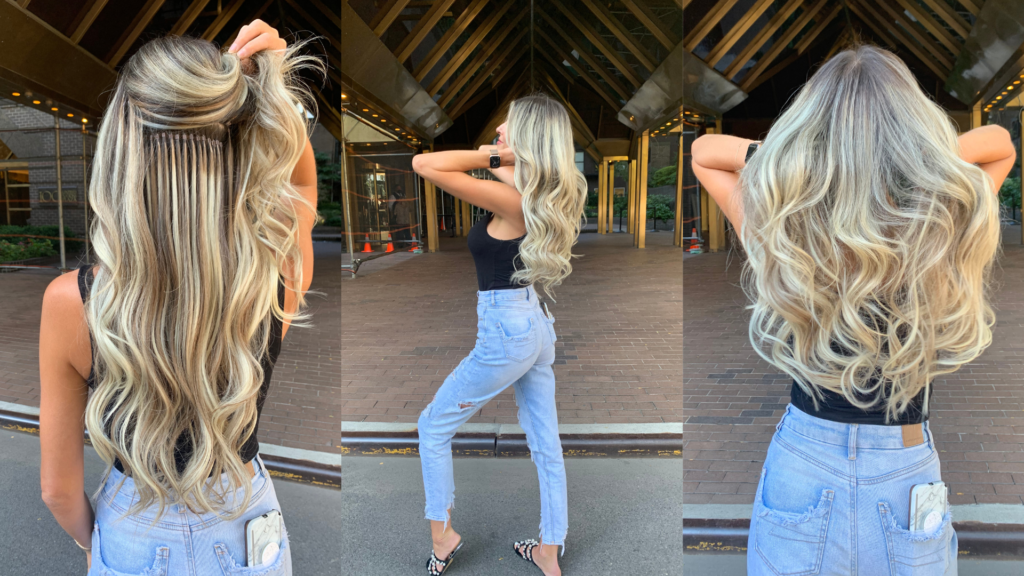
Best Hair Extensions for Length in NYC
Length is the most visually dramatic extension goal—and the one most likely to be approached with expectations shaped by Instagram, rather than a mirror. Getting it right requires a frank conversation before a single strand is ordered. The clients who leave with a result they love are almost always the ones who arrived willing to have that conversation.
Realistic Expectations
The most important variable in a length transformation is where you are starting from.
Extensions add length from where your natural hair currently ends. They do not, on their own, create a seamless cascade from root to tip—they blend into and extend what already exists. This means that a client with hair sitting at the collarbone and a client with hair sitting at the chin will have a meaningfully different experience adding the same six inches of extension length, because the blending challenge is different.
The shorter the natural hair, the more considered the approach needs to be.
It is also worth naming what extensions cannot do. They cannot replicate the natural graduation and movement of hair that has grown to length over time. What a skilled specialist can do—through precise placement, the right weight of hair, and a cut that integrates the extensions with the natural ends—is get extraordinarily close. Close enough that the difference is imperceptible in motion. But that result is earned through expertise and the right method, not assumed.
Clients who arrive with realistic expectations and trust the process tend to leave with results that exceed them. That pattern is consistent.
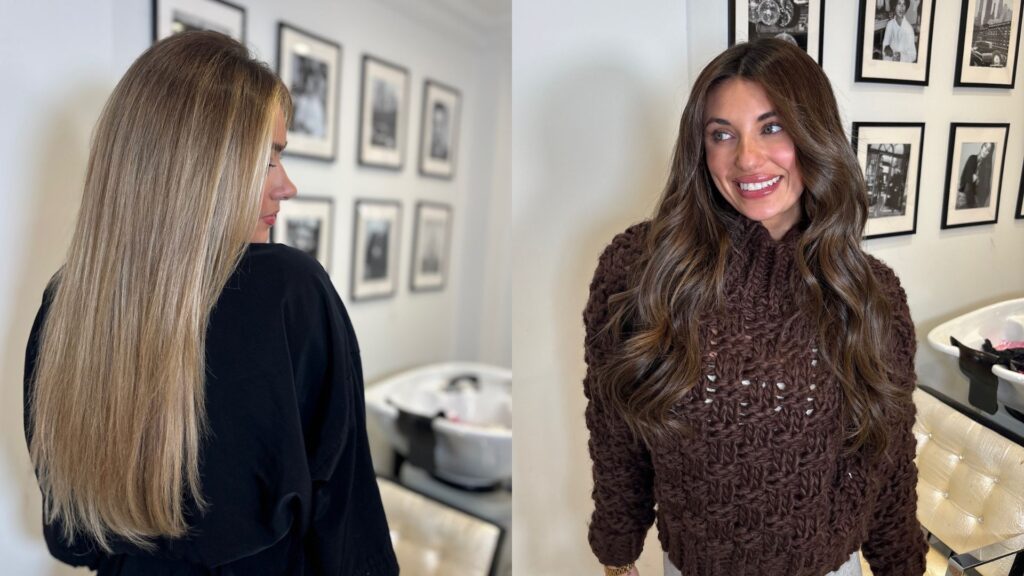
The Importance of Blending
Blending is where length transformations are won or lost. It is the difference between hair that flows and hair that has a visible seam—a line where the natural hair ends and the extension begins, betraying itself in every photograph and every gust of wind.
Several factors determine how well extensions blend for length.
Color Matching
This is the most obvious and the most consequential. Hair rarely sits at a single flat tone. It has dimension, variation, and movement through the mid-lengths and ends. Extensions ordered in a single block color will almost always require customization to integrate properly.
A specialist who takes color seriously will assess your hair in natural light, consider how it behaves when it moves, and either source hair that mirrors that complexity or work with a colorist to achieve it. At our New York hair extension salon, we typically blend between 2-4 colors of hair in every bundle to help achieve this naturally.
Texture Matching
This is equally critical and less discussed. The curl pattern, porosity, and surface texture of the extension hair needs to respond to heat and humidity the way your natural hair does. If your hair waves slightly in moisture and your extensions remain stick-straight, the blend breaks down the moment you step outside.
This is one of the strongest arguments for high-quality, virgin hair—its behavior under real conditions is consistent and predictable in a way that processed hair is not.
The Transition Point
Or, where your natural hair meets the extension length, needs to be addressed in the cut. Without it, even perfectly matched, perfectly placed extensions will carry a visible line between where your natural hair ends, and your extensions end.
All of these points bring us to the conversation most clients don’t expect.
Why the Haircut Is Not Optional
The single most overlooked element of a successful length transformation is the cut that follows the installation.
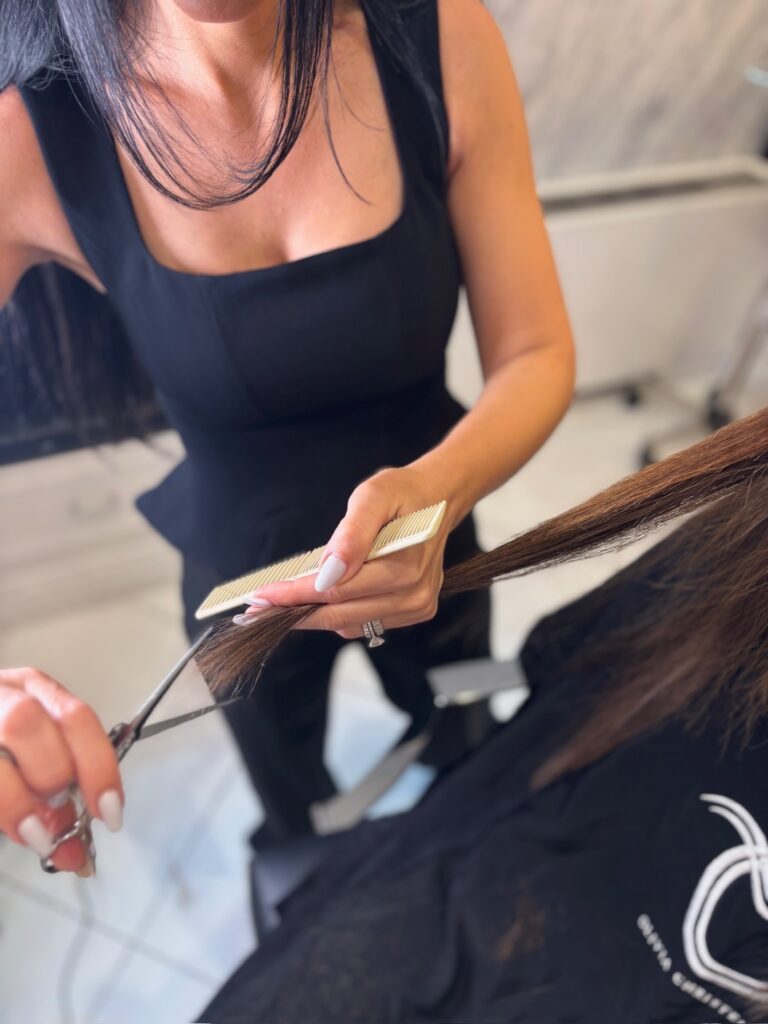
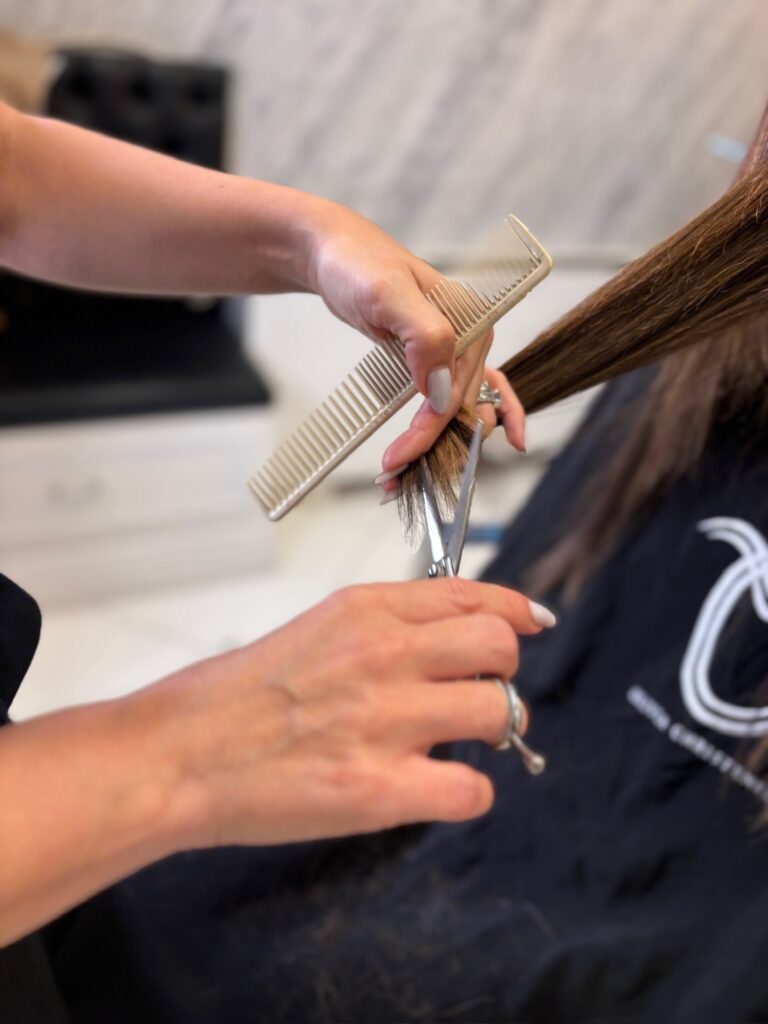
Extensions are added at a consistent length. Your natural hair is not. The ends of your natural hair, wherever they fall, will sit at a different point than the extension hair hanging below them. This can create a layering mismatch that no amount of blending can fully resolve without a scissor. A skilled specialist either performs this cut themselves or works closely with a trusted colorist and stylist as part of the same process.
This is not a trim. It is a considered, technical cut designed to marry the natural hair to the extension length—softening the transition, removing any blunt demarcation, and allowing the full length to move as a single, coherent piece of hair.
Done well, it is invisible work. Done poorly, or skipped entirely, it is the reason length transformations sometimes look like length transformations rather than simply looking like beautiful hair.
For clients adding significant length—anything beyond two to three inches—this conversation should happen before the installation, not after. The specialist should know from the outset that a blending cut is part of the plan, because it shapes decisions about where extensions are placed and at what length they are ordered.
The goal, as always, is hair that raises no questions.
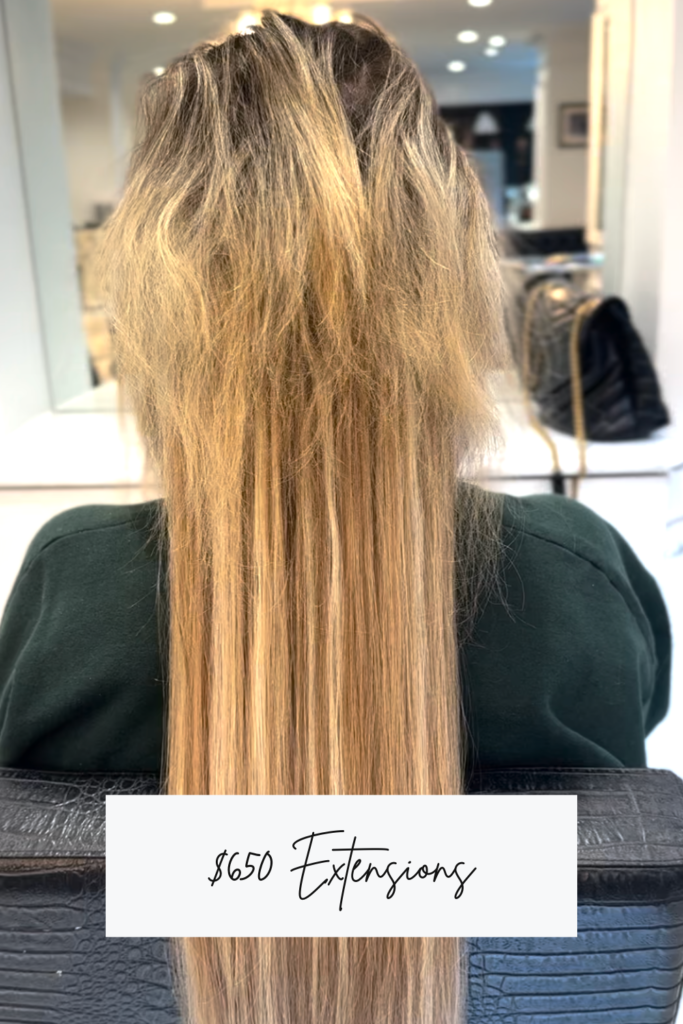
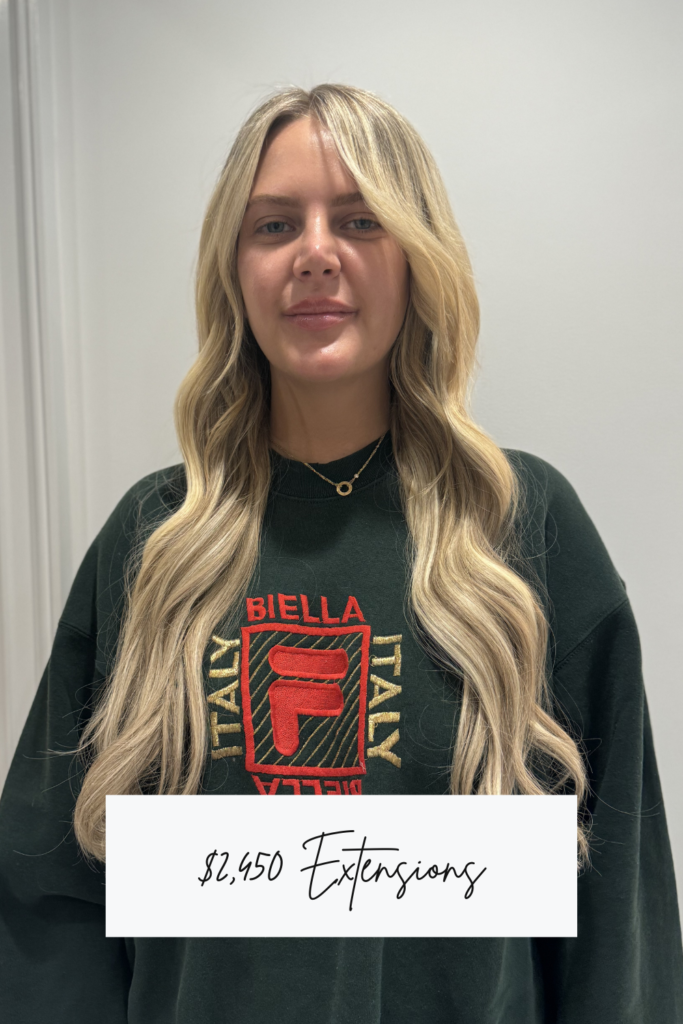
How Much Do Hair Extensions Cost in NYC?
This is one of the first questions asked and, in isolation, one of the least useful questions. The cost of hair extensions in New York spans a wide range–from a few hundred dollars to several thousand. The number itself will tell you very little without understanding why hair extensions are priced what they are.
We’re going to give you an honest framework for understanding what you are actually paying for, and what you are risking when the price feels too good to be true.
Why Hair Extension Prices Vary
Extension pricing is not arbitrary. It reflects a specific combination of variables—and when a price seems unusually low, at least one of those variables has been quietly compromised.
Hair Quality
The quality of the hair used is the single largest driver of cost is the hair itself. Ethically sourced, full cuticle, virgin hair is expensive to procure, and that cost is reflected in the price of a quality installation. Salons that offer dramatically lower prices are almost always working with processed, mixed-fiber, or lower-grade hair.
The savings are real at the point of purchase. The cost of replacing hair that degrades in six weeks, or of restoring natural hair damaged by a poor installation, is considerably less predictable.
Specialist Experience
I-tip extensions applied by a true specialist, someone whose practice is built around extensions rather than someone who offers them among a list of services—carry a premium that is entirely justified. The difference between a competent application and an expert one is not visible on installation day. It becomes apparent over the following months, in how the extensions move, how they hold, how the natural hair underneath them fares, and whether you find yourself back in the chair ahead of schedule.
In New York specifically, experience commands what it commands. A specialist with a deep client roster, a refined technique, and a track record of results is not priced like a generalist. Nor should they be.
Customization
A standard installation and a bespoke one are not the same service. Custom color matching, tailored placement mapping, adjustments for density and growth pattern, and a blending cut designed for your specific hair, are all elements that take time and expertise that a volume-driven salon cannot offer. Customization is where the result moves from good to invisible, and it is priced accordingly.
Maintenance
The full cost of extensions includes the wear cycle, not just the installation. Quality maintenance appointments—where bonds are carefully moved up, the hair is assessed, and the installation is refined—are part of the investment.
Factoring in maintenance from the outset gives a more accurate picture of what extensions actually cost over time, and makes the comparison between methods considerably more meaningful.
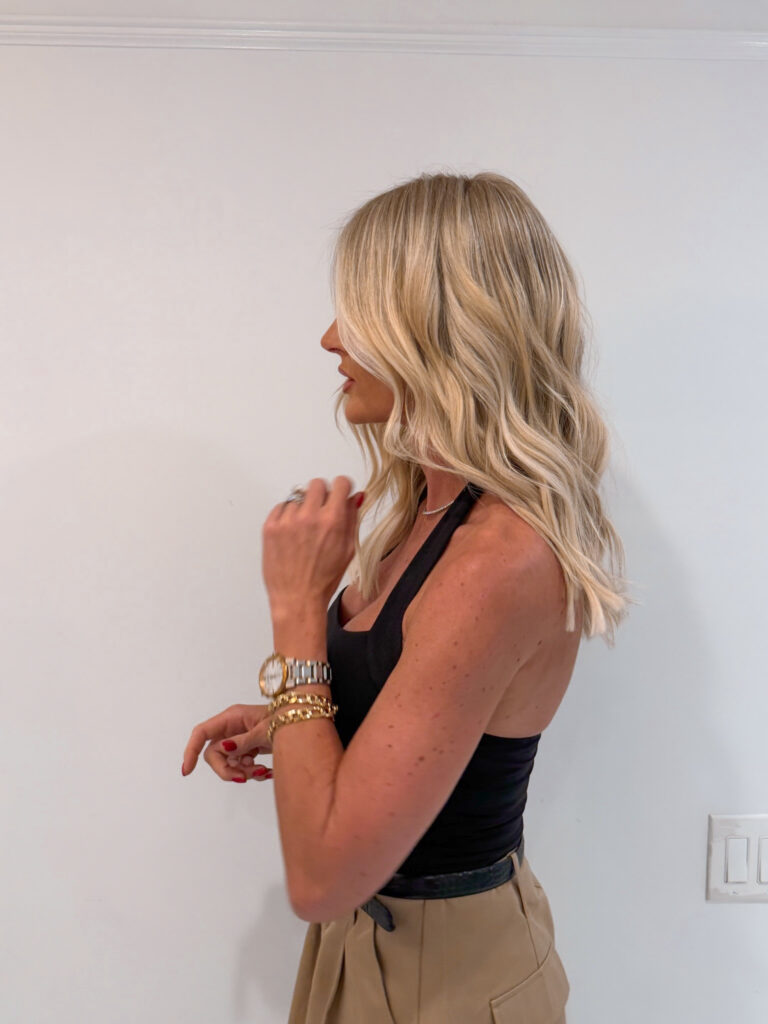
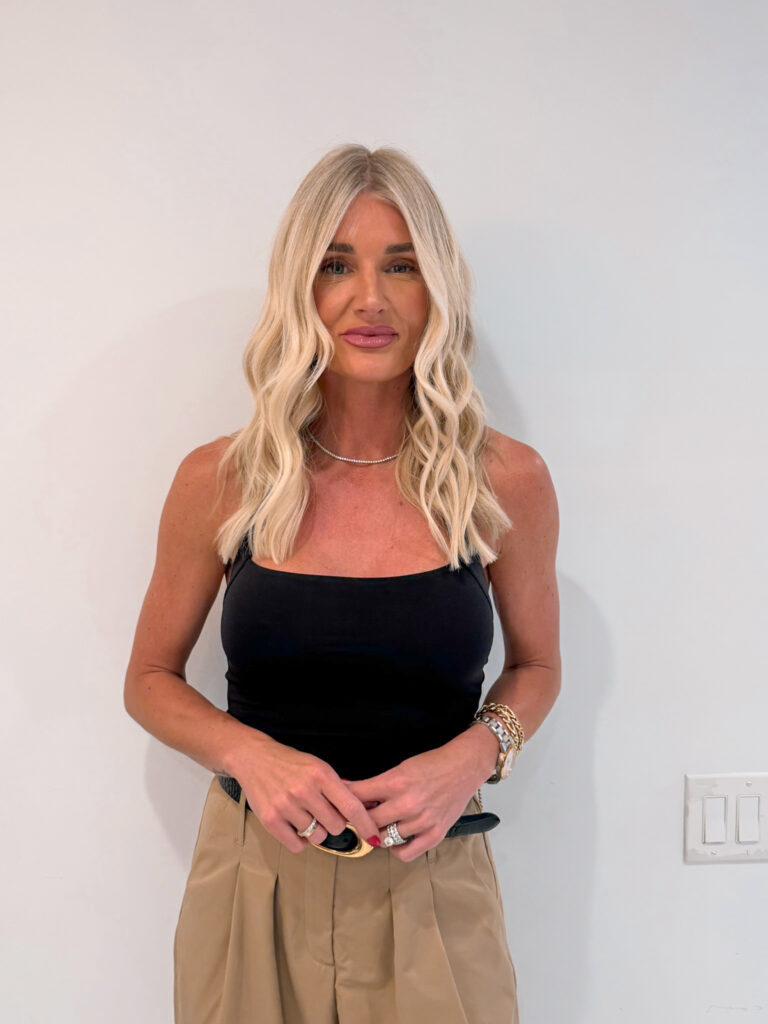
Cheap Extensions vs. Luxury Extensions
The temptation of a lower price point is understandable, but the consequences tend to be costly.
Replacement Costs
Low-quality hair does not last. Extensions that degrade in texture, tangle chronically, or lose their integrity within weeks are not a bargain at any price, because they will need to be replaced. A client who replaces a cheap set three times in the span of a year has spent more than the cost of a quality installation that lasted twelve months, and has subjected her natural hair to additional rounds of application and removal in the process.
Longevity
The economics of quality extensions only make sense across the full wear cycle. Virgin, full cuticle hair that is maintained properly and installed by an experienced specialist—holds its integrity in a way that processed hair structurally cannot. The strand that goes in on installation day is the strand that should still be performing at month ten. That consistency is what quality hair is actually selling.
Hair Health
This is the cost that doesn’t appear on your bill. Poor quality hair, improper installation technique, and methods that place undue stress on the natural hair can cause breakage, thinning, and in significant cases, traction alopecia—damage to the follicle from sustained, excessive tension. Corrective treatment for compromised hair is expensive, time-consuming, and not always fully reversible. The downstream cost of a bad set of extensions is not measured in dollars alone.
A quality installation, by contrast, should leave the natural hair in the same condition, or better, than it was found. That is not an incidental benefit. It is the standard.

Are Expensive Hair Extensions Worth It?
For the right client, working with the right specialist, using the right hair—yes. Without hesitation.
But the more useful framing is this: expensive extensions and cheap extensions are not the same product at different price points. They are fundamentally different experiences, with fundamentally different outcomes, and treating them as comparable options separated only by cost is a premise worth examining before it becomes an expensive lesson.
The Birkin bag is not priced the way it is because of marketing. It is priced the way it is because of what goes into it—the materials, the craft, the longevity, the way it only becomes more itself over time. The philosophy is the same here.
What you are investing in is hair that does not require a second thought. Hair that performs in the humidity of a New York July, survives a weekend in the Hamptons, holds up to a blowout three times a week, and looks as good in month ten as it looked on day one. This is hair that answers no questions.
For clients who have experienced the alternative, the value proposition is self-evident.
For clients who haven’t yet—this is the conversation worth having before the first appointment, not after.
How Long Do Hair Extensions Last?
Longevity in hair extensions is not a fixed number. As you’ve probably noticed by now, everything with hair extensions comes down to the hair quality, the extensions installation method and the stylist who’s taking care of your extensions.
So, how long your hair extensions last is going to be determined by the three factors that we’ll cover in this section: the method, the quality of the hair, and how well the extensions are cared for between appointments. When you understand all three of these things, the answer becomes considerably more useful than a number on a website.
Here’s our breakdown.
Hair Extension Longevity by Method
I-Tip Extensions
With quality hair and proper maintenance, i-tip extensions last up to 12 months before the hair itself needs to be replaced. Maintenance appointments—typically scheduled every 6 to 8 weeks, are required to move the bonds up as the natural hair grows.
These appointments do not replace the hair; they reposition it, which is a meaningful distinction. The hair you invest in on installation day is the same hair that should be performing ten months later, provided it was sourced and cared for correctly.
Of all semi-permanent methods, i-tips offer the longest realistic wear cycle. The absence of adhesive means the hair is not subjected to repeated chemical or thermal stress at maintenance, which preserves its integrity across the full lifespan of the set.
Weft Extensions
Again, wefts typically require repositioning every 6 to 8 weeks, with the full set lasting anywhere from 3 to 6 months depending on the installation method and the quality of hair used. Beaded wefts tend to be gentler on the hair and allow for cleaner maintenance than sewn or glued alternatives.
The track structure, however, means that slippage, visible movement, and edge wear are more common concerns over time, particularly for clients with finer hair or an active lifestyle.
Tape-In Extensions
Tape-ins are typically repositioned every 4 to 8 weeks, with the tape itself replaced at each maintenance appointment. The adhesive bond degrades with heat, oil, and product contact—which is not a flaw so much as the nature of the method.
High-quality tape-in hair can be reused through several rounds of repositioning if handled carefully, but the tape itself is single-use. Most clients find the realistic wear cycle of a tape-in set sits between 3 and 5 months before the hair begins to show meaningful wear.
Keratin Bond Extensions
Keratin bonds typically last 3 to 5 months before removal and reinstallation. The bonds can begin to slip or break down earlier in clients with oily scalps or those who use conditioning products high on the hair shaft—both of which compromise the adhesive over time.
Removal requires a chemical or heat solvent to break down the keratin, which introduces an element of stress at each cycle. Reusing keratin bond hair for a second set is possible but depends heavily on the condition of the strand after removal.
Clip-In Extensions
Clip-ins have no fixed wear cycle because they are not worn continuously. With proper storage and handling, a quality set of clip-in hair can last 1 to 3 years, but that longevity is entirely dependent on how frequently they are worn and how carefully they are maintained between uses. Daily wear degrades clip-ins significantly faster than occasional use. For clients wearing them more than a few times per week, the hair tends to show wear within months.
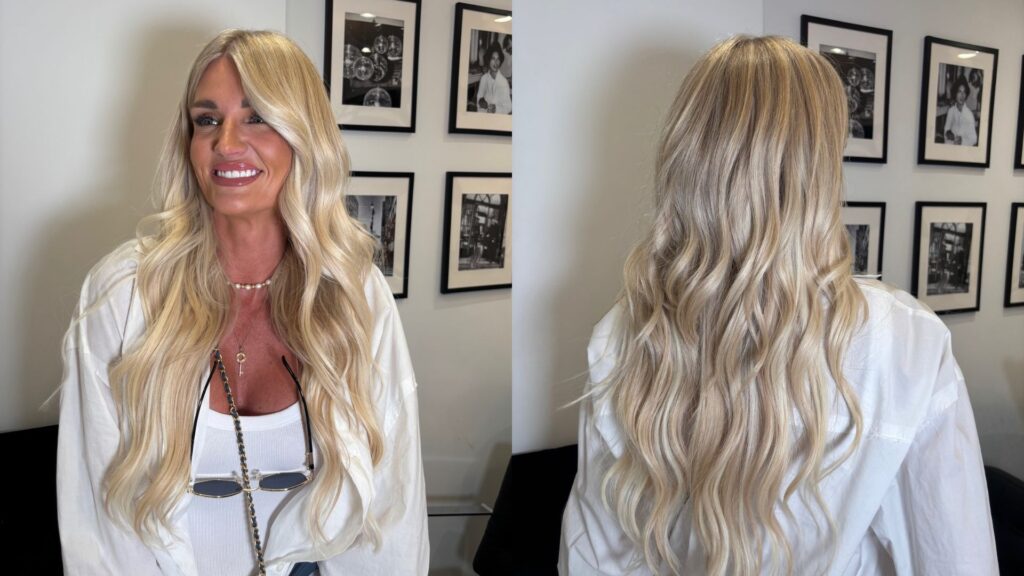
The Three Factors That Actually Determine Hair Extension Longevity
The method sets the ceiling for how long hair extensions last. These are the three main determining factors.
Hair Quality
This is the variable with the most leverage. Virgin, full cuticle hair is structurally intact from the moment it is applied, which means it has the full capacity to last. Processed hair, by contrast, has already been subjected to chemical intervention before it ever touches your head. Its cuticle is compromised, its surface artificially smoothed, and its lifespan is a fraction of what quality hair delivers.
Two sets of i-tip extensions applied by the same specialist, maintained on the same schedule, will age in entirely different ways if one uses virgin hair and the other does not. The hair is not an interchangeable variable.
Maintenance Appointments
Semi-permanent extensions require professional upkeep. This is not optional, and treating it as such is the most common reason extensions fail ahead of schedule. Skipping or delaying maintenance appointments allows the bonds or tracks to migrate too far down the hair shaft, placing increasing tension on the natural hair and causing the extensions to behave erratically.
A client who attends every scheduled appointment is protecting both the extensions and the health of the hair beneath them. The maintenance schedule is not an upsell—it is the mechanism by which longevity is actually delivered.
Home Care
What happens between appointments determines as much as the appointments themselves.
The fundamentals are consistent across all methods: sulfate-free shampoo, conditioner applied to mid-lengths and ends only, thorough detangling from the bottom up before washing, and never sleeping on wet hair. For i-tip extensions specifically, brushing with a loop brush, starting at the ends and working upward, prevents unnecessary tension on the bonds during daily maintenance.
Heat styling is not off the table with quality extensions, but it should be approached with the same care you would give to natural hair. A heat protectant every time, and temperatures dialed to what the hair actually needs rather than the maximum setting. Virgin hair responds to heat well; processed hair is already compromised, and heat accelerates that compromise visibly.
The clients who reach the 12-month mark with hair that still performs are not lucky. They are consistent.
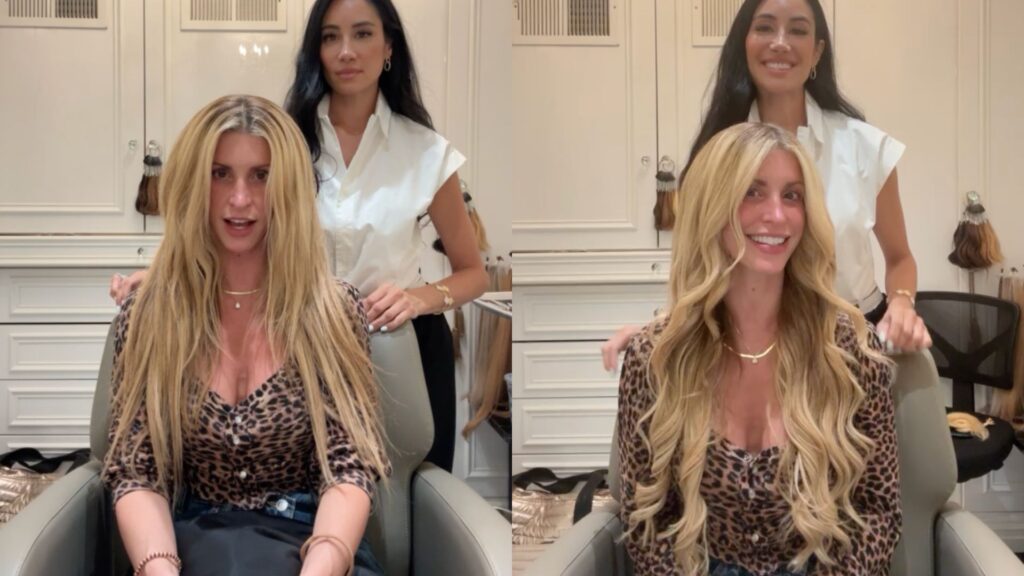
A Realistic Timeline
| Method | Maintenance Interval | Full Replacement |
| I-Tip | Every 6–8 weeks | Up to 12 months |
| Weft | Every 6–8 weeks | 3–6 months |
| Tape-In | Every 4–8 weeks | 3–5 months |
| Keratin Bond | Every 10–14 weeks | 3–5 months |
| Clip-In | N/A | 1–3 years (occasional use) |
The Bottom Line on How Long Hair Extensions Last
The client who invests in quality hair, attends her maintenance appointments, and follows a considered home care routine is the client whose extensions last. That is not a sales point, it is simply the pattern, repeated consistently across every method and every price point.
At the top of that range sits i-tip extensions with virgin hair. Not because the number is the largest, but because the hair that reaches month twelve still looks like it did at month one. That consistency, the integrity of the investment held across the full wear cycle, is what longevity actually means at this level.
How to Care for Hair Extensions
One of the ways that you can ensure your hair extensions last is by taking proper care of them at home. It’s what happens at home, between appointments, in the small daily decisions that accumulate over months into either a thriving set of extensions or a compromised one.
The good news is that caring for high-quality hair extensions is not complicated. It just takes consistency.
Washing Your Hair Extensions
Washing is where most extension wear occurs and actually where most mistakes are made.
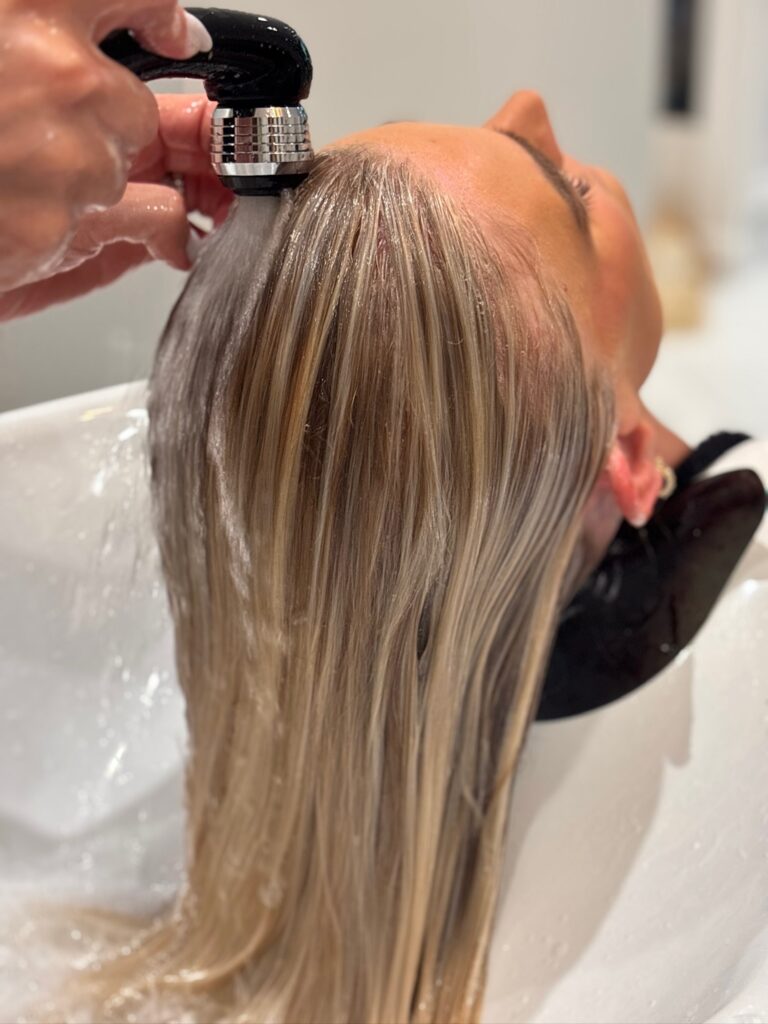
The goal when you wash your hair is to cleanse thoroughly, while minimizing friction, tangling, and stress at the bond or attachment point. Before washing, always detangle your hair fully with a loop brush, working from ends to roots in sections. Attempting to detangle wet, tangled extensions is the fastest way to cause unnecessary shedding and bond stress.
In the shower, keep the water pressure moderate and work the shampoo through the hair in a downward motion—never circular scrubbing at the scalp, which creates friction and tangles at the attachment points. Focus the shampoo on the scalp and roots; the extension hair itself does not produce oil and does not require the same cleansing attention.
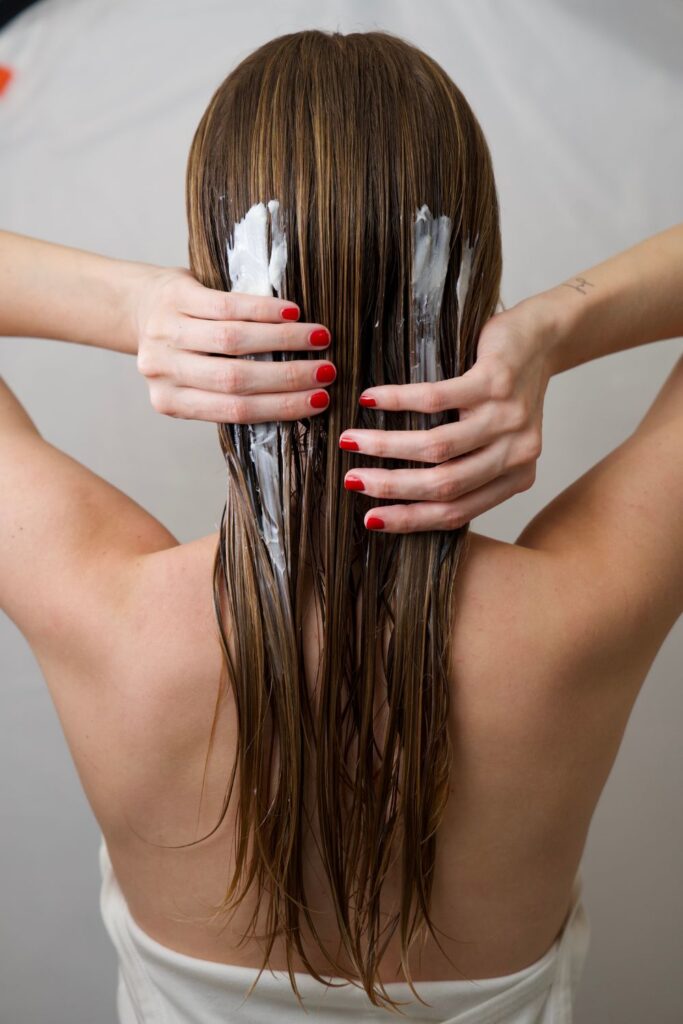
Conditioner should be applied to mid-lengths and ends only. Never at the root, never near the bonds. Conditioning product at the attachment point, whether a micro-ring, tape, or bond, compromises the hold and accelerates slippage. This is non-negotiable.
Rinse thoroughly. Residue left in the hair, particularly near the bonds, is one of the most common causes of premature buildup and slippage.
Frequency is a personal variable, but for most clients with i-tip extensions, two to three washes per week is the sweet spot. It’s enough to keep the scalp healthy and the hair clean without over-stressing the attachment points.
We’ve designed a gentle shampoo that’s safe enough to be used every day, but we recommend washing your hair extensions every other day, to avoid oils building up around your beads.
Brushing
Brush your hair more often than you think you need to, and make sure to always brush correctly.
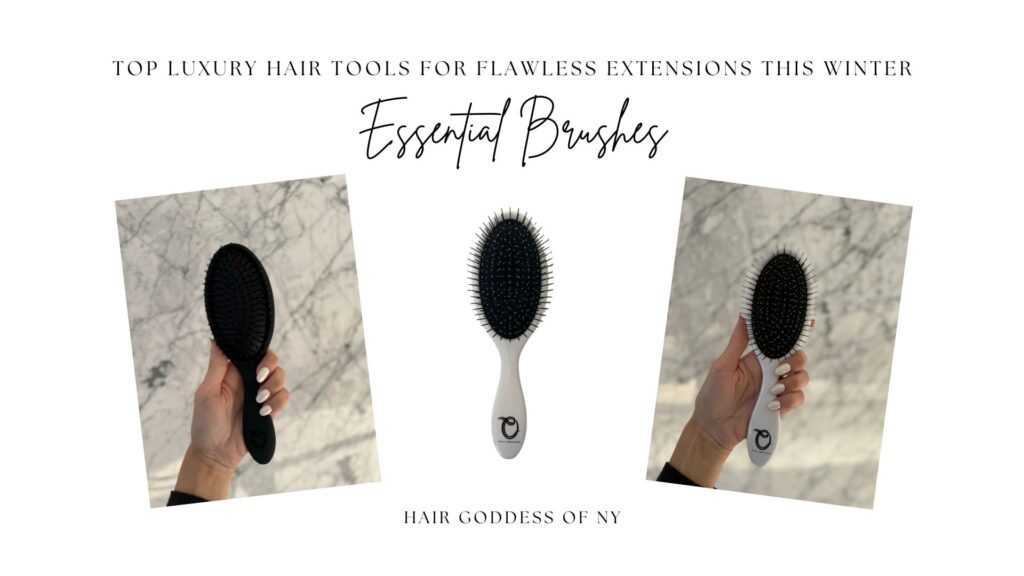
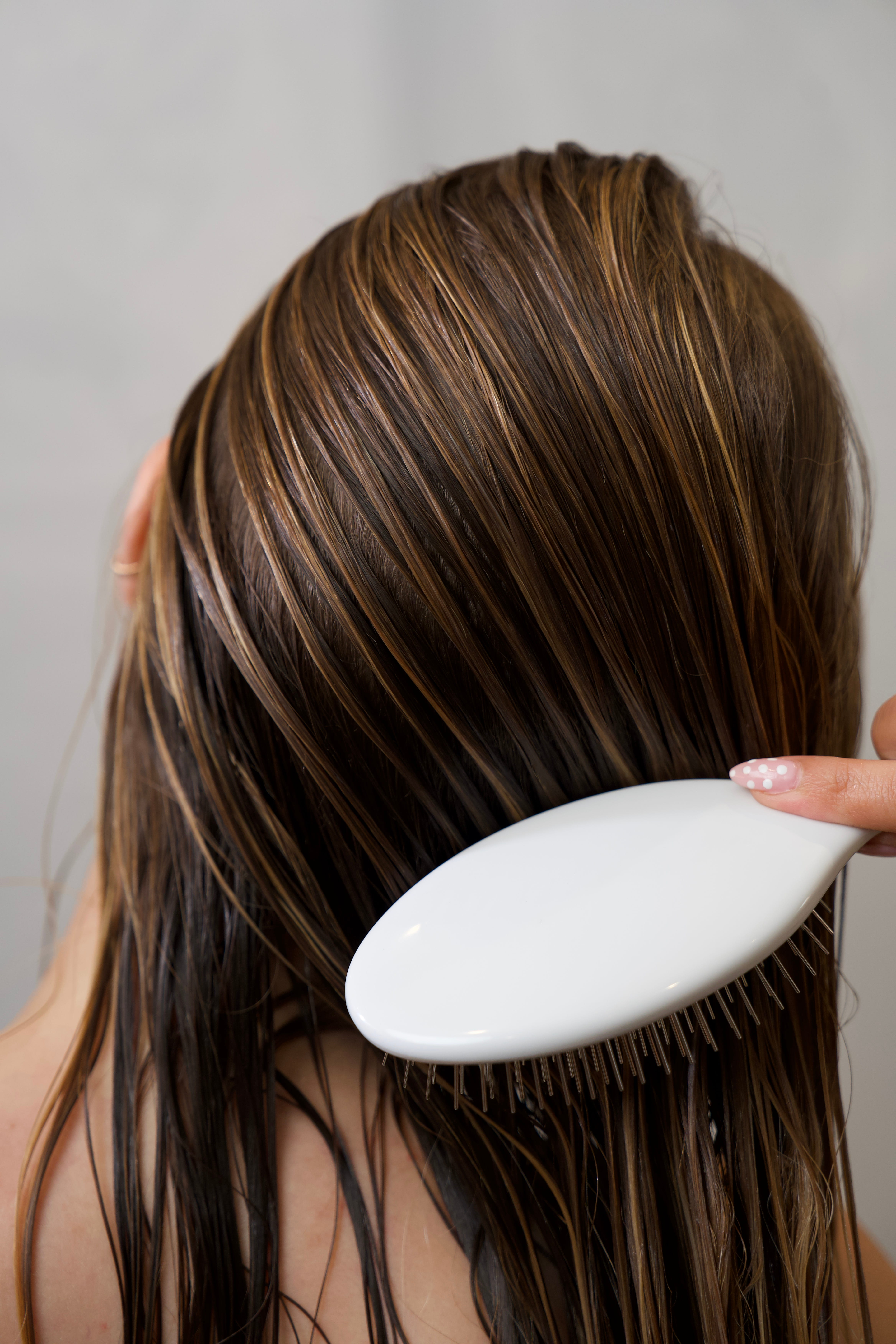
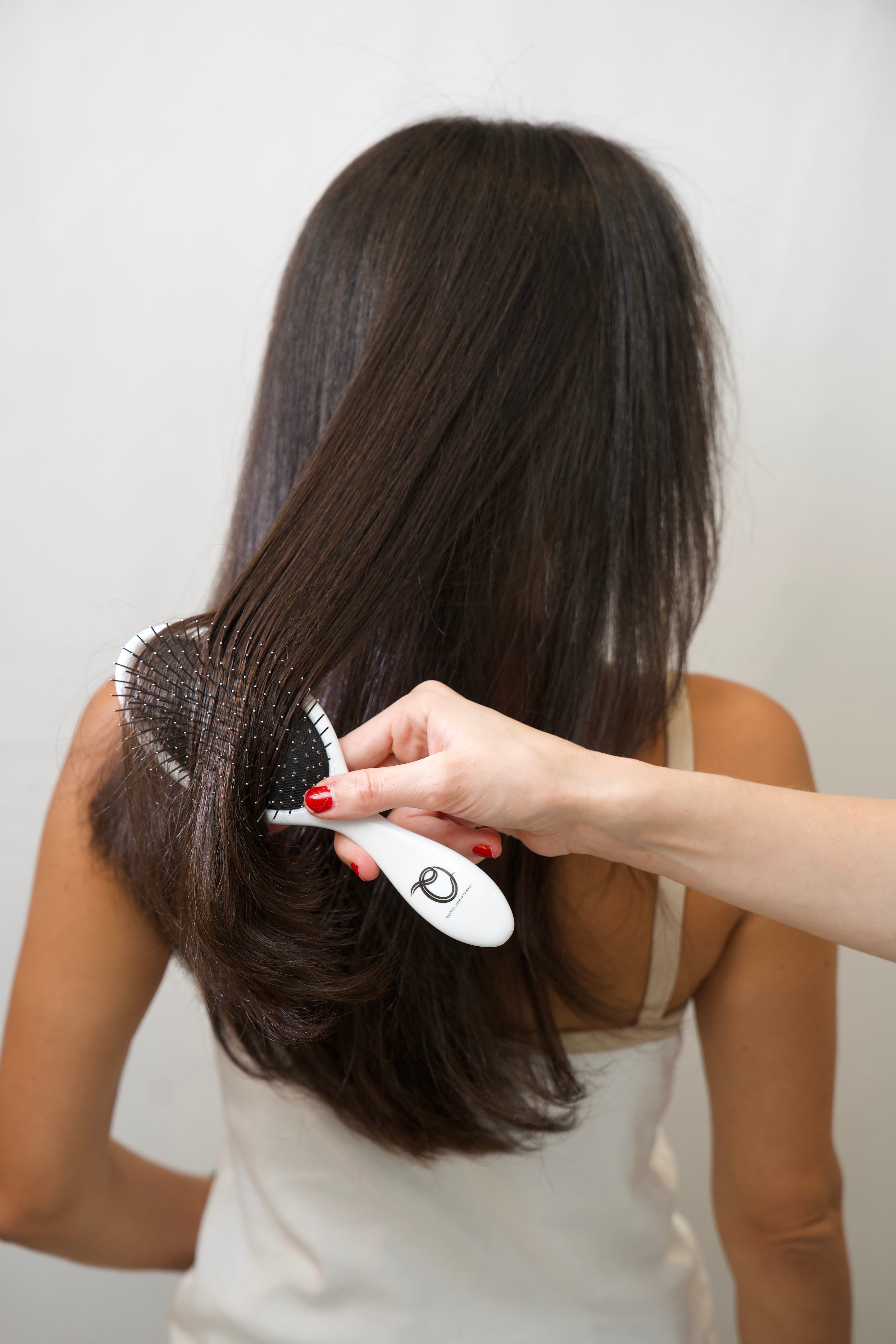
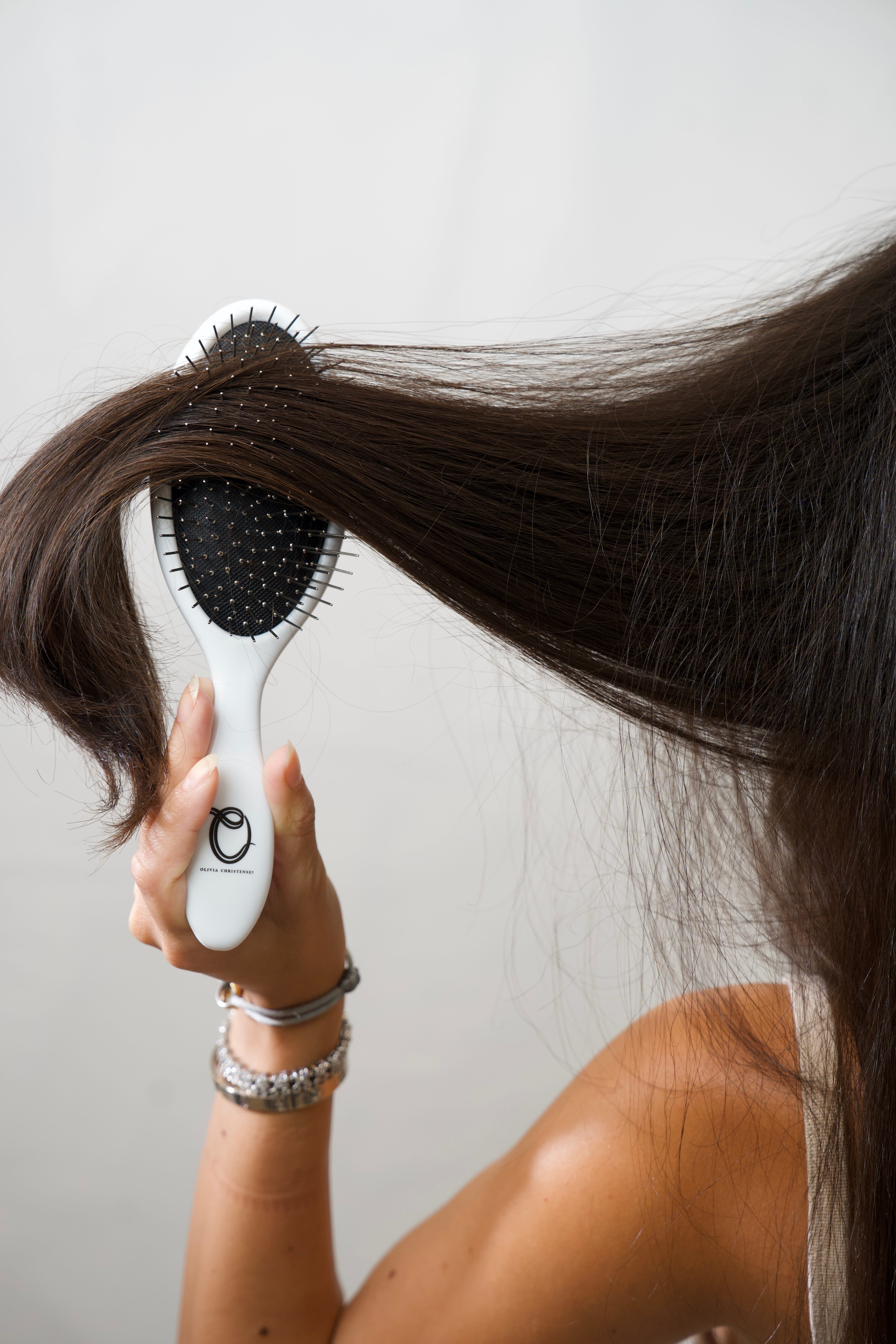
A loop brush or a detangling extension brush is not optional. You want to avoid brushes that can catch on bonds and create unnecessary tension. The investment in the right tool is negligible compared to the damage the wrong one causes over time.
The technique is consistent: start at the ends, work upward in sections, hold the hair above the point you are brushing to minimize tension at the root. Never drag a brush from root to tip through unsectioned hair. Never brush wet extensions without first applying a leave-in detangler.
Brush before washing, before bed, and after any activity that creates tangles (workout, wind, sleep). The clients who maintain the best-looking extensions are almost always the ones who brush most consistently.
Sleeping
Sleep is the longest period of sustained friction your extensions experience, and managing it is one of the easiest wins in extension care.
A loose braid before bed is the single most effective thing a client can do to extend the life of her extensions. It keeps the hair contained, prevents tangling at the nape, and significantly reduces the friction between the extension hair and the pillowcase over seven or eight hours.
A silk or satin pillowcase reduces that friction further. Cotton creates drag on the hair shaft that accelerates tangling and surface wear on the extension hair over time. Silk and satin allow the hair to move without resistance. For clients who sleep with their hair down regardless of advice, this is the non-negotiable alternative.
Finally, never go to sleep with wet hair. Wet extensions are significantly more vulnerable to tangling, matting, and bond stress. If an evening wash is unavoidable, blow-dry to at least 80 percent dry before bed.
Heat Styling
Quality extensions, particularly virgin hair, respond beautifully to heat styling. The approach, however, should be considered rather than casual.
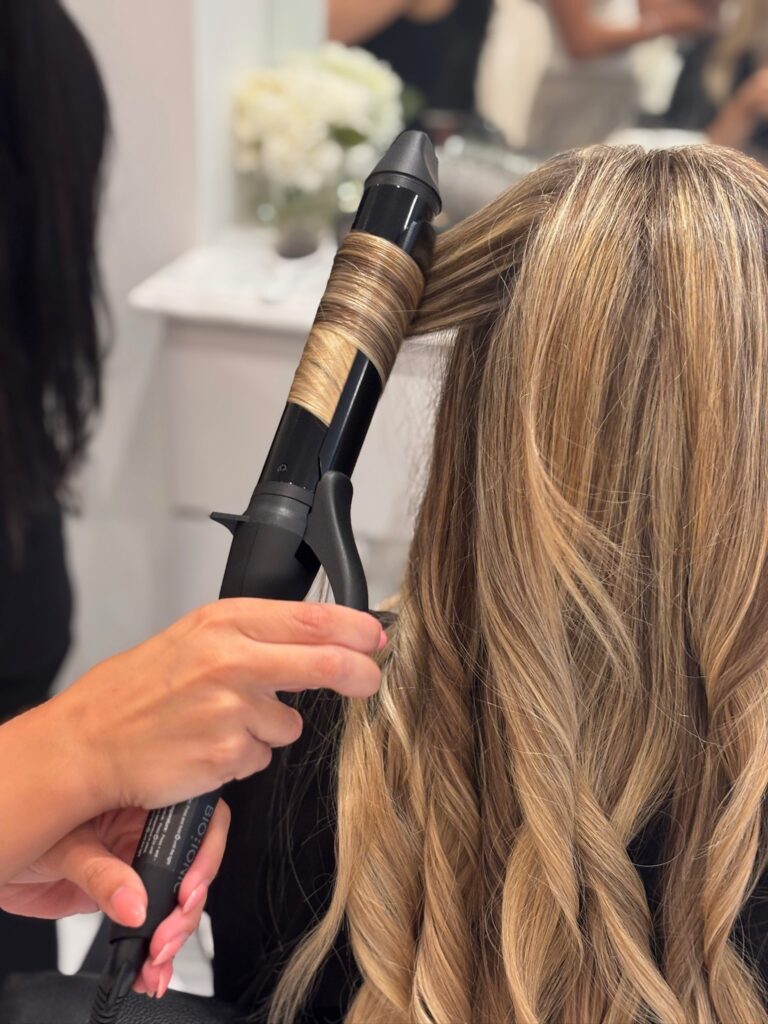
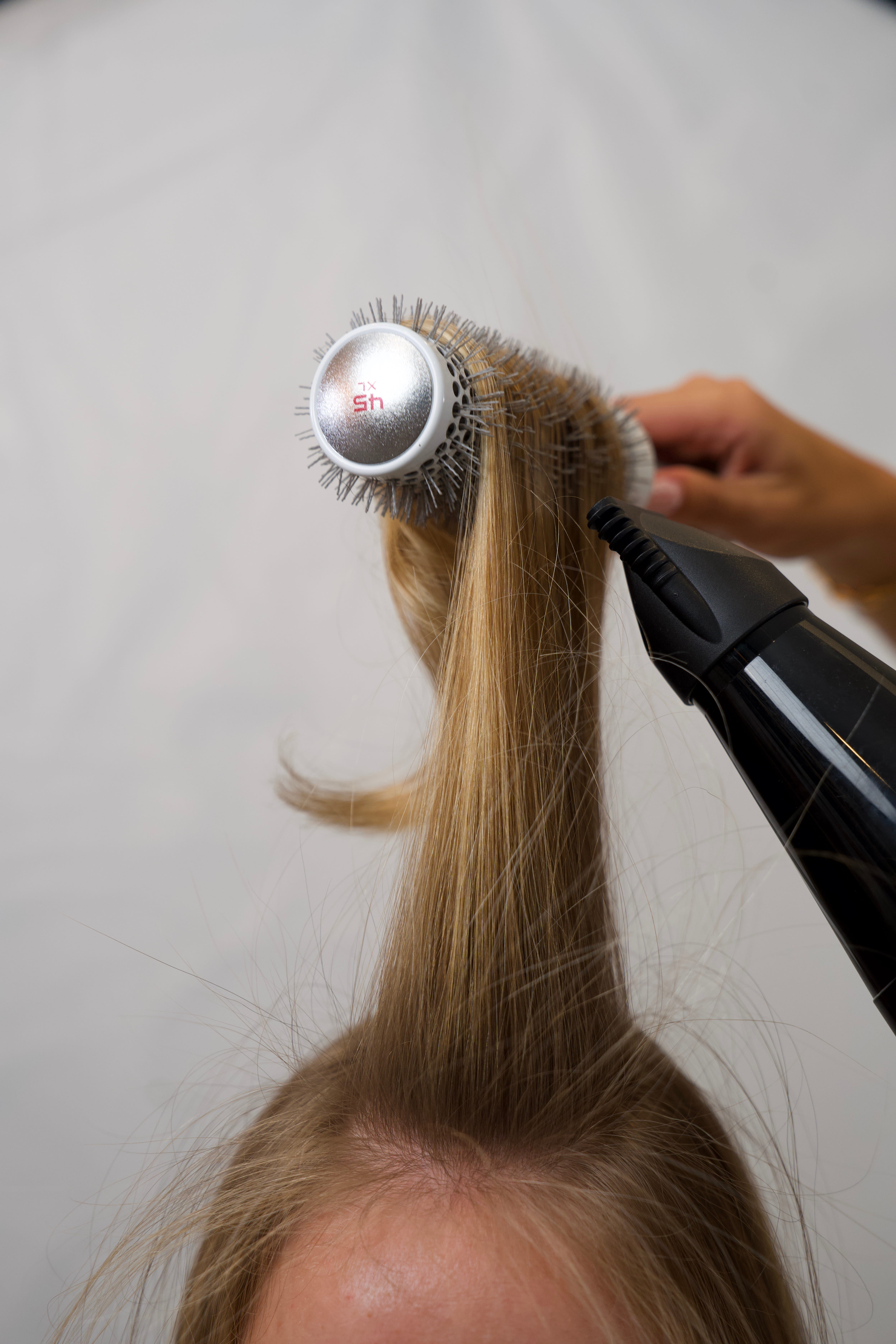
Always apply a heat protectant before any thermal tool. This applies to blow dryers, flat irons, and curling wands without exception. Extension hair does not benefit from the natural oils produced at the scalp, which means it has less inherent protection against thermal damage than your natural hair. A protectant bridges that gap.
Keep tools at the lowest effective temperature for your desired result. This is good practice for natural hair and essential for extensions. High heat applied repeatedly at the mid-lengths and ends accumulates as damage over time and unlike your natural hair, extension hair cannot recover from split ends or significant thermal stress.
Keep heat tools away from the attachment points. Applying a flat iron or wand directly over a micro-ring or attachment point is a common mistake. It doesn’t damage the bond so much as it creates unnecessary tension and wear at the most structurally important part of the extension. Work below the bond, never over it.
Products to Avoid
Certain products are genuinely incompatible with extension wear, regardless of the method.
- Sulfate-based shampoos strip the hair aggressively, accelerating surface wear on extension hair that cannot replenish its own moisture. They also dry out the natural hair at the scalp, which creates an imbalance in texture and behavior between the natural and extension hair over time.
- Silicone-heavy conditioners and masks applied near the root create buildup around the bonds and attachment points, compromising hold and creating the conditions for slippage and matting.
- Alcohol-based styling products. Many dry shampoos, hairsprays, and texturizing sprays contain alcohol that dry and degrade the extension hair shaft with repeated use. Check ingredient lists before incorporating any new product into a routine.
- Oil treatments at the root are another common mistake. Natural oils, argan oil, and scalp serums applied at or near the bonds create the same slippage risk as heavy conditioners. Oils are appropriate at the mid-lengths and end never near the attachment point. And we often recommend you skip them altogether.
When in doubt, less is more. Extensions perform best with a clean, simplified product routine.
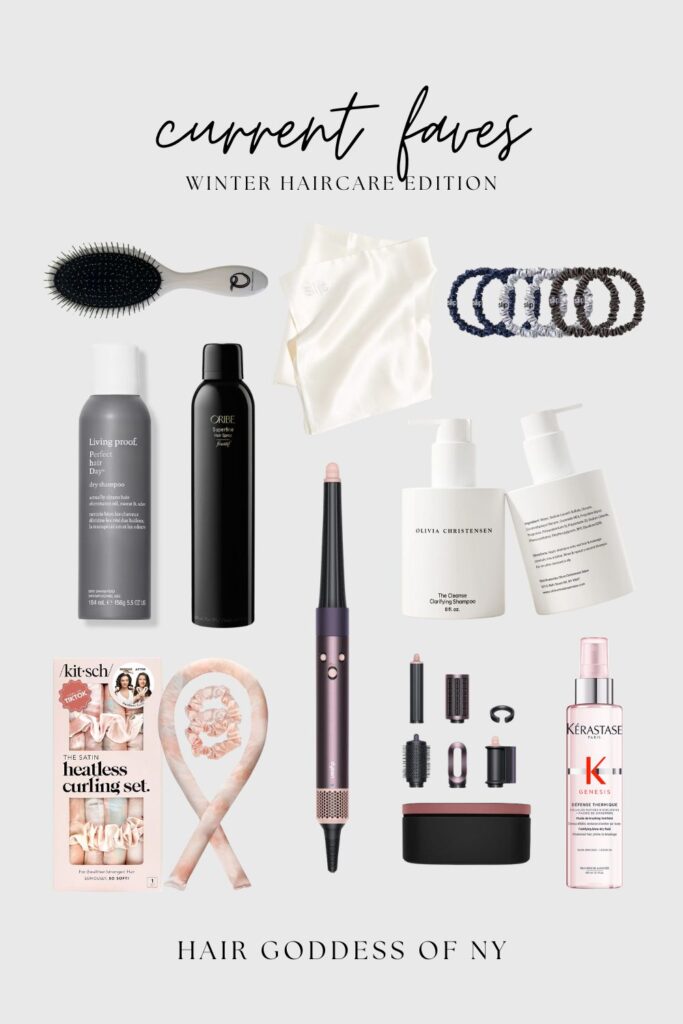
Products We Recommend
The right product routine does not need to be extensive. It needs to be correct.
For extensions to perform across a full wear cycle, the essentials are:
- Shampoo — A sulfate-free, extension-safe formula that cleanses without stripping. Our founder Christina has designed an extension-safe shampoo that cleanses gently, making it safe to use every day.
- Conditioner — A lightweight, silicone-free conditioner that hydrates mid-lengths and ends without compromising bond integrity. Again, you want to make sure your conditioner isn’t going to weigh down your hair.
- Clarifying shampoo – A shampoo that deeply cleans and clarifies your hair without drying you out. This is the exact shampoo that we use on your maintenance appointments, to clean and prepare your hair for installation.
- Leave-In Detangler — Applied before brushing, particularly on damp hair. The difference between detangling with and without one is significant. We love the Milbon Replenishing Spray for this.
- Loop or Detangling Brush — You need to be so careful with how you brush your hair, which is exactly why Christina designed her loop brush and classic detangling brush, both safe for extensions. Find our extension-safe brushes here.
- Heat Protectant — Non-negotiable before any thermal tool.
- Extension Care Kit — For clients who prefer a curated routine in one place. You can now shop for our entire hair extension starter kit that gives you everything you need for an easy home care routine.
The TL;DR
Detangle before washing. Condition ends only. Braid before bed. Use the right brush. Never skip the heat protectant. Show up to your maintenance appointments.
That is the entire formula. The extensions take care of the rest.
How to Choose a Hair Extension Specialist in NYC
New York has no shortage of salons that are offering hair extensions. Finding the one that has genuinely mastered them is a different search entirely.
This distinction matters more than it might appear on the surface. Extensions applied by a true specialist and extensions applied by a generalist can look identical on installation day. The difference reveals itself over the following months—in how the natural hair holds up, how the extensions age, and whether the result at month six looks anything like the result at week one.
Here are the questions that you can ask, that will tell you everything you need to know.
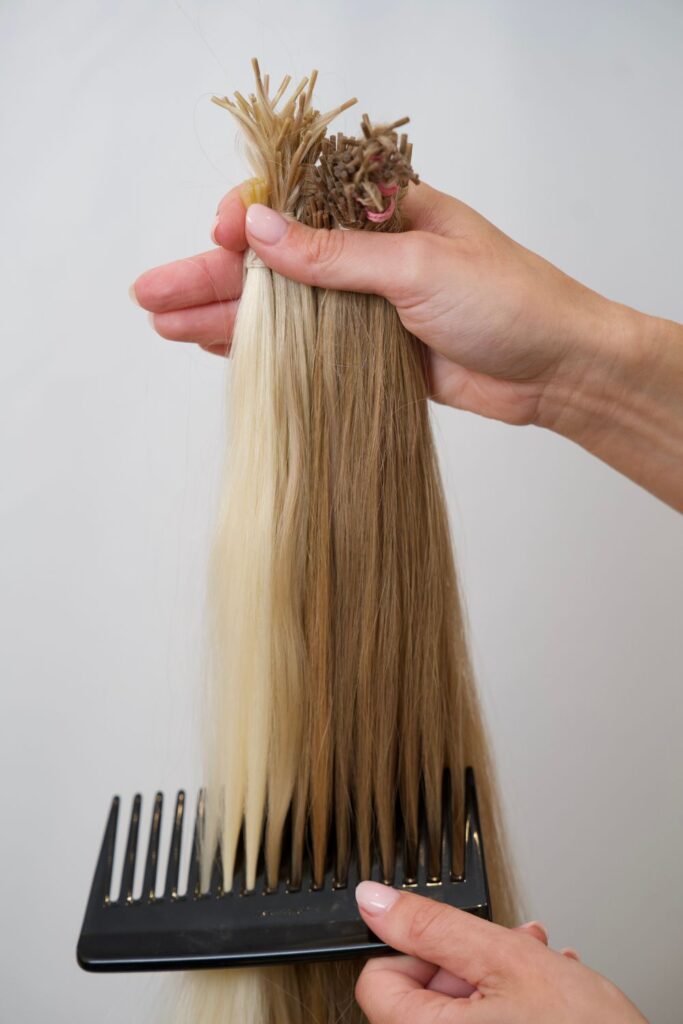
What Type of Hair Do You Use?
This is the first question and the most revealing one. A specialist who works with quality hair will answer it with specificity and without hesitation—the origin, the sourcing, the grade. A vague answer, a pivot to brand names without substance, or an inability to explain what distinguishes the hair they use from what is available elsewhere are all meaningful signals.
You are looking for full cuticle, ethically sourced hair. Anything less is a compromise that will eventually make itself known.
Is It Full-Cuticle Hair?
Worth asking as a direct follow-up, because the language around hair quality is not always precise. “Human hair” and “full cuticle human hair” are not interchangeable terms, and the difference in performance is significant. A specialist who understands their material will know exactly what they are working with and why it matters. One who cannot explain the distinction is likely working with processed hair sold under ambiguous terminology.
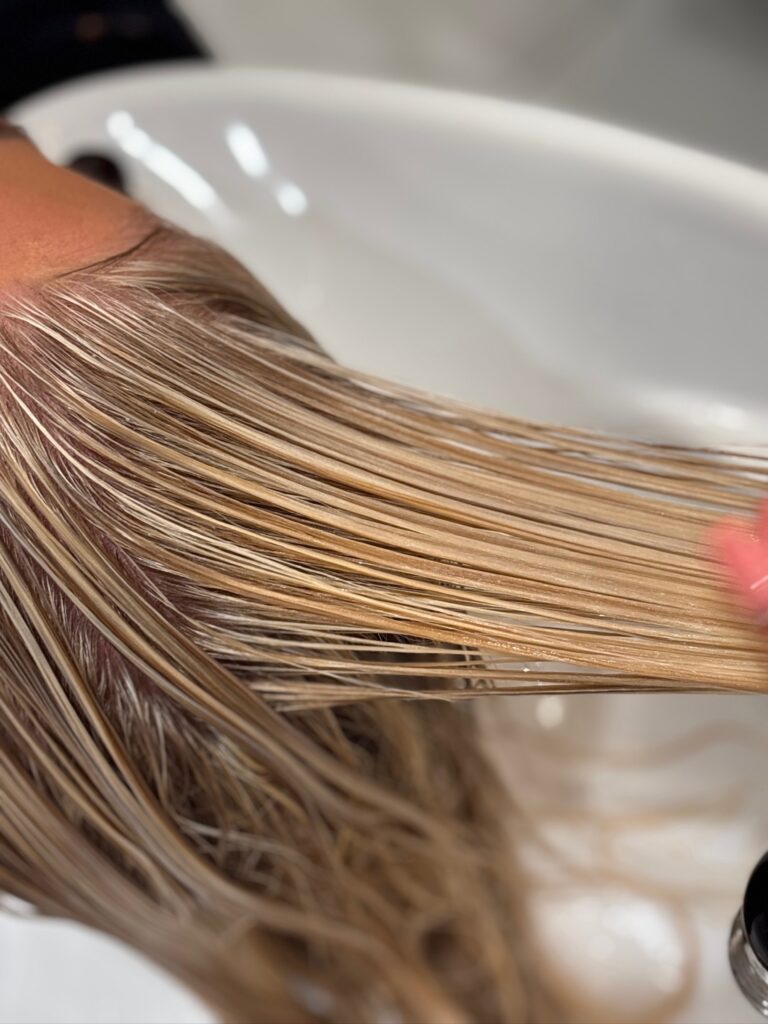
How Many Years of Experience Do You Have and Is This Your Specialty?
Experience in extensions is not the same as years in a salon. A stylist who has been cutting and coloring hair for a decade and added extensions to their service menu two years ago has two years of relevant experience. What you are looking for is a specialist whose primary practice is built around extensions. Someone for whom this is not one service among many but the singular focus of their craft.
Ask how many extension clients they see per week. Ask whether they do other services or whether extensions are their focus. The answer tells you everything about the depth of expertise you are actually booking.
Do You Customize Every Install?
The answer should always be yes. A specialist worth trusting will be able to describe specifically what customization looks like in their practice. How they assess hair density. How they map placement. How they adjust section size and weight for different hair types. How they approach color matching in natural light rather than salon lighting.
A templated installation approach, the same method, the same placement, the same weight applied to every client, is not customization. It is a production line. The client whose fine hair requires a different approach than the client with thick hair sitting next to her should receive a meaningfully different installation. If a specialist cannot articulate how, that conversation is telling you something.
Can I See Healed Grow-Outs?
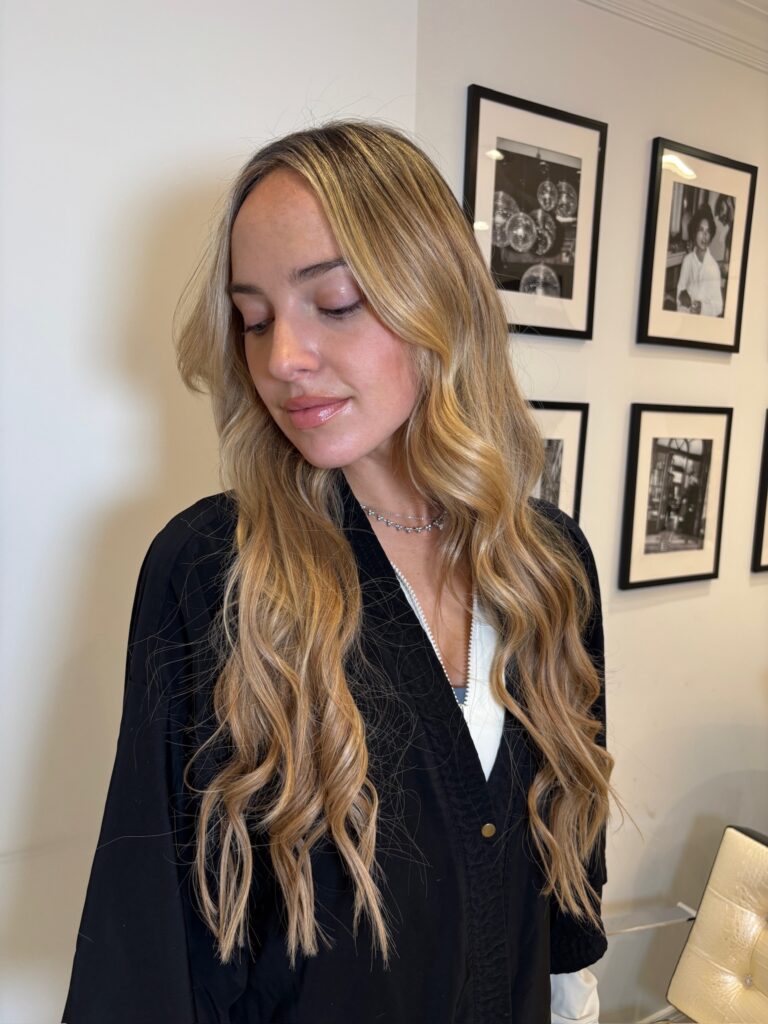
Portfolio photos taken immediately after installation are nearly useless as a quality indicator. Extensions look good on day one. What you want to see is how the work holds up at six weeks, at three months, at six months. How the bonds sit as the hair grows. Whether the extensions still move and blend naturally. Whether the natural hair underneath them is in good condition.
A specialist with genuine expertise and a committed client base will have this documentation. Ask for it specifically. Before and after photos are the industry standard; grow-out documentation is the specialist standard.

How Often Will I Need Maintenance and What Does It Involve?
A transparent answer to this question tells you two things: whether the specialist is honest about the commitment extensions require, and whether their maintenance approach protects the natural hair as well as the extensions themselves.
For i-tip extensions, maintenance appointments every six to eight weeks are standard. At each appointment, the bonds are moved up to account for natural hair growth, a process that requires care, precision, and time. A specialist who underestimates the maintenance requirement to close a booking is setting expectations that the client will eventually hold against them. One who explains the schedule clearly, and what happens to the natural hair if it slips, is operating with integrity.
The maintenance appointment is not an inconvenience. It is the mechanism by which your investment is protected.
What the Right Answer Sounds Like
A specialist who uses ethically sourced, full cuticle virgin hair. Who has built their practice around extensions rather than offering them as a supplementary service. Who customizes every installation to the specific architecture of the client’s hair. Who can show you how their work ages, not just how it looks on day one. And who is honest about the maintenance commitment from the first conversation rather than the second.
In New York City, that combination exists. It simply requires knowing what to ask for.
Common Hair Extension Mistakes and How to Avoid Them
Alongside taking proper care of your hair extensions, there are a few hair extension common mistakes to avoid. These are the most common hair extension mistakes and how to avoid them.
Applying Oils Near the Bonds
Oil and extension bonds are fundamentally incompatible. Whether it is a natural oil treatment, an argan serum, a scalp product, or even a heavily oil-based conditioner applied too high on the hair shaft—any product with significant oil content near the attachment point will begin to compromise the bond’s integrity over time. The result is slippage, premature movement, and extensions that require maintenance ahead of schedule.
The instinct is understandable. Clients who have been told to oil their scalp for hair health bring that habit into their extension care routine without thinking. The adjustment is simple: anything oil-based belongs at the mid-lengths and ends only. The scalp and bond area should remain clean, free of buildup, and conditioned only with extension-safe products designed for the purpose.
It is a small change in routine that will have one of the greatest impacts on how long your hair extensions last.
Sleeping with Wet Hair
This one is consistent enough to be worth stating plainly: never go to sleep with wet or even significantly damp extensions.
Wet hair, whether natural or extension, is in its most vulnerable state. The strand is swollen, elastic, and significantly more susceptible to tangling, friction damage, and stress at the attachment point. Eight hours of movement against a pillowcase in that state creates the conditions for matting, bond stress, and the kind of tangling that requires aggressive detangling in the morning.
If an evening wash is unavoidable, dry to at least 80 percent before bed. Then put your hair in a loose braid, so it’s all contained. We recommend all of our clients use a silk pillowcase to reduce friction. Doing all three of these things is not excessive, it’s simply the standard for clients who want their extensions to last for months.
Buying Cheap Hair
This is a common hair extension mistake that’s only made once.
The appeal of significantly lower-priced hair, whether purchased online, through a discount supplier, or offered by a salon that’s cutting corners on materials, is obvious. The consequences are less so. Processed, mixed-fiber, or ‘floor hair’ degrades quickly and unpredictably. It tangles at a rate that quality hair does not, it loses surface integrity within weeks and it can’t be restored once that process begins.
Beyond the aesthetic failure, cheap hair carries a structural risk that quality hair does not: because it has been chemically processed to appear smooth and healthy, the underlying damage is invisible at purchase. That damage manifests under heat, humidity, and the normal mechanical stress of daily wear, which in New York means it can manifest quickly.
The replacement cost, combined with the installation cost of starting over, almost always exceeds what quality hair would have cost in the first place. And that calculation does not include the condition of the natural hair that bore the cost of the failed installation.
Buy the hair once, and wear it for months to come.
Skipping Maintenance Appointments
Maintenance appointments aren’t optional and the consequences of treating them as flexible are real. As your natural hair grows, the bead attachment points migrate down the hair shaft. An i-tip bead that sat correctly at installation will begin to place increasing, uneven tension on the natural hair if it’s not moved up on schedule.
That tension doesn’t announce itself immediately. It accumulates quickly, and by the time it’s visible–through breakage at the attachment point, thinning around the bead area, or extensions that have slipped out of alignment–the damage has already been done.
The six to eight week maintenance schedule for i-tip extensions is based around your own natural hair growth and when the beads will need to be removed, cleaned and replaced. Hair extensions are an investment, and making sure that you attend every maintenance appointment is the easiest way to take care of your investment.
Overusing Heat
Quality extensions tolerate heat styling well. They do not tolerate carelessness.
The most common heat mistake is not the temperature, it’s the frequency and the absence of protection. Flat irons and curling wands used daily without a heat protectant accumulate damage on the extension hair in a way that has no corrective path. Unlike natural hair, extension hair does not grow out. The damage introduced in month two is still present in month ten.
The second most common mistake is applying heat directly over the bond or attachment point. This does not melt or compromise the micro-ring, but it does introduce unnecessary stress at the most structurally important section of the extension. Heat styling belongs at the mid-lengths and ends—below the attachment, where the hair can be styled freely without risk.
The rule is simple enough to apply every time: protectant first, appropriate temperature second, and never linger over the bond.
And the nice thing about using high-quality, full-cuticle human hair, is that it holds style much better than synthetic alternatives. This means you don’t have to style your hair everyday, because your curls and style will hold more naturally.
The Pattern Behind the Mistakes
What most of these have in common is not carelessness—it’s simply the absence of information. Clients who oil their scalp, sleep on wet hair, and skip a maintenance appointment are not doing anything wrong by general hair care standards. They are applying habits that work perfectly well for natural hair to a context that requires a slightly different approach.
The adjustment is not dramatic. But it is specific—and knowing it before the first appointment rather than after the first set of problems is precisely the difference between extensions that last and extensions that don’t.

Frequently Asked Questions About Hair Extensions in NYC
Let’s go over some of the most frequently asked questions we get about hair extensions.
What are the best hair extensions in NYC?
The honest answer is that the best hair extensions in NYC are the ones applied by a specialist using quality hair, customized to the specific needs of your hair. The method, the material, and the expertise behind the installation matter more than any single brand or salon name.
That said, for clients seeking a result that is genuinely indistinguishable from natural hair, one that lasts, performs under the demands of a New York life, and does not compromise the health of the natural hair beneath it. I-tip extensions using full cuticle, ethically sourced virgin hair represent the current standard. The individual application, the absence of heat and adhesive, and the precision of placement available through this method produce a result that other methods structurally cannot replicate at the same level.
The best extensions in New York City are not found by searching for the lowest price or the fastest appointment. They are found by asking the right questions of the right specialist.
How much do luxury hair extensions cost in NYC?
Luxury hair extensions in NYC vary significantly in cost depending on the method, the quality of hair used, the experience of the specialist, and the degree of customization involved. A full i-tip installation using virgin, full cuticle hair by an experienced specialist is a meaningful investment. This can typically range from several hundred to several thousand dollars when the hair and application are considered together.
The more useful framing, however, is total cost across the wear cycle. A quality set of i-tip extensions maintained correctly can last up to 12 months. A cheaper alternative that degrades in six weeks and requires replacement is not a lower-cost option when the full calculation is made. It is simply a more expensive mistake spread across more appointments.
For an accurate quote specific to your hair, its density, and your goals, a consultation is always the right starting point.
Which hair extensions are best for thin hair?
I-tip extensions are the most consistently recommended method for fine or thin hair, and the reasoning is all to do with installation. Because i-tips are applied strand by strand, the weight of the extensions is distributed across individual attachment points rather than concentrated along a track or weft. There is no single point of tension bearing a disproportionate load, which is precisely the failure mode that makes most other methods problematic for fine hair.
The fact that i-tips don’t use heat or glue is equally important. Fine hair has a lower tolerance for chemical and heat stress, and methods that introduce either at the root carry a risk that can compound over time.
How often do hair extensions need maintenance?
Maintenance frequency depends on the method. For i-tip extensions, appointments are typically scheduled every six to eight weeks. At each appointment, the bonds are moved up to account for natural hair growth, the hair is repositioned, not replaced. This is a meaningful distinction: the hair you invest in at installation is the same hair that should be performing months later, provided it is quality hair cared for correctly.
Tape-ins require repositioning every four to eight weeks, with the tape itself replaced at each visit. Wefts follow a similar interval. Keratin bonds typically last ten to fourteen weeks before requiring attention, though the removal process introduces its own considerations.
Skipping or delaying maintenance is one of the most common causes of premature extension failure and natural hair stress. The schedule is not optional, it is how you protect your investment.
Do hair extensions damage your hair?
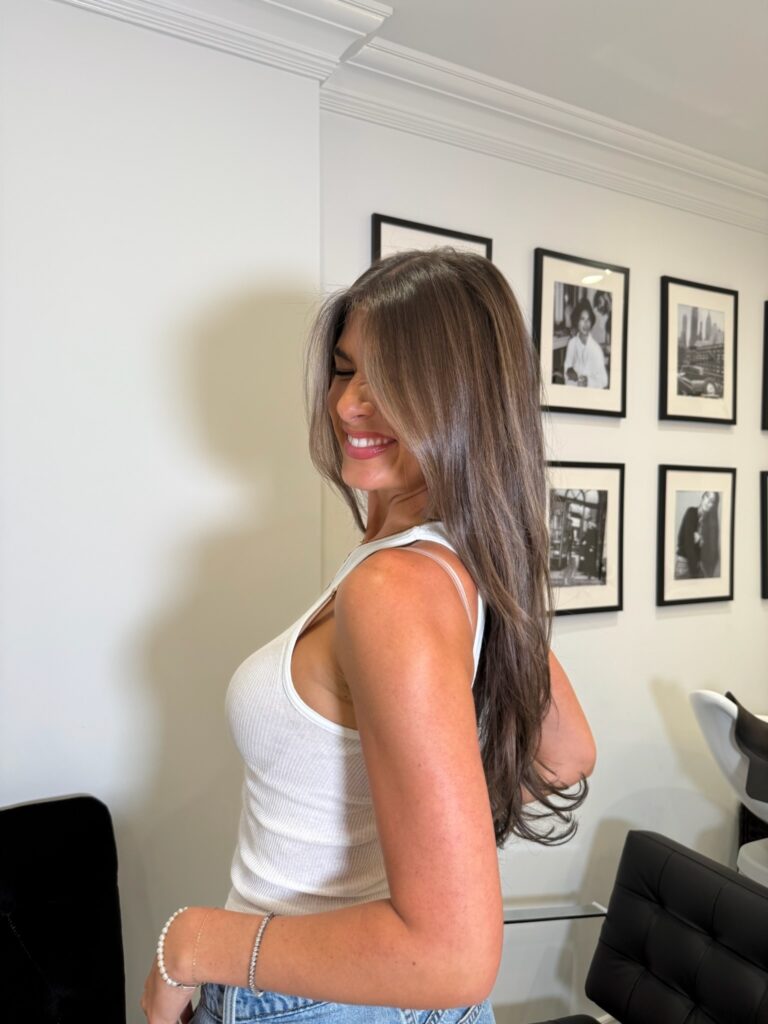
Applied correctly, with quality hair, by an experienced specialist, the answer is no. Extensions that are well-matched to the client’s hair density, properly installed, and maintained on schedule should leave the natural hair in the same condition, or better, than before installation.
The damage associated with hair extensions in the broader conversation is almost always the result of one or more of the following: the wrong method for the client’s hair type, poor installation technique, low-quality hair that creates unpredictable tension and tangling, or a maintenance schedule that was skipped or ignored.
The risk is real, you can get traction alopecia, breakage at attachment points, and thinning from sustained tension are documented consequences of extensions done incorrectly. They are not, however, inevitable consequences of extensions done well. The distinction lies entirely in the expertise of the specialist and the appropriateness of the method for the individual client.
Can I work out with hair extensions?
Yes, and for most clients in New York, this is a non-negotiable requirement rather than an occasional consideration. The practical adjustments are straightforward.
Wear the hair in a loose braid or low ponytail during workouts to minimize friction and tangling at the nape. After a session involving significant sweat, rinse the hair or wash with an extension-safe shampoo rather than allowing salt and buildup to sit on the bonds. Dry thoroughly, particularly near the attachment points, before styling or going to sleep.
The concern with working out and extensions is not the activity itself. It is the buildup from sweat and the tangling that occurs when extension hair is left loose during high-movement exercise. Both are entirely manageable with a minor adjustment in routine. Clients who train daily maintain beautiful extensions consistently, it simply requires that the care routine accounts for the activity level.
Can I swim with hair extensions?
Swimming with extensions requires more care than working out, but it is not off the table.
Chlorine and salt water dry and potentially compromise the extension beads and hair quality over time.
For clients who swim regularly, the approach is: saturate the hair with fresh water before entering the pool or ocean. Hair that is already wet absorbs significantly less chlorine or salt. Then apply a light leave-in conditioner or oil to the mid-lengths and ends as a barrier. After swimming, rinse immediately and wash with a sulfate-free shampoo as soon as possible.
Avoid prolonged submersion, and never go to sleep with hair that is wet from swimming. Chlorine and salt left on the extension hair overnight accelerate surface degradation considerably.
For clients who swim competitively or daily, this is a conversation worth having in your consultation. The frequency and type of water exposure is a relevant variable in determining the right method and the appropriate maintenance schedule.
How long do hair extensions last?
Longevity varies by method, hair quality, and home care. As a general guide: i-tip extensions last up to 12 months with proper maintenance every six to eight weeks. Wefts and tape-ins typically require full replacement every three to six months. Keratin bonds last approximately three to five months. Clip-ins, used occasionally and stored correctly, can last one to three years.
The variable with the most leverage over longevity is the quality of the hair itself. Virgin, full cuticle hair is structurally intact and built to last across a full wear cycle. Processed hair has already been chemically compromised before installation and degrades accordingly. Two identical installations with different hair quality will age in entirely different ways — the method is the ceiling, but the hair determines whether you reach it.
What hair extension method looks most natural?
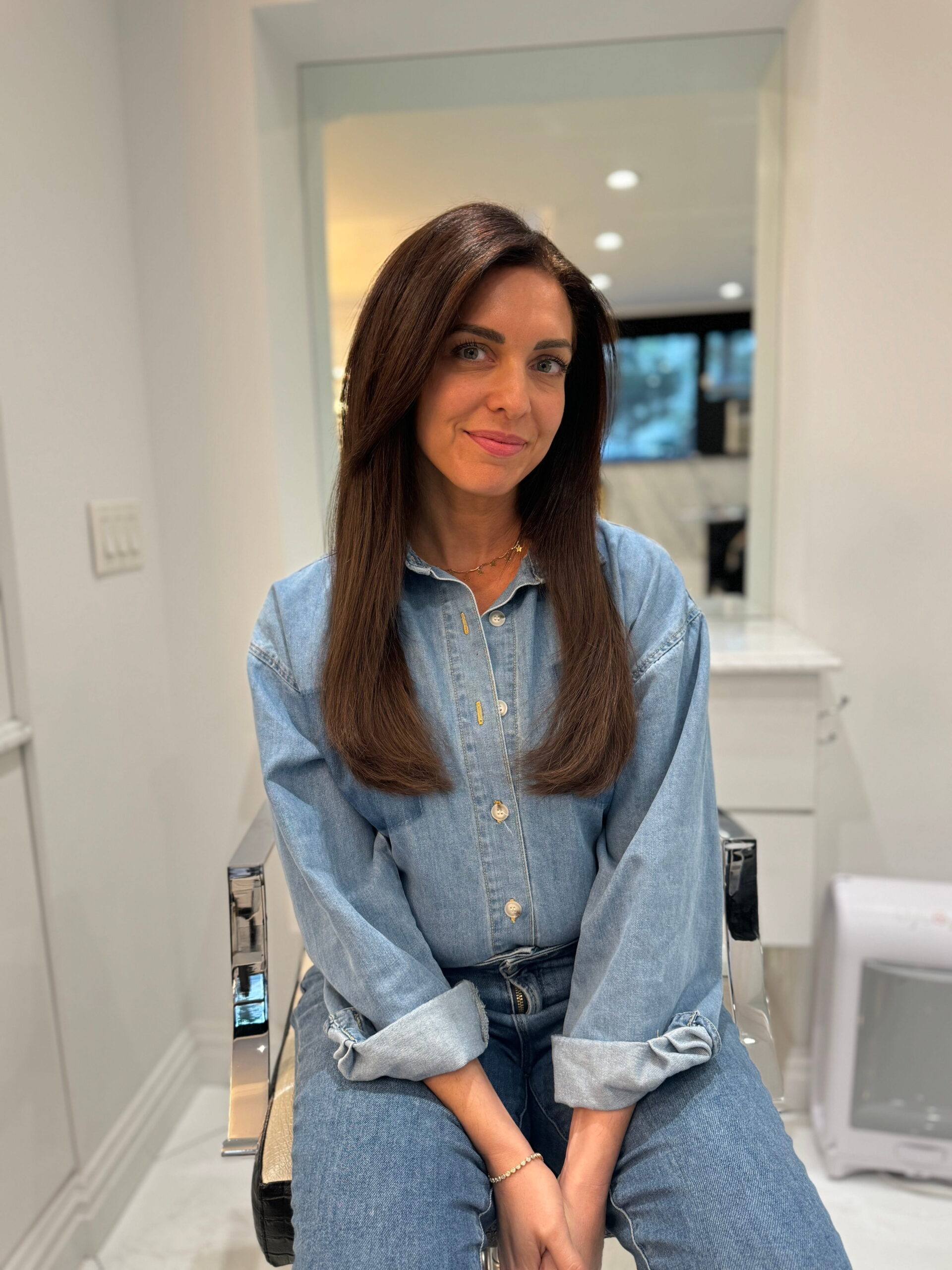
I-tip extensions, applied by an experienced specialist using well-matched hair, consistently produce the most natural-looking result currently available.
Individual strand application means placement can be tailored precisely to the architecture of the natural hair, following its growth pattern, matching its density, and layering in a way that mimics how natural hair actually grows. There is no track to reveal in an updo, no tape line visible when the hair parts unexpectedly, no bulk at the root that creates a visible transition between natural and extension hair.
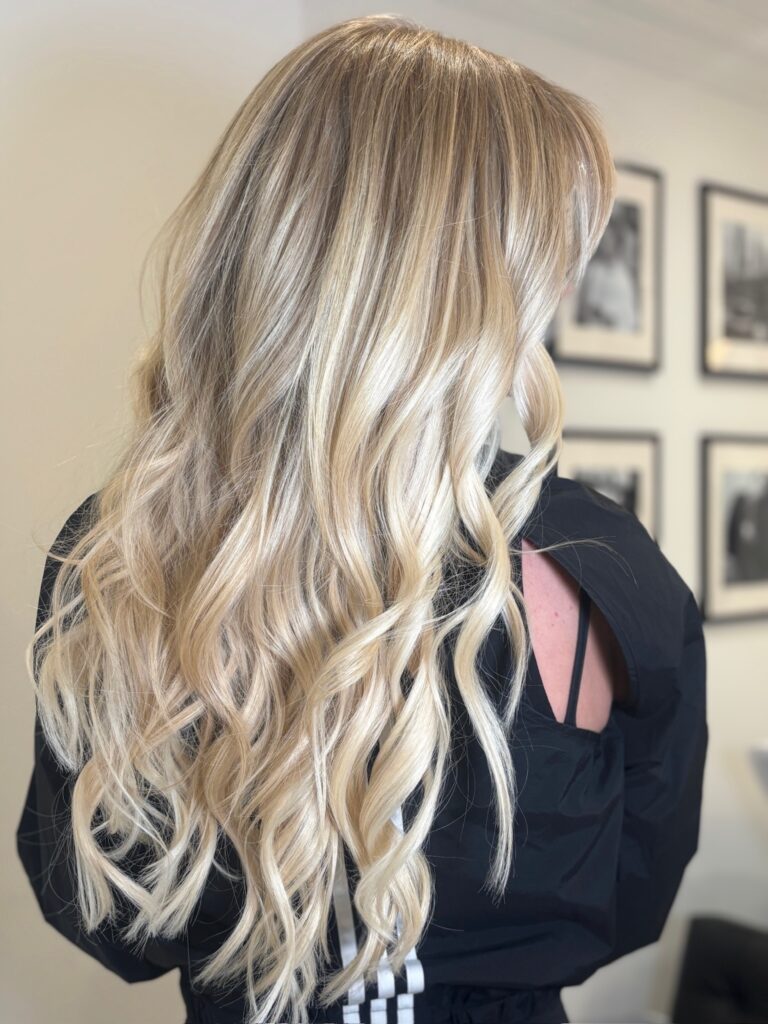
Color matching and texture matching are equally important to the final result. Extensions sourced in a single flat tone will rarely integrate seamlessly with natural hair that has dimension and movement through the mid-lengths. A specialist who takes color seriously, assessing in natural light, working with dimension rather than against it, produces a result that raises no questions in any light, from any angle, in any style.
Are i-tip extensions worth it?
For the right client, yes—without reservation.
The investment in i-tip extensions using quality hair is higher than most other methods at the point of installation. What that investment buys is a wear cycle of up to 12 months, a result that is genuinely indistinguishable from natural hair, a maintenance process that introduces no heat or chemicals at the root, and an installation that—applied by a true specialist—doesn’t compromise the health of the natural hair beneath it.
The clients for whom i-tips are most clearly worth it are those who have tried other methods and found them wanting, those with fine or thin hair who need a method that distributes weight intelligently, those with active lifestyles and high styling demands, and those who simply refuse to accept a result that looks like anything other than their own hair.
The question of whether i-tips are worth it is ultimately a question of what you are comparing them to. Against cheap extensions that last six weeks and require replacement—they are worth it 100%. Against the cost of correcting damage caused by the wrong method on the wrong hair—they are worth it significantly. Against the experience of wearing hair that you never have to think about—that calculation is personal, and it tends to answer itself.
Ready for the Best Hair Extensions in NYC?
The best hair extensions don’t just add length. They add the quiet confidence of knowing your hair is exactly what it should be, in every room, every season and every style.
You’ve done the research. You understand the difference between methods, materials, a salon that offers extensions and a specialist who has made them her life’s work. The next step is a consultation.
A consultation with Christina is where the information on this page becomes specific to you. Your hair, density, lifestyle, and goals. It’s where the right method is determined, the right hair is selected, and the result you have been looking for begins to take shape.
There are no universal answers in extensions. But for the right client, working with the right specialist, using the right hair—there is a result that needs no explanation.
Book your consultation with Christina today.