
Hair Extension Tips

The Difference Between Luxury and Standard Hair Extensions

Welcome back to the blog. We’re Olivia Christensen Salon, and over the last year, we’ve shared numerous posts discussing the differences between hair extension types, the pros and cons of various methods, and debunked the biggest myths about hair extensions. You could say that we know a thing or two about hair… (our founder is, after all, the Hair Goddess of New York).

​While we’ve talked about this topic on various occasions, today we’re going to do a deeper dive into the differences between luxury and standard hair extensions.

​And first, you might be wondering… what makes hair extensions either luxury… or not? Well, it all starts with the hair that’s being used for the extensions.

The Type of Hair That’s In Hair Extensions

You might think this one’s simple — after all, hair extensions are made from… hair, right?

Not always.

When it comes to what’s actually used in extensions, there are two main types: synthetic hair and human hair. And understanding the difference is where quality truly begins.
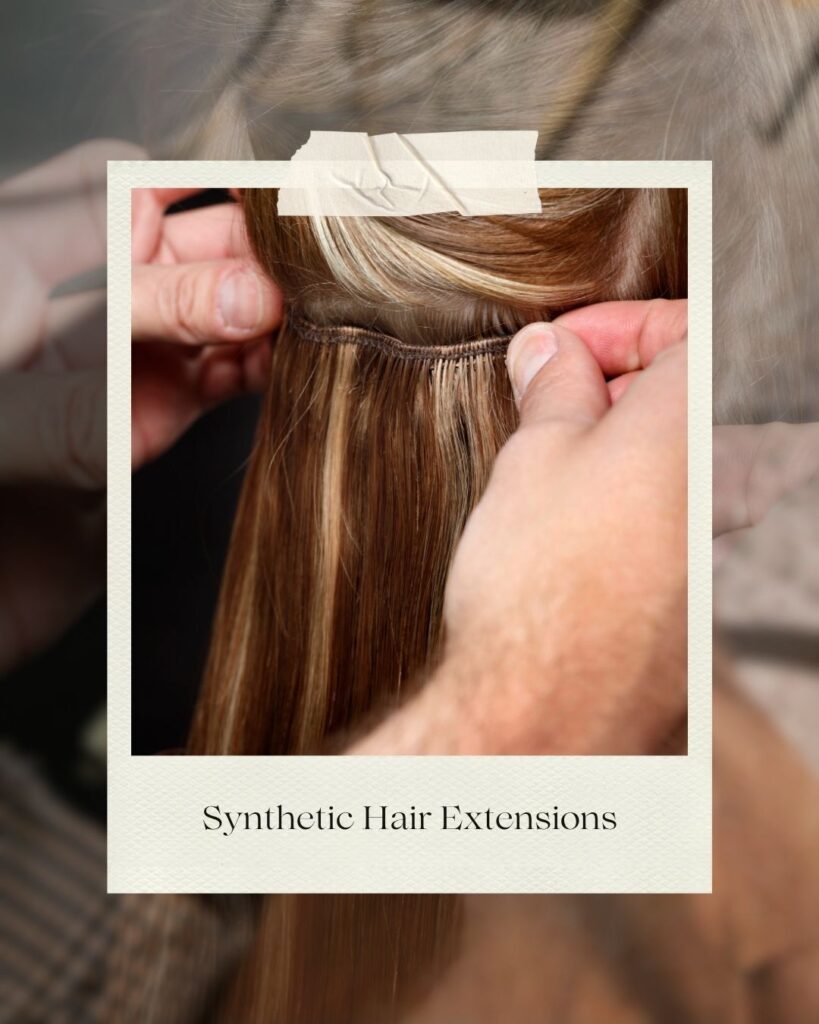
Synthetic hair

By definition, synthetic means “made by chemical synthesis, especially to imitate a natural product.”

In other words, synthetic hair extensions are not real hair — they’re manufactured to look like it.

You’ll typically find synthetic hair in low-quality clip-ins (the kind you see all over Amazon) or inexpensive wigs. But here’s where it gets tricky — some manufacturers use what’s called fallen hair and still market it as “real human hair.”

Fallen hair is collected from salon floors, brushes, and even drains, then chemically processed to make it appear smooth and shiny. Some brands also coat it in silicone to give it a soft, healthy look — but that coating washes away over time, leaving the hair dry, frizzy, and brittle.

Here’s the truth: you can’t create more hair out of thin air. Real, high-quality hair must be grown, collected, and purchased, which naturally affects its price.
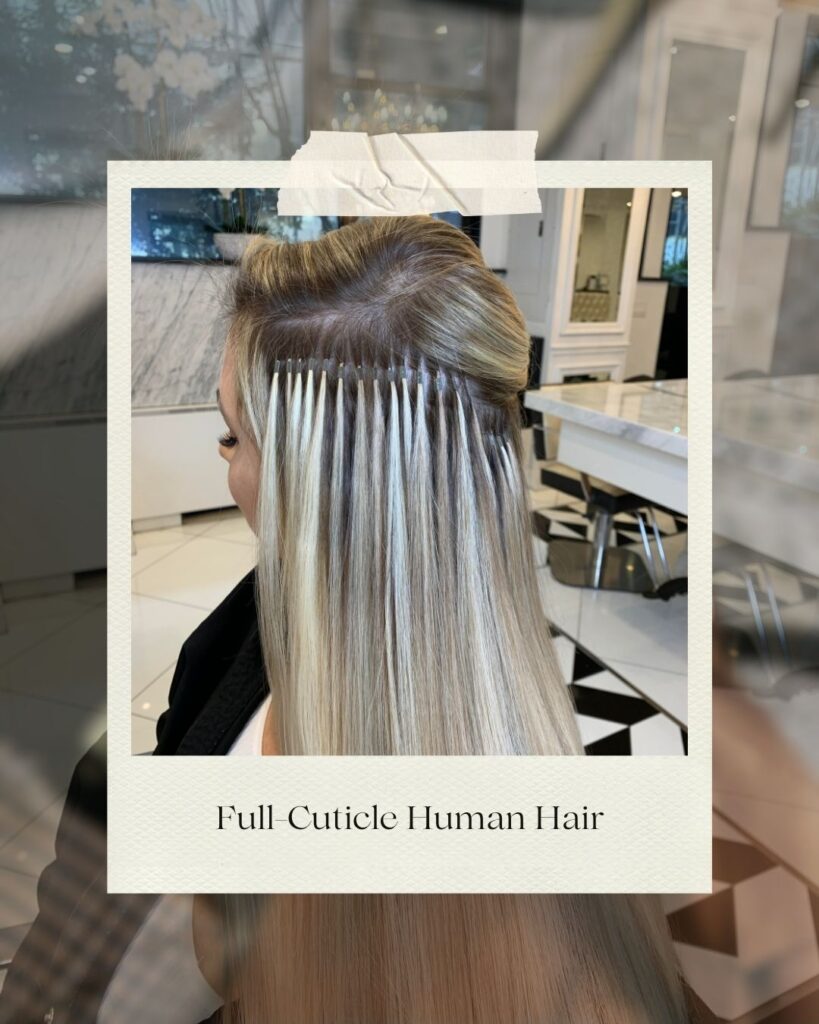
Human Hair

Now let’s talk about the real deal: human hair extensions.

Luxury extensions should always be made from 100% human hair, often referred to as Remy or full-cuticle hair. The gold standard is hair that’s never been chemically treated or dyed — truly natural, unprocessed hair.

Because this hair can’t be manufactured, it will always cost more than synthetic options. But the results speak for themselves.

High-quality human hair moves, styles, and feels like your own natural hair. Your stylist can match the texture, color, and density to your natural hair for a seamless, undetectable blend. It also lasts much longer and can be washed, styled, and maintained just like your real hair — because it is real hair.

If you’ve ever worn extensions, you already know: you can feel the difference the moment they touch your hands.

What Makes Luxury Hair Extensions Different

Luxury hair extensions start with ethically sourced, full-cuticle human hair — and end with expert craftsmanship. Each bundle is carefully aligned to preserve the hair’s natural direction, resulting in smooth, tangle-free extensions that last for years. Unlike mass-produced synthetic options, luxury extensions are designed to blend, move, and feel like your natural hair — because they are real hair.
The Longevity of Luxury vs. Synthetic Hair Extensions

Yes, luxury hair extensions come with a higher upfront cost — but that investment pays off over time. Real human hair extensions not only look and feel better, but they also last significantly longer than synthetic alternatives, making them a smarter long-term choice.

Luxury hair extensions (like ours) are designed to last for years when properly maintained. When you take care of your hair, it takes care of you — staying soft, silky, and beautiful through countless wears and styles.

Synthetic extensions, on the other hand, degrade quickly. They lose their luster, tangle easily, and can’t handle heat styling or color the way human hair can. If you’ve ever spotted extensions that looked overly shiny, stiff, or obvious — chances are, they were synthetic.

Durability is another key difference. Once synthetic fibers break down, there’s no way to restore them. Human hair extensions, however, maintain their integrity, softness, and shine far longer because they’re made from real hair. That means you can wash, style, and care for them much like your natural hair — and enjoy that seamless, effortless look for months (or even years) to come.

Are Luxury Hair Extensions Worth It?

Yes. Absolutely, yes.

Luxury hair extensions not only elevate your look — they protect your natural hair, promote growth, and maintain their beauty far longer than synthetic alternatives. They style just like your own hair, meaning you’ll never have to compromise on your signature look.

Trust us — luxury extensions don’t just add length and volume; they add confidence.

Another reason stylists (and clients) love them? Every bundle can be custom-blended to perfectly match your natural hair color, texture, and density. The result is seamless, natural movement that turns heads for all the right reasons.

It’s the Birkin of Bundles — refined, timeless, and absolutely unmatched.

FAQs About Luxury Hair Extensions

  • How long do luxury extensions last? With proper care, our luxury extensions can last up to 1–2 years.
  • Can I color my extensions? Yes — since they’re 100% human hair, your stylist can custom tone or color them for a perfect match.
  • Do luxury extensions damage your natural hair? Not when installed and maintained correctly. In fact, our lightweight i-tip method protects your natural hair while it grows.

Ready to see the difference for yourself? Book a consultation with our founder and experience the beauty of truly luxurious hair.

Read next: 7 Lies You’ve Been Told About Hair Extensions (And What to Believe Instead)

Beauty

Tape-In vs. I-Tip Extensions: Which Is Better for Summer?

Summer is finally here! And we couldn’t be more excited. This is the season of beach days, weddings, rooftop parties, and effortless beauty. If you’ve been thinking about leveling up your hair with extensions, the timing couldn’t be better. 

But before your transformation begins, you need to answer one big question: tape-in vs. i-tip extensions–which is better for summer? 

Both styles have pros and cons, but one holds up better regarding sweat, saltwater, humidity, and all the heat-filled plans on your calendar! At Olivia Christensen Salon, we specialize in high-end i-tip hair extensions, and we’re breaking down exactly why they’re our top pick for summer styling.

Tape-In vs. I-Tip Extensions: Which Is Better for Summer?

While there are many ways to install hair extensions, today we’re focusing on two of the most popular methods: i-tip vs. tape-in extensions. These are the styles we get asked about most, especially when summer rolls around. 

Curious about other extension types? We’ve broken down the pros and cons of each here.

Now let’s dive into tape-in vs i-tip extensions for summer.

1. Installation & Maintenance

One of the most significant differences between tape-in and i-tip extensions is how they are installed and how well they hold up over time.

Tape-Ins:

  • Quick install time
  • Can loosen with sweat, swimming, or heat
  • Heavier on your natural hair, which may cause damage over time

I-Tips:

  • Longer install process—but longer lasting
  • No tape, glue, or heat required
  • Lightweight and gentle on your natural hair
  • Stay secure during workouts, beach days, and long travel days

You need extensions that can keep up with your lifestyle. No slipping, no loosening, no high-maintenance touch-ups. With i-tip extensions, you can hit the gym, dive into the ocean, or hop on a flight without giving your hair a second thought.

2. Styling Versatility

Another big difference between i-tip and tape-in extensions is how you style them, especially on hot, humid days when you want to pull your hair back. 

Tape-Ins:

  • Limiting when you wear your hair up
  • May peek through in ponytails or braids

I-Tips:

  • Fully customizable placement
  • Easy to wear up, down, or in a messy bun
  • Great for events, weddings, travel, and day-to-day wear

If there’s ever a time of year when you want the versatility to style your hair up and down, it’s summer. That’s where i-tip hair extensions shine. From high ponytails to boho braids and effortless half-up styles, you can confidently wear your hair however you want this summer.

3. Water & Sweat Resistance

Summer fun means sunshine, sweat, saltwater, and humidity—not all extensions are built to handle it. Water and sweat resistance should be at the top of your list if you’re choosing extensions for the season. Here’s how tape-ins compare to i-tips for summer. 

Tape-Ins:

  • Adhesives can break down with frequent swimming or sweating
  • Not ideal for humid climates or active lifestyles

I-Tips:

  • Bonded with tiny beads (no tape!)
  • Hold strong through beach days, workouts, and summer humidity

We’re not exaggerating when we say our i-tip extensions move and feel just like your natural hair. You live an active life, especially in the summer, and your extensions should keep up with you, not slow you down. For sweat-proof, swim-proof, effortlessly chic hair all season long, i-tips are the way to go.

4. Natural Look & Feel

Both options can look natural… but it depends on the quality and application. Truly, i-tips offer greater flexibility for customization, meaning a more flawless blend and movement that holds up all summer. 

At Olivia Christensen Salon, we only use 100% full-cuticle human hair that we custom blend and precisely install to match your hair type and goals. 

The verdict? I-tip hair extensions are the winner for summer. While tape-ins might work for specific clients, i-tip extensions are our top pick. They’re secure, long-lasting, and can handle heat, sweat, and saltwater. With i-tips, your extensions keep up with your lifestyle, and you never have to worry about sacrificing style or comfort. 

Thinking About Extensions for Summer?

Book your consultation at Olivia Christensen Salon, and let’s create your perfect summer look. Whether you’re headed to Europe, the Hamptons, or just want that effortless hot-weather glam, we’ve got you covered.

Beauty

Common Hair Extension Questions

Welcome back to Olivia Christensen Salons. We’re passionate about helping women regain their confidence and fall back in love with their hair, through our high-quality real-human hair extensions. Today we’re going to be answering your TOP hair extension questions!

Since our early days, our founder Christina has developed a unique technique for installing and maintaining beautiful hair extensions. We love seeing each of our client’s transformations and it turns out that you love seeing those transformations as well! 

Over on Instagram, we’ve been collecting your top questions about hair extensions – and today we’re finally going to be answering them all for you. Keep reading to get your hair extension questions answered!

Common Questions About Hair Extensions

How long do hair extensions last?

First things first, how long do hair extensions last? This is probably one of our most asked questions. We source high-quality, real-human hair extensions which means they can last up to 1-2 years with expected upkeep and regular maintenance appointments every 4-8 weeks. 

During regular maintenance appointments (every 4-8 weeks) we remove the extension strands, comb through the shedded hair, and retip and install your extensions. This ensures the highest care for your hair and extensions!

How much do hair extensions cost?

The price of hair extensions varies depending on where they’ve been sourced and what type of hair extensions they are. At Olivia Christensen Salons, we install microbead or i-tip extensions with our unique blending technique which means you’re getting the most natural, lightweight extensions on the market. Our hair extensions cost between $1,500-$6,500. 

Are hair extensions heavy?

A lot of hair extensions tend to be extremely heavy – but that’s what makes our technique so unique. We hand blend bundles of hair to attach to your natural hair with i-tips. This means we’re able to use smaller bundles, evenly dispersed across your natural hair. This is extremely lightweight, especially compared to other techniques. 

How do hair extensions stay in your hair?

The strands are individually beaded through your natural hair. We take the hair extension strands and securely clamp them to strands of your natural hair using i-tips. This means no heat, glue, or damage to your natural hair. 

Will the hair extensions match my natural hair color?

That’s another part of our technique that is so unique! Because we carefully bundle your extension strands to your natural hair, we’re able to custom color blend multiple colors in one strand for an identical color match. This hair extension technique ensures you have the most natural-looking extensions possible

Can I style my hair extensions like normal?

Yes! You can style your hair extensions using any hot tool of choice. We source our hair from Eastern and Western Europe and match it directly to your texture helping you to style your hair like normal. Since our hair extensions are 100% full cuticle human hair, you can treat it just like your natural hair. 

Can I exercise with my hair extensions?

Yes, you can work out with our hair extensions! We always highly recommend washing your hair after an intense workout. If you are the type to sweat excessively on the scalp, then we recommend washing your hair after each workout. However, if the workout is light (for example, Pilates) then you wouldn’t need to wash your hair after. 

This is simply because our hair extensions are applied using a small capsule (called a microbead) and any sweat or natural oils could cause the hair extensions to slip out. 

How long do the hair extensions take to install?

You can expect to spend 1 hour in the salon having your hair extensions installed. 

How do I care for my hair extensions?

We recommend washing your hair 2-3 times per week to avoid any oil buildup on your scalp. You can get regular blowouts and style your hair like normal using any hot tool. 

We also recommend braiding your hair at night and sleeping on a silk pillowcase. We carry a small curation of products and brushes that we recommend our extension clients use. If you’d like to learn more about the products and brushes that we recommend, let us know and we can do a post on that specifically! 

How can I book my first hair extension appointment?

The first step is to book a consultation with us! At your consultation appointment we’ll discuss the goals you have with your extensions, we’ll also be able to answer any additional questions that you have and make a plan for your hair extension installation. 

You can book your consultation appointment here.

Don’t forget to follow us on Instagram @oliviachristensensalon to get inspired by our recent client’s hair extensions. We can’t wait to help you with your transformation! 

Hair Extension Care

Different Hair Extension Techniques

We’ve shared before that not all hair extensions are created equally. At Olivia Christensen Salons, we always use the highest-quality, real human hair for our extensions, but the quality of hair extensions and the various hair extension techniques can vary wildly across the industry. In fact, this recent post exposed some of the darker sides of the hair extension industry.

Today we’re going to dive into the various hair extension techniques so you can get a clear idea of what style is right for you. 

Different Hair Extension Techniques

These are the most typical or popular hair extension installation methods: 

  • Clip-In
  • Halo
  • Tape-In
  • Sew-In (Weft/Weave)
  • Keratin Fusion (K-Tips)
  • Microbead Extensions (I-Tips)

Each of these hair extension techniques can be divided into three main types: 

  • Temporary: are taken in and out daily
  • Semi-Permanent: lasts for 6-8 weeks
  • Permanent: remain in your hair for a couple of months

Of course, there are pros and cons to each of these different hair extension techniques, so let’s dive in a bit further. We will start with temporary extensions and move our way into the more permanent extension techniques. 

Clip-In Extensions

Clip-in hair extensions are a type of hair extensions where the hair is attached to a clip, that is then clipped into your hair. Because clip-in extensions are usually mass-produced, it’s important to know where that hair comes from. Here we shed more light on why human hair extensions simply can’t be mass-produced. 

Also, because clip-in extensions tend to be mass-produced, this hair extension technique won’t match your hair perfectly – each strand won’t be blended to match your natural hues and shades. This means that they often look like extensions, instead of looking like real hair. 

The biggest con about clip-in extensions is that they can cause hair loss, especially for anyone with thin/fine hair. My client with baby-fine hair was using clip-in extensions which ended up causing bald spots from hair loss. 

The pro of clip-in extensions is that they can be taken in and out at home, which means you can play around with length and style whenever you want to wear your extensions. They also tend to be the cheapest hair extension technique. 

Clip-in extensions should last for years with proper care because you’re able to take them out and keep them brushed, cleaned, and stored properly. 

Halo Hair Extensions

Halo hair extensions are very similar to clip-ins, but in our professional experience, we recommend these above clip-ins. Halo extensions are worn like a headband, which means they’re less damaging than clip-ins that weigh your hair down and cause hair loss. 

They’re made up of multiple wefts sewn together to create a thicker weft. You then wear it under your natural hair like a headband. You’re able to take these extensions out each evening, meaning with proper care they should last for years. 

However, because Halo extensions are pre-made unless your hair is in one natural color, they’re not going to match perfectly. As with clip-in extensions, halo extensions make it look like you’re wearing extensions as opposed to more natural hair extension techniques. 

Tape-In Extensions

Tape-in extensions are a semi-permanent extension solution that came on the scene after clip-ins. They’re 1-1 ½ inch sections of hair that are pre-taped. Then a stylist will use a medical grade glue to attach the extensions to your natural hair.

This is not a DIY extension technique, you do need to have them professionally installed. They need to be applied to clean, dry hair to ensure that the adhesive sticks and is sandwiched between your natural hair. However, they’re a fairly easy installation process requiring no tools or chemicals. 

Tape-in extensions will last anywhere from 8-10 weeks depending on your natural hair growth and the quality of the extensions. It’s important to note that they also need to be taken out by a professional, using a specific tape-in remover solution. 

It’s recommended that you buy the extensions “pre-colored” because the tape cannot get wet. This means this hair extension method will not likely match your hair perfectly. 

Sew-In Extensions (Weft/Weave)

Sew-in extensions are often referred to as a weft or a weave. They’re a hair extension technique where the strands of hair are sewn onto a super-thin cloth strip that is attached to your head. 

There are hand-sewn and machine-sewn weft extensions. Machine sewn extensions are cheaper because they’re made faster while hand-sewn extensions will take longer but can be better customized to your hair. Once again, you will need to have these extensions installed by a professional, if they’re installed incorrectly they can cause headaches and hair loss. 

In all the years our founder Christina has worked as an extension specialist, she has seen a lot of hair loss/tension from wefts sewn into her client’s natural hair. This happens because the wefts are bulky and heavy. They weigh down your natural hair, causing tension and alopecia. 

Sew-in extensions will usually last around 6-8 weeks depending on how you care for them and how quickly your hair grows. 

Keratin Fusion (K-Tips)

Keratin fusion or K-tip extensions stand out as a hair extension technique because they use keratin bonds to attach individual strands of hair to your hair. They’re called ‘Keratin’ but the bonds are still made with glue. The term ‘keratin’ is misleading because it often leads clients to believe there won’t be any damage to their natural hair – but glue is typically more damaging.  

With this technique, your stylist can create unique strands of the extension hair to perfectly match your natural hair. When the technique is done correctly, you should be able to wear these extensions for 8-12 weeks without the hair slipping down. 

Microbead Extensions (I-Tips)

Lastly, we have microbead extensions, which are the style of extensions that we use at Olivia Christensen Salons. We take individual strands of hair to create bundles that we then bond together. These become your extensions, that then get beaded onto the natural strands of your hair. 

To see an example of what this looks like, watch this video

Like keratin fusion, this technique allows our stylist to perfectly blend your natural hair with your extensions. With microbead extensions, you can do everything you would normally do with your hair, especially because we only use the most high-quality, human hair. 

This ensures that your extensions behave exactly like your natural hair. Our clients need to come in for regular maintenance appointments (every 6-8 weeks) but because we rebond the extensions each time, your extensions should last for 1-2 years. This technique is truly unmatched in the industry. 

Microbead extensions are the safest and most natural way to achieve fuller, longer hair with extensions. When it comes to the pros and cons of various extension techniques – the only con you might find for microbead extensions is the cost. They are going to be the highest cost extensions on the market, but like we always say “Quality isn’t expensive. It’s priceless.”

When it comes to the various types of hair extension techniques, you might be tempted to cut corners and choose a more cost-effective method. When you’re just starting out on your extension journey and you’re not sure you want something permanent, that’s OK. 

But when you’re ready for natural-looking extensions, microbead (i-tips) is the best direction you can go in. 

Wefts v.s. Microbead (I-Tips)

When it comes to the age-old question of wefts vs microbead extensions, we can tell you that wefts tend to be heavy. We often hear from clients when we help them switch from a weft that our microbead technique makes their head feel lighter and can help with occasional headaches caused by the weight of previous extensions. 

We also know that all that weight isn’t healthy for your natural hair. Our microbead technique keeps your extensions light and doesn’t cause tension on your natural hair. 

If you’re ready to make the switch, or you’d like to explore getting extensions for the first time, make sure to book a consultation with us today. For more hair extension inspiration and recent updates from our team, follow us on Instagram @oliviachristensensalon and our founder Christina @hairgoddessofNY