
Are i-tip hair extensions better than k-tips? It’s finally here: the definitive guide to the two types of hair extensions most people confuse and think are interchangeable. So, let’s answer the question together and compare i-tips to k-tips. Grab a cup of coffee because this is going to be a long one.
We’ll start by saying that i-tip extensions are different from k-tips. While they’re both ‘strand-by-strand’ methods, i-tips are installed using a small bead that attaches your natural hair to the extension hair, and k-tips are attached using heat-fused keratin protein bonds.
That’s not the only thing that sets these two hair extensions apart. In fact, the only thing they have in common is that they’re strand-by-strand methods, and they’re most often marketed in an upscale, luxury fashion, but more on that later.
At Olivia Christensen Salon, we specialize in luxury i-tip hair extensions, and we’ve worked with thousands of women seeking natural, seamless extensions. While we truly believe i-tips are the best extensions on the market, we’ll outline the facts in this post so you can decide for yourself.
In this guide, we compare i-tip extensions to k-tips, break down the pros and cons of each method, and help you decide which one is right for your hair type, lifestyle, and goals.
If you’re interested in learning more about other hair extension techniques, you can read this article next.
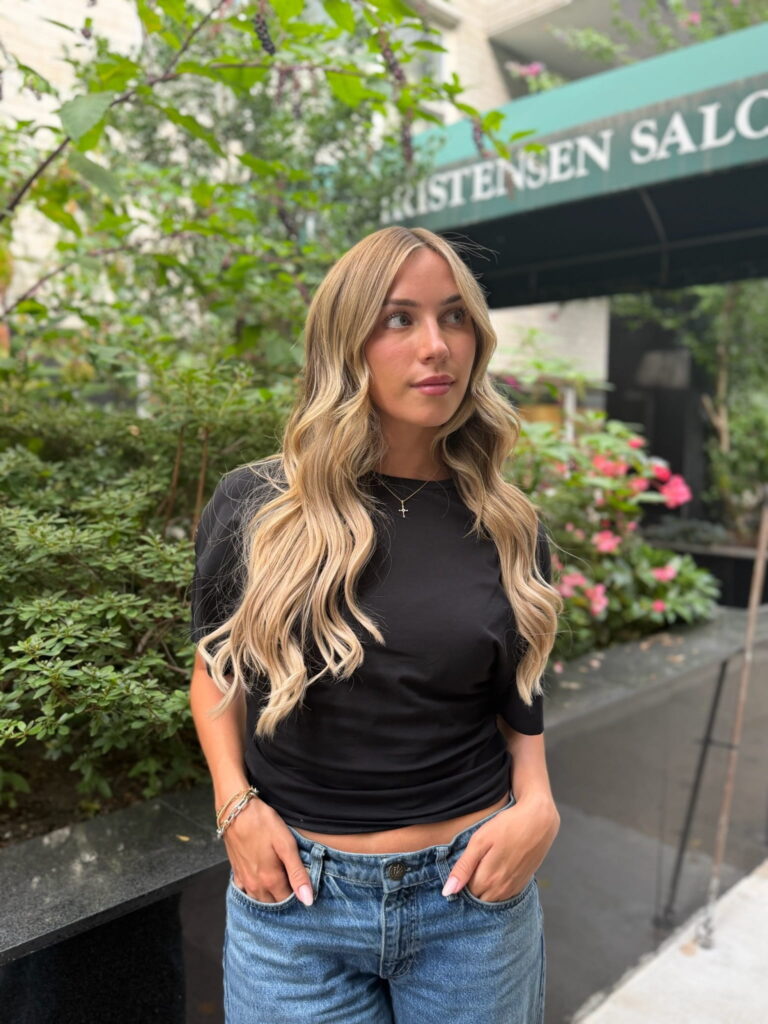
I-Tip Hair Extensions vs K-Tip Hair Extensions at a Glance
| Method | K-Tips | I-Tips |
| Lifespan | 4-6 months | Up to 12 months (with proper care) |
| Reusability | No, new hair everytime | Absolutely |
| Blend | Seamless | Seamless |
| Maintenance | None | Every 4-6 weeks |
| Heat application | Yes (keratin melting) | No heat required |
| Comfort | Lightweight | Lightweight |
| Styling freedom | Complete versatility and customization | Complete versatility and customization |
As you can see from that table, these two hair extension types share a lot in common. I wouldn’t lie and say K-tips are harder to install or less comfortable than I-tips just because we prefer that method; I will tell you that I-tips are reusable and use absolutely no heat, because those are the facts. Now let’s dive a little deeper.
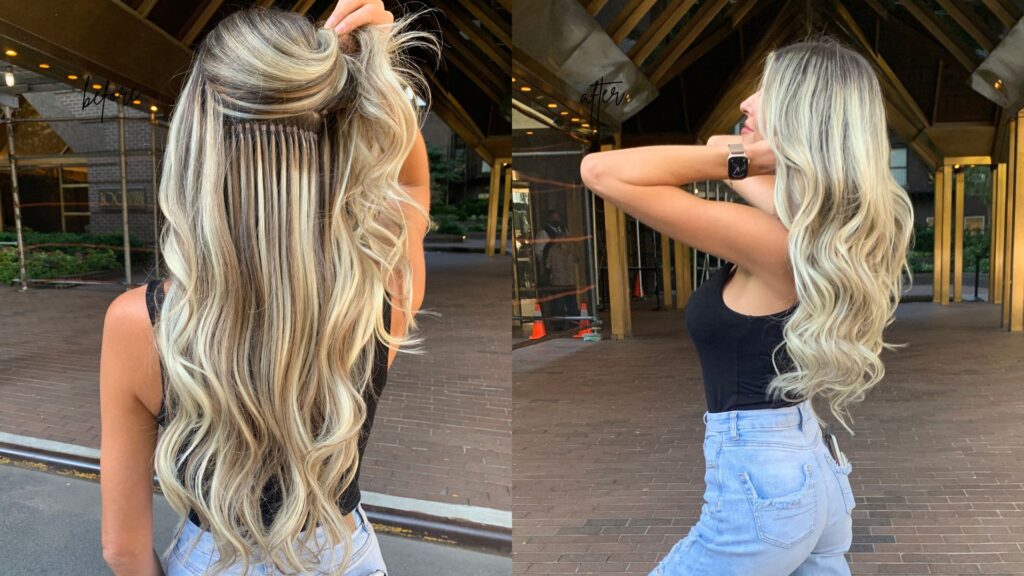
What Are I-Tip Hair Extensions?
Let’s start with the basics: what are i-tip hair extensions? We briefly touched on this, but i-tips are a strand-by-strand extension method that uses small bundles of hair attached to your natural hair with beads.
This is the only hair extension method that doesn’t use heat, glue, or harsh chemicals to attach extensions to your natural strands. That makes it the safest method, especially for women with thin or fine hair.
And we’re not just making claims here. We’ve been in the hair extensions industry for over 10 years, and during that time, we’ve seen women come to us with hair damaged by each extension method out there.
This is what makes us so passionate about i-tips. Beyond our passion, i-tips blend seamlessly, are completely customizable, and are gentle on your hair. In terms of customization and blends, they’re about as customizable as K-tips because the strand-by-strand method allows for that.
Benefits of I-Tip Hair Extensions
There are many reasons why clients choose i-tip extensions over other methods, including:
- Highly customizable placement and density
- No glue, tape, or heat required
- Natural movement and seamless blending
- Lightweight and comfortable to wear
- Ideal for ponytails, braids, and updos
- Reusable hair for multiple installations
- Suitable for a wide range of hair types
Our clients come to us because they want the most natural-looking extensions that add believable length and volume without compromising their natural hair. Our absolute FAVORITE thing to do is brag about how much our hair extensions actually help your natural hair grow. And yes, it’s a brag–we know. But when your clients keep coming back with healthier, longer natural hair, you can’t help but shout about it.
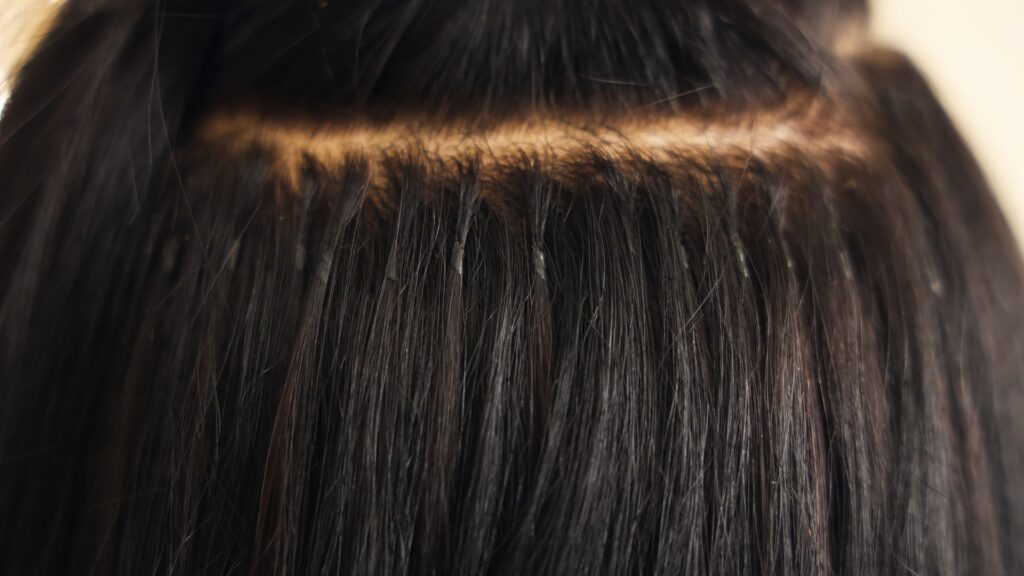
What Are K-Tip Hair Extensions?
K-Tip hair extensions are another strand-by-strand extension option on the market. Like i-tips, they’re extremely customizable and lightweight. The difference is how they’re installed.
At the end of K-tip bundles, there is a tip called a keratin tip. It’s heated up and melted onto your natural hair. The extensions stay in your hair for 4-6 months, and when it’s time to remove them, we remove the bond with a specialized chemical that melts the keratin bond.
The tool used to attach the extensions must be used carefully because you’re installing them directly at the root, where we’ve seen damage in our clients. We’ve also seen damage when extensions are removed: the natural hair breaks away with the extensions, reducing overall hair health.
Benefits of K-Tip Hair Extensions
There are several reasons why some women prefer K-tip hair extensions:
- Customizable and lightweight (so similar to i-tips in that manner)
- Less frequent visits to the salon. Because K-tips aren’t removed and reinstalled, there are no maintenance appointments
- Natural movement
- Suitable for a wide range of hair types (but with that, we wouldn’t recommend thin, fine, or damaged hair because the heat and glue can cause more damage and significantly stop your natural hair from recovering)
That said, K-tips can be absolutely beautiful when installed correctly. The key is choosing a skilled professional, high-quality hair, and natural hair that can withstand the heat of installation and chemical removal.
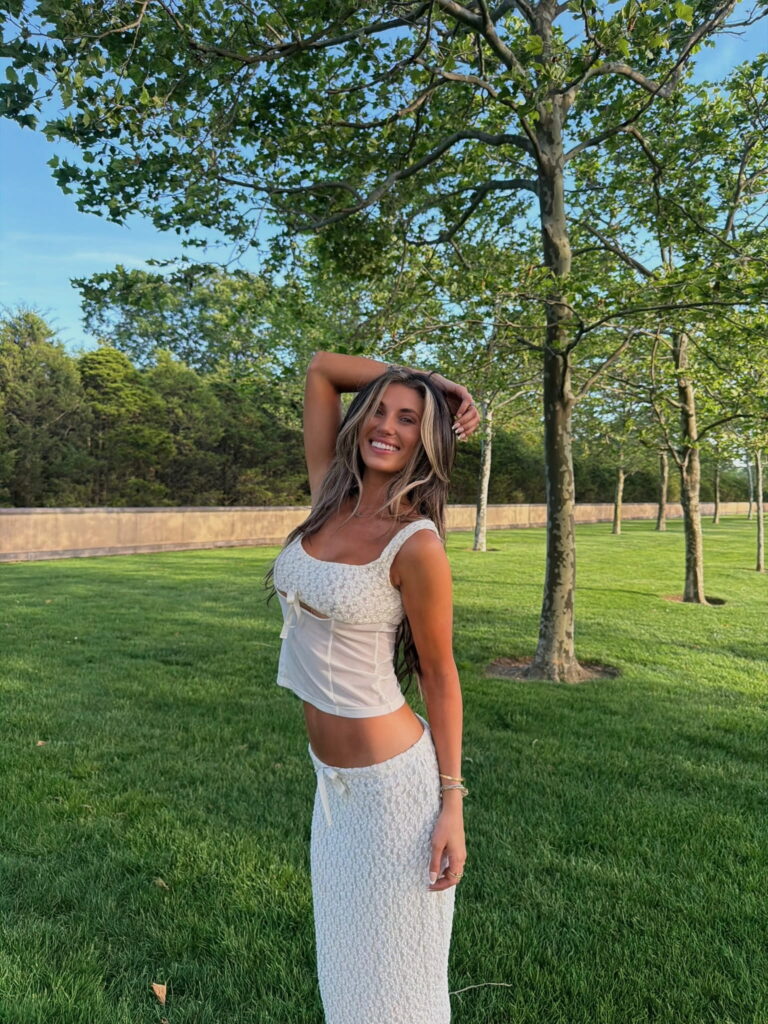
I-Tip Extensions vs. K-Tips: The Biggest Differences
Now that you know how both extension methods work, let’s compare them side by side.
1. Installation
The biggest difference between i-tips and k-tips is how they’re installed. As you know, i-tips use a small bead to attach the bundles to your natural hair. This bead is safe on your hair, requires no heat, and is easy to remove and replace. Occasionally, bundles will fall out; when they do, please hold on to them until your next maintenance appointment, when we’ll reinstall them.
K-tips are installed using a tip that’s melted onto your natural hair near the root. So let’s talk about that, because when people here have them installed with a keratin bond, they automatically think there’s no way it can be unsafe for your hair because keratin is so good for your hair.
Keratin is the protein that’s naturally found in our hair. K-tip extensions have a small bead of keratin blended with resin and often sealed with silicone, and when you find hand-bonded K-tips, you know they’re usually crafted with the highest-quality ingredients and the highest price tag. The problem with K-tips usually comes from factory-made extensions, where they focus on quantity over quality, something you absolutely want to avoid with hair extensions.
So what’s the verdict: I-tip extensions win for their no-heat, no-glue, no-chemical installation.
2. Maintenance
Maintenance is another area where these two extensions differ. With i-tips, the beads will naturally move down your hair as it grows. We bring you into the salon every 4-6 weeks (depending on how fast your hair grows) to remove and reinstall the extensions. This means we remove the extensions, comb out the hair fall, and reinstall them. These appointments are quick but vital for prolonging your extensions’ life and supporting your hair’s health.
K-tips, on the other hand, are installed once. You don’t come in for maintenance because you can’t remove and reinstall the hair. They grow as your natural hair grows, and when your natural hair gets too long, or your hair falls to the point where you need to remove the extensions, that’s the end of their life.
Verdict: K-tips because they have no maintenance at all (but they don’t last as long–more on that in the next point)
Learn more about hair extension maintenance in this post.
3. Longevity
With high-quality hair, proper maintenance, and a good at-home care routine, you can reuse your i-tip extensions for up to 12 months. In fact, most of our clients reuse their hair for 12 months. That is why it’s so important to invest in good hair, because it’s the difference between long-lasting, seamless extensions and extensions that can’t be reused as long (or don’t look as natural).
K-tips last around 4-6 months, depending on how fast your hair grows and how you care for them. Again, hair quality plays a big role, and so does whether you choose factory-processed K-tips or a bespoke, hand-melted salon.
Verdict: With i-tips, you can usually more than double the life you get out of the hair.
The Bottom Line
All in all, those are the biggest differences between i-tips and k-tips. When it comes to weight, styling versatility, and comfort, they should be pretty equal because they depend more on the strand-by-strand method and hair quality than the method itself.
The biggest takeaway from both methods is that hair matters, and so does the salon.
Which Hair Type Is Best for I-Tips?
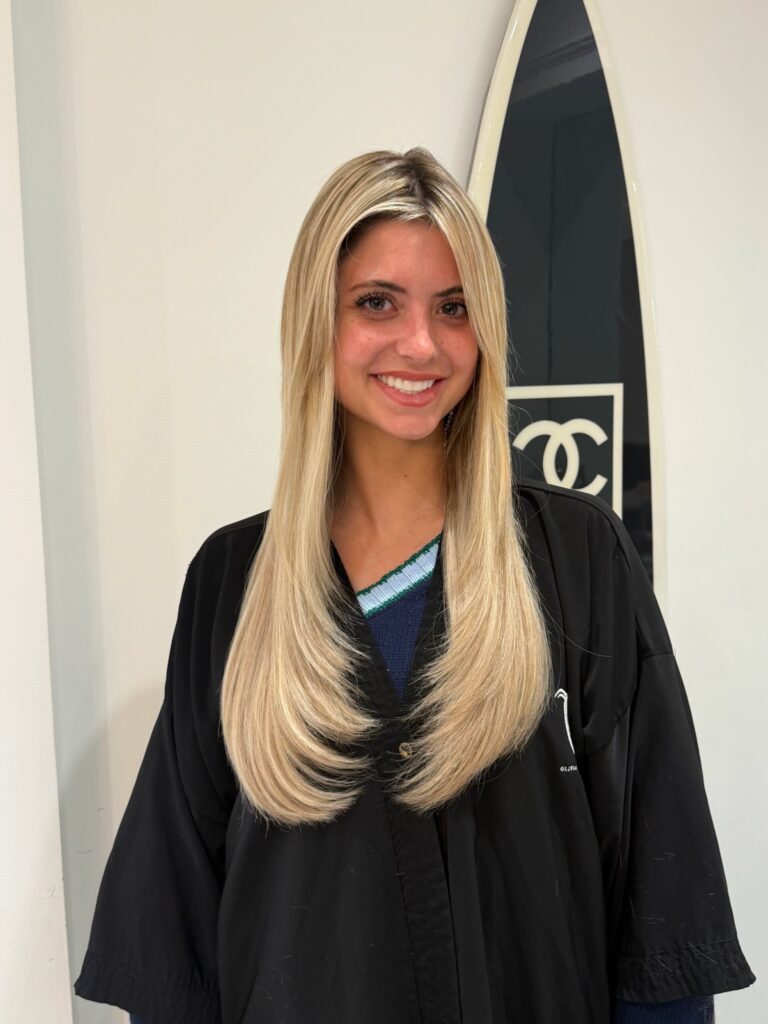
When women come to us asking about what hair extension method is right for them, we always start with their hair type. Goals, customization, density, and lifestyle play a role, but a big factor is whether you have thick or thin, fine or coarse hair. For this reason, your hair and the extension method you choose should never be one-size-fits-all.
I-Tips Are Ideal For:
I-tip extensions are especially well-suited for:
- Fine hair
- Thin hair
- Medium-density hair
- Clients wanting invisible, undetectable extensions
- Clients looking for maximum customization and precision placement
Because i-tips are applied strand by strand, your stylist can work with your natural density rather than against it. This makes them particularly effective for creating fullness without adding unnecessary weight or bulk, especially in finer hair types.
For clients concerned about extensions being visible or feeling heavy, i-tips often provide the most natural-looking and comfortable result.
Which Hair Type Is Best for K-Tips?
Again, choose the method that’s best for your hair type, and because K-tips are another strand-by-strand method, the answer is pretty similar to i-tips. That said, we wouldn’t recommend K-tips to women who already have fine, damaged hair. Don’t add the additional heat strain to your hair–when you can choose a method that.
K-Tips Are Often Better For:
- Medium-density hair
- Clients wanting invisible, undetectable extensions
- Clients looking for maximum customization and precision placement
Keep in mind that neither of these extension methods is inherently better. So much of the decision comes down to your hair type, your goals, your budget, and your lifestyle. However, for the widest range of women, i-tips tend to win, simply because they are so safe on your natural strands.
If you want fast volume, neither method wins. If fast volume is your goal, we recommend this guide comparing i-tips to wefts, another popular hair extension method.
At Olivia Christensen Salon, we focus on creating results that feel seamless, sustainable, and fully tailored to each client. In many cases, that means recommending i-tip extensions for their flexibility and natural finish, but we always tailor the consultation to find the best fit for you.
Why We Prefer I-Tips for Luxury Hair Extensions
Throughout this post, there’s been a lot of back-and-forth and, honestly, a lot of saying these two hair extension methods are pretty similar, and that’s because they are. But we prefer i-tips as the luxury hair extension method because they are safe for all hair types, and we mean all hair types.
We install and remove them without heat, glue, or harsh chemicals. They are lightweight and completely customizable to your hair type, density, length, and lifestyle. We cannot tell you how many women come into our salon with a bob and walk out with 22 seamless inches. Just watch this video if you don’t believe us.
And we love that you can reuse the hair for up to a year. Simply put… what other hair extension method lasts 12 months? We can’t think of any. Yes, you have to come in for regular maintenance appointments, but that also means we get to see you more, and we get in regularly on the hair. Hair health is one of the reasons women who choose our method see such incredible hair growth over time.
All in all, these two methods share a lot of similarities, but at Olivia Christensen Salon, i-tips are the luxury, high-end result we’re here to help our clients achieve.
Common Myths About I-Tip Extensions
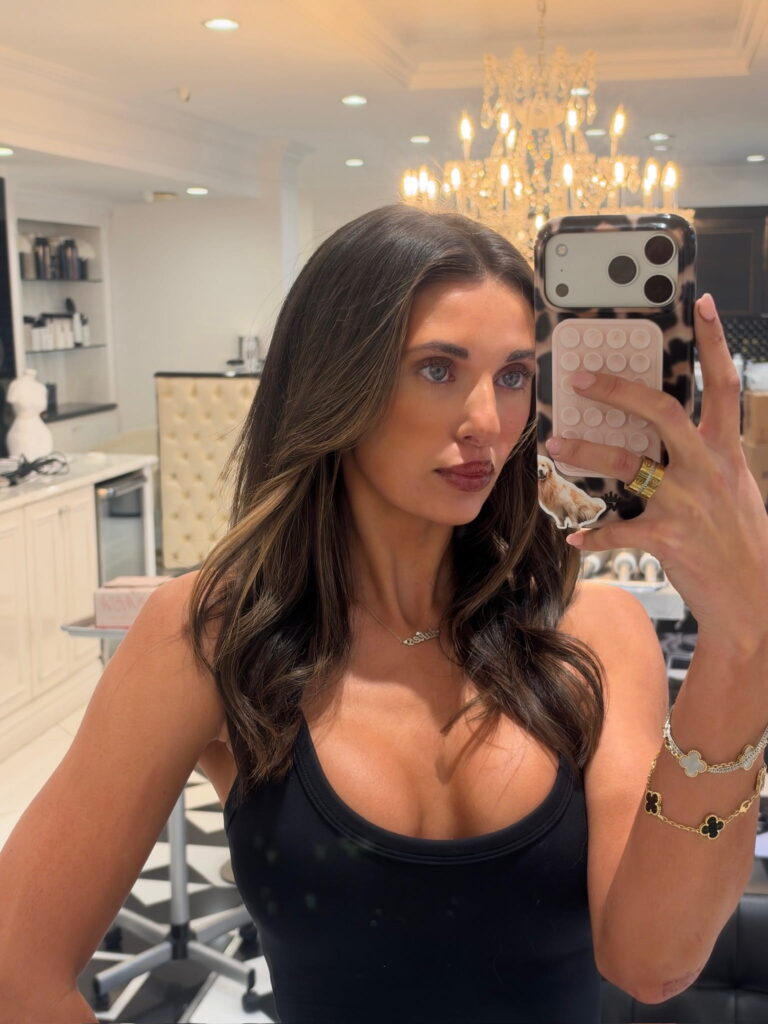
We know there are a lot of myths about i-tips, and we try to cover them in every post because we think you should know the facts, no matter what method you choose.
Myth #1: They Damage Your Hair
When installed incorrectly, every hair extension method can damage your hair. That’s why it is so important to work with a skilled professional at a salon that specializes in extensions. That’s why you should choose a method that uses no heat, glue, or chemicals during installation and removal, because that’s what will protect your hair in the long run.
When i-tips are installed correctly, they do not damage your hair. In fact, they protect your hair and promote natural hair growth—more on that in this article.
Myth #2: They’re High Maintenance
Hair extensions are a high-maintenance way to be low maintenance. Yes, with i-tips you need to come into the salon every 4-6 weeks for maintenance appointments, but those appointments take less than an hour, and they can last up to a year. So it’s a win-win for us.
Plus, hair extensions make styling easier and hold your style longer, which means you’re actually more low-maintenance than before, but with better hair.
Myth #3: They Fall Out Easily
In reality, hair extensions don’t simply “fall out” when installed and cared for properly. Most issues come from product use and maintenance habits, not the extensions themselves.
To keep your extensions secure, avoid heavy, oil-based products near the bonds, and use a gentle, extension-safe shampoo and conditioner. Brushing carefully with the correct tools also plays a key role in maintaining a strong, long-lasting hold.
Occasionally, a strand may loosen or come out, but this is rare. If it does, there’s nothing to worry about. Simply bring it to your next appointment, and we can easily reinstall it during your maintenance visit.
So, Are I-Tip Extensions Better Than K-Tips?
The answer is…well, not so simple. The best hair extensions are the ones that are best for YOU. For your hair type, goals, and lifestyle.
If you want:
- Maximum customization
- Natural movement
- Lightweight wear
- Invisible results
- Luxury hair that lasts up to 12 months
Then i-tip extensions are the better choice.
If you want hair extensions installed once and worn for 4-6 months without maintenance, then K-tips might be the route you need to take. Ultimately, you need to speak with a professional to address everything that will affect your hair once you get extensions.
If you’d like to learn more about our luxury i-tip extension method, book a consultation with our founder, Christina, who can help you find the best solution for your needs.
FAQs
Are i-tip extensions better for thin hair?
Yes, absolutely. We can place the extensions to protect your natural hair and keep your movement natural. We won’t overload your texture or density; instead, we customize the experience to best match your needs. We also don’t use heat, glue, or chemicals that can further damage your already fragile hair.
Do i-tip extensions damage your natural hair?
When installed and maintained correctly by an experienced stylist, i-tip extensions should not damage your natural hair. Most issues come from improper installation, incorrect tension, or poor at-home care, not the method itself.
How long do i-tip extensions last?
As we’ve said, the hair itself can last up to a year with proper care, with maintenance appointments every 4-6 weeks depending on how fast your natural hair grows. During those appointments, we actually fully remove the extensions, comb out any hair fall, and reinstall them.
And selfishly, we love seeing you every 6 weeks so we never miss an update on your life.
Are K-tips or I-tips more comfortable?
All things considered, these two extension methods should be about equally comfortable. If either method feels uncomfortable, it’s a red flag that something went wrong with the installation, and you should contact a professional as soon as possible.
Can you wear your hair up with i-tip extensions?
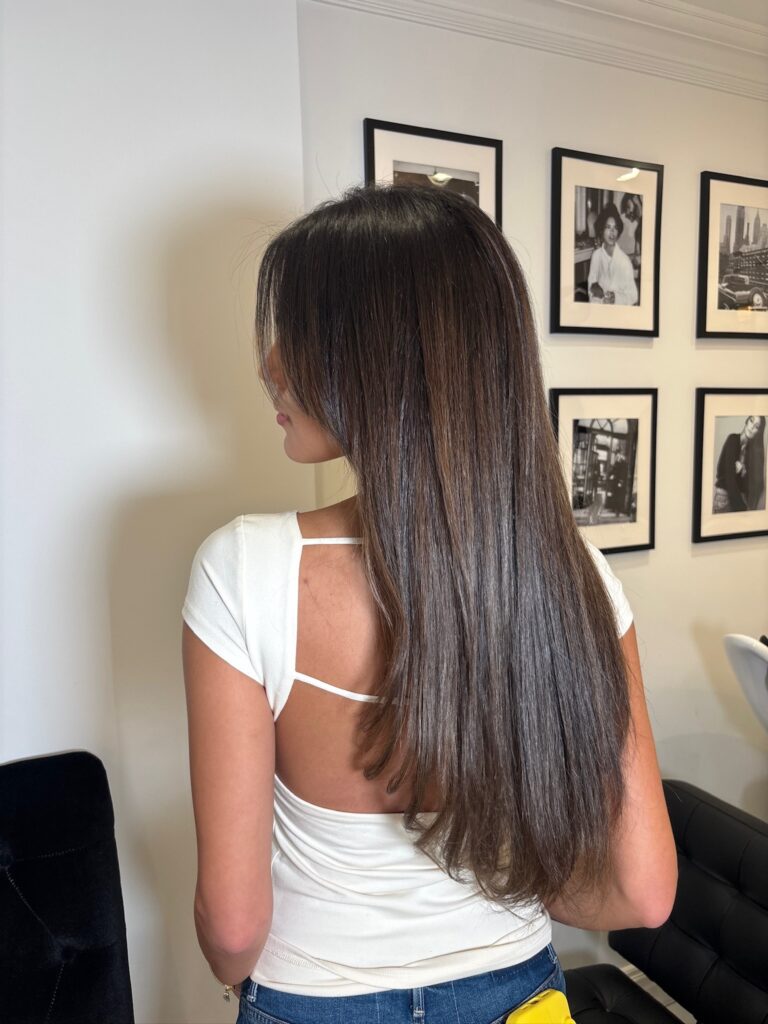
Absolutely. And we’re going to make sure to customize them so you can wear your hair however you normally would. The goal with i-tips is undetectable, natural-looking hair. You can wear your hair up, down, half up, in braids, slicked back, curled, straightened, etc.
Which extensions look the most natural?
Again, when installed correctly, both methods are the most natural-looking extension techniques available. If you want extremely natural-looking extensions, always look for a strand-by-strand method.

Conclusion
Alright, given everything that we’ve covered today…are i-tip hair extensions better than wefts? The truth is, there’s no one-size-fits-all method. That’s why we keep having these conversations. That’s why we keep writing these posts: to compare the various methods, give you the facts, and let you decide for yourself which method is right for you.
Now, here’s the thing we will say…we love i-tips. We are absolutely obsessed with this hair extension method, and we wholeheartedly believe it’s right for all women. If you’re on the fence, or you have questions that haven’t been answered yet, please book a consultation with our founder, Christina.
She is, after all, the hair goddess of New York City, and she’s the best person to talk to about hair extensions. She really does know it all.
At Olivia Christensen Salons, it’s our ultimate goal to help restore your confidence with hair extensions that are so seamless, even you can’t tell where your natural hair ends and your extensions begin. And yes, while i-tips require more frequent trips to the salon, that means more time with you.
Book your consultation and start your hair journey with us. We can’t wait to see you in the salon.