
The hair extension industry has a sourcing problem and most clients don’t find out until it’s too late.
It’s an understandable problem. The hair we use for extensions can’t be created from nothing, and there are a lot of shady practices out there designed to make it seem like you can. But the reality is this: full-cuticle, premium hair has to be grown and sourced from real people. That matters, and it’s worth talking about.
The two types you’ve probably heard of are Indian and Slavic hair. Slavic hair extensions are widely considered the gold standard, and for good reason, but they can actually fall flat (quite literally) for clients with naturally textured hair. That’s where Indian hair extensions come in. The problem is, Indian hair has a reputation in this industry, and not a good one.
Here’s what I want you to know: that reputation comes from how most Indian hair is processed and sold, not from the hair itself.
When it comes to extensions, knowing exactly where your hair comes from can make or break your entire experience. So let’s talk about this.
I’m Christina, a luxury i-tip specialist in New York City, and I work with both Slavic and Indian hair, sourced directly from my supplies. No middlemen, no compromises.
Today, I’m breaking down the real difference between Slavic and Indian hair extensions, who each one is right for, and what exactly to look for before your first extension appointment.
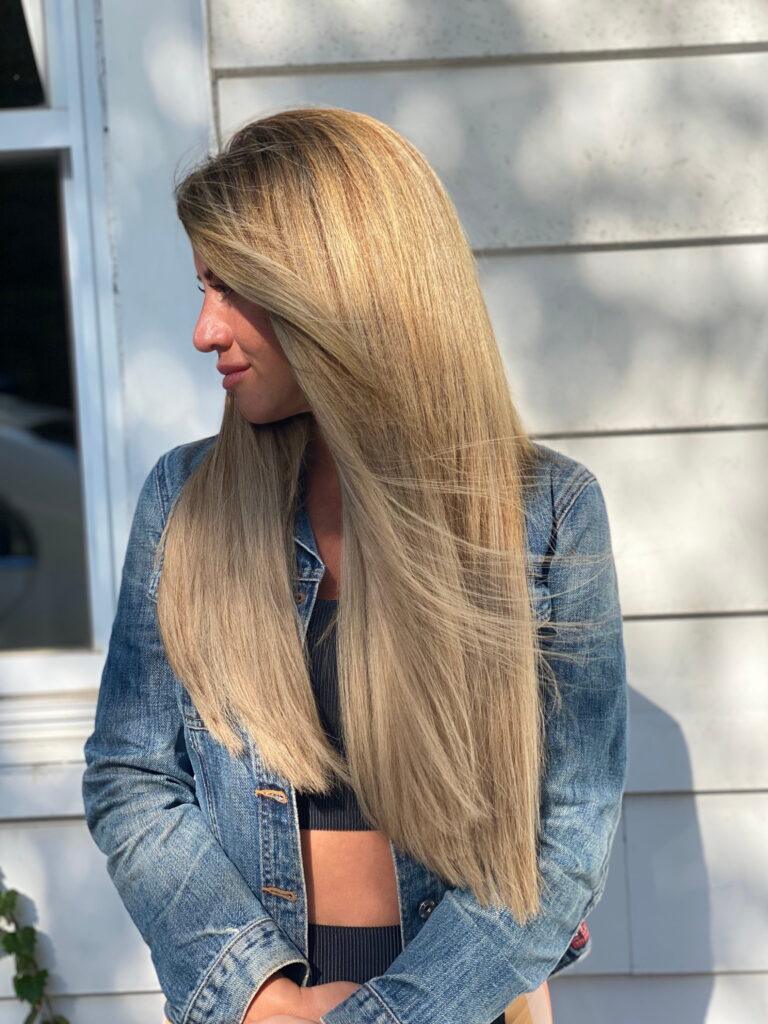
The Industry Problem Nobody Talks About
The hair extension industry is largely unregulated–and when it comes to labeling and sourcing, that becomes a problem.
Here’s something that might surprise you: a lot of hair sold as “Russian” or “Slavic” on the market isn’t actually Slavic at all. It’s processed hair of Asian origin, repackaged and relabeled. And ordering directly from a Russian supplier doesn’t guarantee you’re getting the real thing either.
The same goes for Indian hair. A significant portion of Indian hair gets exported to China, where it’s blended with lower-quality hair and put through aggressive chemical processing before it ever reaches our salons.
The result is clients ending up with extensions that mat, tangle, or lose their shine within weeks. And almost always, the method gets blamed, but the method wasn’t the problem. The hair was.
At Olivia Christensen Salons, we use both Slavic and Indian hair, and we source it directly from vetted suppliers. We don’t use middlemen, so there’s no mystery about where our hair comes from. Every strand is unprocessed, traceable, and held to the same luxury standard that I want for my own hair.
So now that you know what we’re working against, let’s talk about what makes these two hair types genuinely different, and how to know which one is right for you.
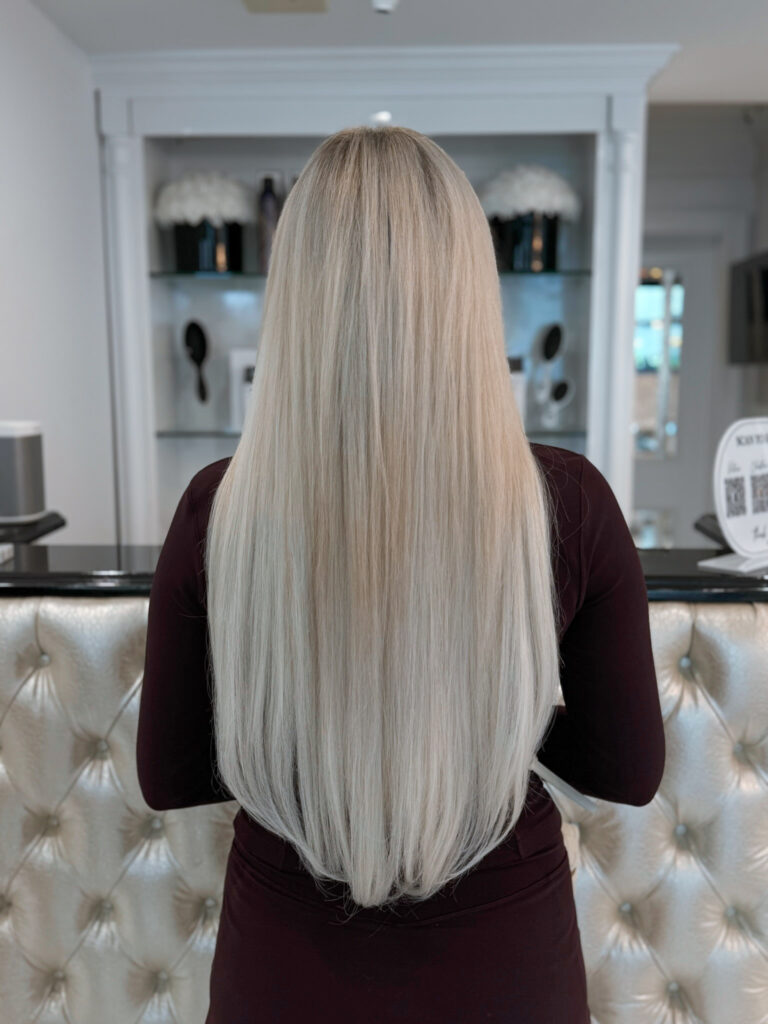
What Is Slavic Hair?
Slavid hair comes from donors in Eastern Europe. Countries like Russia, Ukraine, and the surrounding countries. Slavic hair is genuinely in a category of its own.
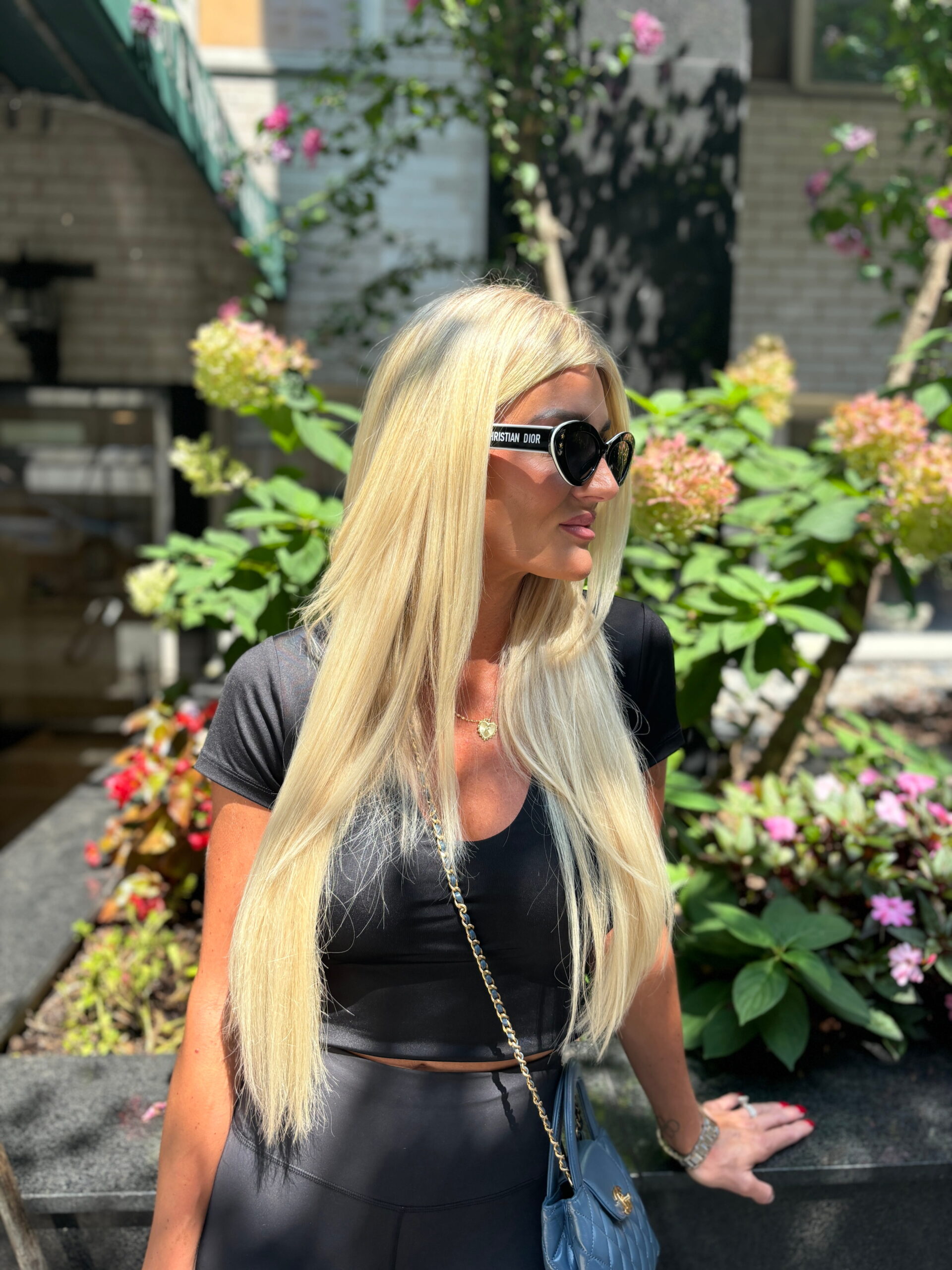
The texture is what most people notice first. It’s exceptionally soft, fine, and smooth, with a natural lightness that makes it feel almost weightless once it’s in. It naturally comes in a wide range of shades, from light brown through medium brown, often with the kind of subtle dimensional highlights that women spend a fortune trying to recreate.
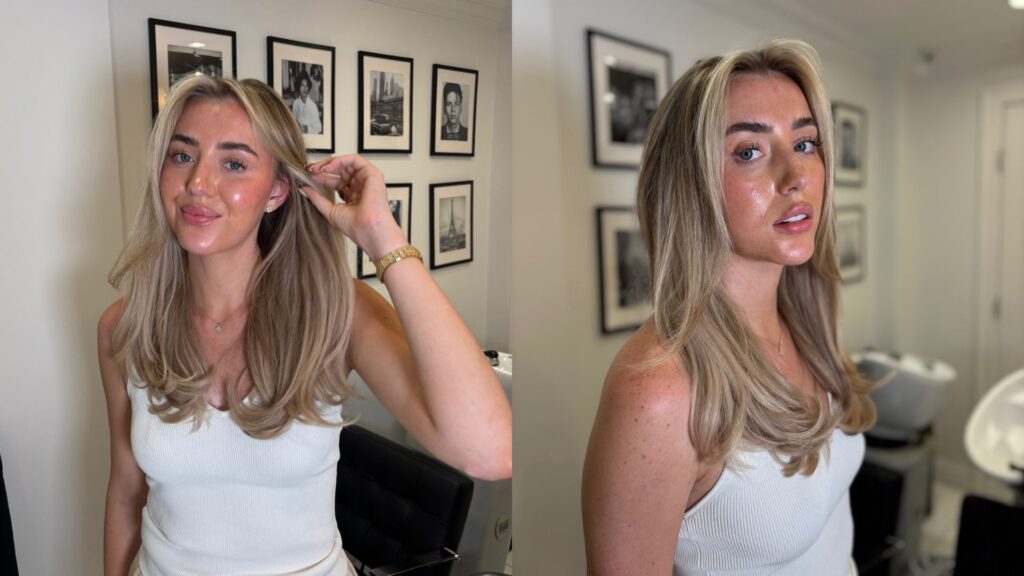
When you find the right match, it doesn’t just blend with your natural hair. It becomes your natural hair.
What makes Slavic hair the gold standard isn’t just how it feels, it’s also how it’s been processed (or really how it hasn’t been processed). Virgin Slavic hair means exactly what it sounds like: no dye, no chemical processing, no shortcuts. The cuticle stays intact, the hair is collected from a single donor, and nothing has been done to alter it from the way it grew.
That’s increasingly rare in this industry, and it’s part of why Slavic hair is the gold standard and why it comes at a premium price. With proper care and the right application method, this hair can last up to 12 months–and that’s not a marketing claim, that’s what happens when the sourcing is done right.
Slavic hair is the ideal choice for clients with fine, thin, or lighter-colored hair. Because it’s naturally fine itself, it integrates seamlessly without adding bulk or weight, which is exactly what someone with delicate hair needs. It’s the hair I reach for when a client comes to me having lost density, going through a hair growth journey, or simply wanting a result that nobody can detect.
When I say I won’t compromise on my Slavic sourcing, that’s what I mean: virgin, traceable, and exactly what it’s represented to be.
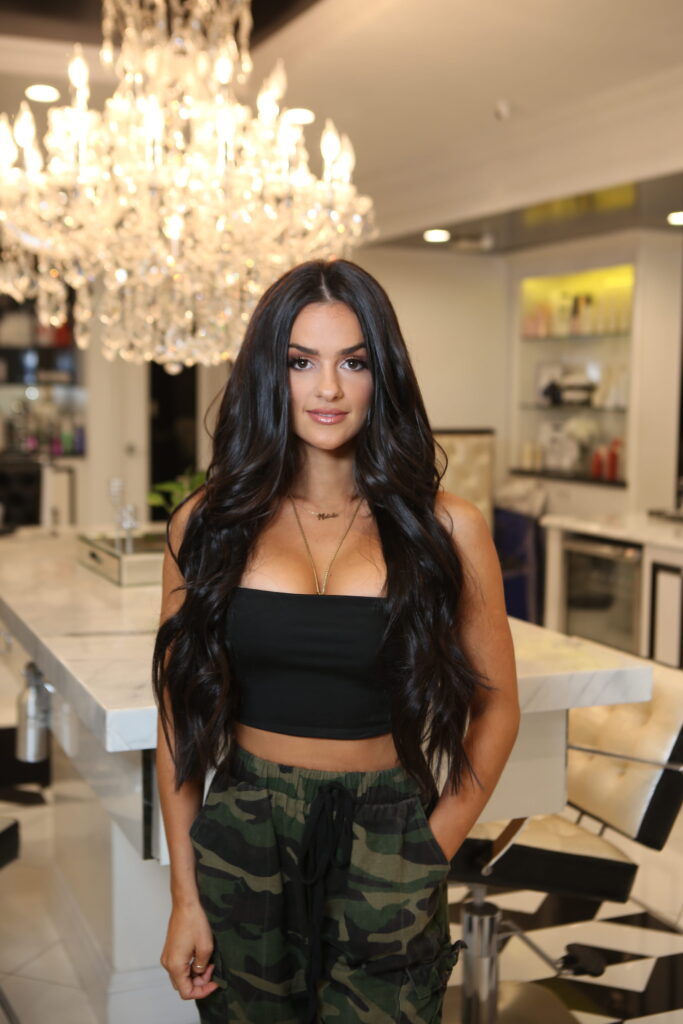
What Is Indian Hair (When It’s Done Right)?
Let’s clear something up: Indian hair doesn’t have a quality problem. It has a sourcing and transparency problem, and those are very different things.
The reputation that follows Indian hair in the extension industry belongs to the processed, mislabeled, middleman version. The real thing, ethically-sourced and unprocessed, is a completely different experience.
Most high-quality Indian hair comes from temple donations, a practice rooted in the Hindu tradition of tonsuring, in which donors offer their hair as a spiritual act. When hair is collected with integrity and goes directly from the supplier to the specialist, you get genuinely beautiful human hair with its cuticle fully intact. The problem is when that hair detours through processing facilities.
Indian hair is naturally richer in texture and more dimensional than Slavic hair. It tends to have natural movement, subtle waves, or even thick curls, and a depth that makes it an exceptional match for clients who have thicker, darker, or more textured hair.
Where Slavic hair blends seamlessly into fine, light strands, quality Indian hair does the same for a completely different client. It moves like their hair because it is their hair, just more of it.
This is actually one of our specialties, and I’ll be honest: it’s not something that more extension specialists in New York City are doing at this level. Offering truly unprocessed Indian hair, sourced directly with no blending or chemical intervention, requires relationships and standards that most salons don’t prioritize.
My clients with textured hair deserve the same luxury experience as everyone else, which is why I’ve worked so hard to build this.

Slavic Vs. Indian Hair: The Side-By-Side Breakdown
| Feature | Slavic Hair | Indian Hair (quality-sourced) |
| Texture | Fine, silky, lightweight | Richer, more textured, natural movement |
| Color Range | Light blonde to dark brown | Predominantly darker shades |
| Porosity | Low—smooth cuticle, less frizz-prone | Slightly higher—but gorgeous when unprocessed |
| Best for | Fine, thin, or lighter hair | Textured, thicker, or darker natural hair |
| Availability | Rare and limited | More accessible, but quality varies widely |
| Processing (industry standard) | Often mislabeled or mixed | Frequently over-processed before sale |
| The Olivia Christensen Standard | Virgin, direct-sourced | Unprocessed, direct from supplier |
| Lifespan (with our luxury hair extensions) | Up to 12 months | Up to 12 months |

Why the Method Matters As Much As the Hair
You can have the most beautiful, perfectly sourced hair in the world, and still walk away with a result you hate. The hair used is only half of the equation.
How your hair extensions are installed matters just as much as the material used, and this is where a lot of women get let down, even when they’ve done their research. The wrong technique for your hair type can cause tension, slippage, damage, and a result that looks anything but natural. Regardless of how premium the hair was to begin with.
This is exactly why we work exclusively with i-tip extensions. The micro-ring application method is one of the gentlest available, especially for clients with fine or thin hair. With our method, there’s no heat, no glue, and no unnecessary stress placed on your natural hair.
When sized and placed correctly, your natural hair doesn’t even know the difference.
What it comes down to is this: professional installation paired with genuinely high-quality hair to create a result that mimics your natural texture and density so seamlessly you can’t tell where your hair ends and the extensions begin.
That’s the standard I hold every single appointment to.
The right hair, the right method, and the right specialist. Most clients who come to me have had one or two of those three. Very few have had all three at the same time.
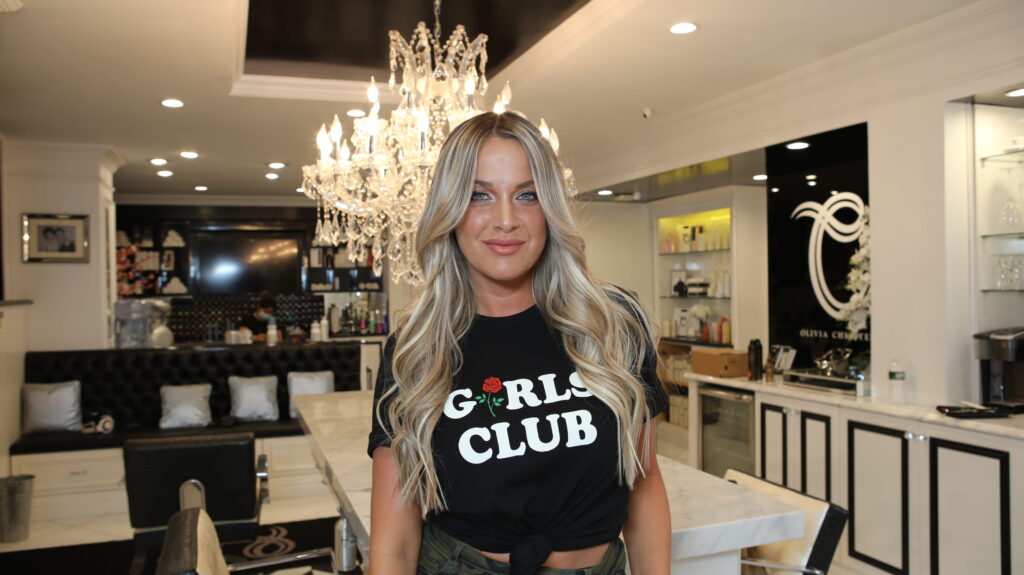
How to Know If Your Stylist Is Using Quality Hair
Most clients never think to ask where their hair extensions came from. And most stylists are probably counting on that.
Before you sit in anyone’s chair, there are four questions that are worth asking, and the answers will tell you everything you need to know:
- Where does your hair come from?
- Is it virgin and unprocessed?
- Do you work directly with your supplier?
- Can you tell me the country of origin for this specific hair?
A stylist who sources quality hair will be able to answer your questions without hesitation. Vague answers, deflection, or a pivot to price are red flags.
Speaking of price, if it seems too good to be true, it is. Authentic, premium hair comes with a premium price. That’s not a sales tactic, it’s just the reality of hair that’s been ethically sourced.
Beyond having this conversation with your stylist, you can also look out for a few physical things. Authentic virgin hair extensions are always bundled, never sealed in a plastic bag. The ends should be naturally a few tones lighter than the rest of the strand, because that’s how hair grows. If every strand looks perfectly uniform from root to tip, that can be a sign of heavy processing.
And if the only quality descriptor your stylist offers is “remy” with no mention of origin, that’s worth paying attention to. Remy tells you about alignment, not where the hair came from or how it was handled.

So Which One Is Right for You?
After everything we’ve covered today, it probably won’t surprise you to hear that the answer isn’t really about Slavic vs. Indian hair extensions. It never was.
It’s about matching the right hair to the right person, and having a specialist who actually knows the difference.
If you have fine, thin, or lighter-colored hair, Slavic hair is almost certainly your match. The texture, the weight, the way it integrates–it was made for hair like yours.
If you have naturally thicker, darker, or more textured hair, high-quality Indian hair, sourced and installed correctly, will give you results that Slavic hair simply can’t. The problem is that most extension specialists aren’t offering Indian hair at this level. It requires direct supplier relationships, a deeper understanding of texture matching, and a standard most salons aren’t willing to maintain.
That’s a specialty I’ve intentionally built because every client who walks through my door deserves a result made specifically for her, not whatever hair happens to be in stock.
Not sure which one is right for you? That’s exactly what a consultation is for. Book a consultation to walk through your hair type, your goals, and which method and material will get you there. No guesswork, no one-size-fits-all recommendations–just the right answer for your hair.
Frequently Asked Questions About Slavic vs. Indian Hair Extensions
No, and this is one of the biggest misconceptions in the industry. Indian has a reputation problem, but that reputation belongs to the process, mislabeled Indian hair that’s been blended with lower-quality hair and aggressively treated before it ever reaches the salon.
Ethically sourced, unprocessed Indian hair is genuinely beautiful and performs exceptionally well, especially for clients with naturally thicker, darker, and more textured hair. The issue has never been the hair itself. It’s always been how it was sourced.
Slavic hair comes from donors in Eastern Europe–Russia, Ukraine, and surrounding regions–and is prized for its fine, soft, silky texture and natural color range. What makes it truly exceptional is what hasn’t been done to it: authentic Slavic hair is virgin, meaning it’s completely unprocessed, undyed, and collected from a single donor with the cuticle fully intact. That combination of rarity, quality, and longevity is why it commands a premium price and why it’s considered the best in the industry.
With proper care and the right application method, high-quality Slavic hair extensions can last up to 12 months. The key words there are proper care and the right method–even the best hair won’t perform if it’s installed incorrectly or maintained with the wrong products. This is why the specialist you choose matters just as much as the hair itself.
I-tip extensions are individually applied strands attached to your natural hair using a small micro-ring–no heat, no glue, no adhesive. Because the application is so precise and gentle, they’re particularly well-suited for clients with fine or thinning hair who need a method that won’t add unnecessary weight or tension to the strand. They’re also one of the most natural-looking methods available when installed correctly, because each strand moves independently, just like your own hair.
Ask these four questions before you commit: Where does your hair come from? Is it virgin and unprocessed? Do you work directly with your supplier? Can you tell me the country of origin for this specific batch? A stylist who sources quality hair will answer all four without hesitation. If you get vague answers, a pivot to price, or “it’s remy” with no further detail, those are red flags worth paying attention to.
These terms are used all the time interchangeably, but they’re not the same thing. Remy simply means the hair strands are all aligned in the same direction from root to tip, which reduces tangling. Virgin means the hair has never been chemically processed or dyed. Hair can be remy without being virgin. Meaning it’s aligned but has still been treated. For the highest quality extensions, you want hair that is both remy and virgin, with a traceable origin.
Olivia Christensen Salon offers luxury i-tip extensions in New York City using exclusively direct-sourced Slavic and Indian hair. Every consultation includes a personalized hair-type assessment to match you with the right hair type and method for your specific needs. To book, visit oliviachristensensalon.com/#book-now.
The Bottom Line
The hair extension industry has a transparency problem–but you don’t have to be a victim of it anymore.
I hope this post has helped you learn how to spot the difference between hair that’s been intentionally sourced and hair that’s been repacked and relabeled to look like something it’s not. At the very least, now you have the questions to ask and some important things to look for.
All of this knowledge is yours to keep, regardless of where you choose to go.
If you choose to come to Olivia Christensen Salon, here’s what I can promise you: I know exactly where every strand I install comes from. I work with both Slavic and Indian hair at a level most specialists in New York City simply aren’t offering–and I’m not done raising the bar.
Ready to find your perfect match? Book a consultation today.