
Today we’re talking about clip-in hair extensions, and more specifically, how they compare to i-tip hair extensions. This post is part of our series comparing every hair extension method to help you decide which is best for your lifestyle, goals, and hair type. This will be your definitive guide to choosing the most suitable method for your hair.
Other than being two extension methods, i-tips and clip-ins have very little in common. For starters, i-tips are a semi-permanent extension method while clip-ins are temporary. This means that i-tips stay in your hair after they’re installed, while clip-ins need to be applied and removed each time you want to wear them.
Clip-ins are a good solution if you only need extensions for a big event, only want to wear them occasionally, or you want to test whether you want a more permanent extension solution. But we’ll get into the pros and cons of each method a bit later in this guide.
By the way, if you’re new around here, we’re Olivia Christensen Salon, and we specialize in luxury i-tip hair extensions at our two New York salons. We’ve worked with hundreds of women who are seeking natural, seamless extensions–and we’re very passionate about this method. While we truly believe i-tips are the best extension method on the market, we also lay out the facts so you can decide what’s best for you and your lifestyle.
In this guide, we’ll compare i-tip extensions to clip-ins, break down the pros and cons of each method, and help you decide which one is right for your hair type, lifestyle, and goals. If you’re interested in learning about other techniques, you’ll find all of our comparison guides here.
I-Tip Extensions vs Clip-Ins at a Glance
| Method | Clip-Ins | I-Tips |
| Lifespan | Dependent on the type of hair and care routine | Up to 12 months (with proper care) |
| Reusability | Yes | Absolutely |
| Blend | More noticeable, especially depending on the type of hair you choose | Seamless |
| Customization | Typically none | Fully customizable |
| Maintenance | None | Every 4-6 weeks |
| Heat application | None | No heat required |
| Comfort | Can pull on natural hair if clip-in pieces are too heavy or dense | Lightweight |
| Styling freedom | Limited styling freedom | Complete versatility and customization |
As we already mentioned—and as you can likely see from this table—I-Tip extensions and clip-ins don’t have much in common. Yes, they’re both extensions, but that’s about as far as the similarities go. This alone won’t help you decide which method is right for you, so let’s dive a little deeper.
What Are I-Tip Hair Extensions?
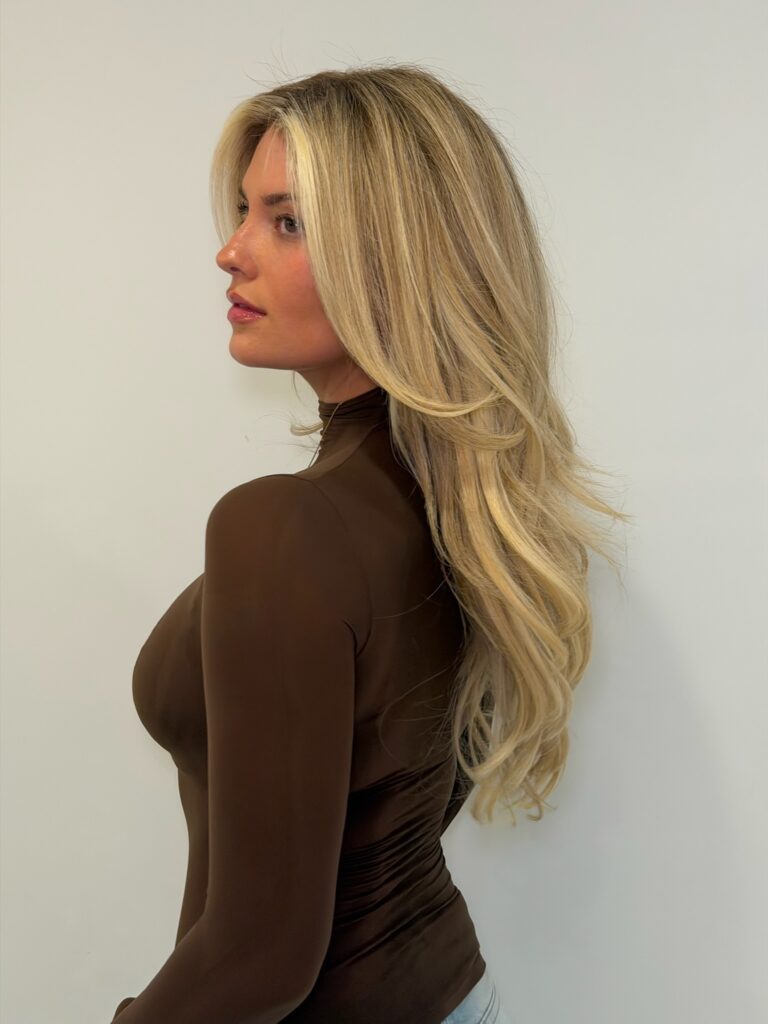
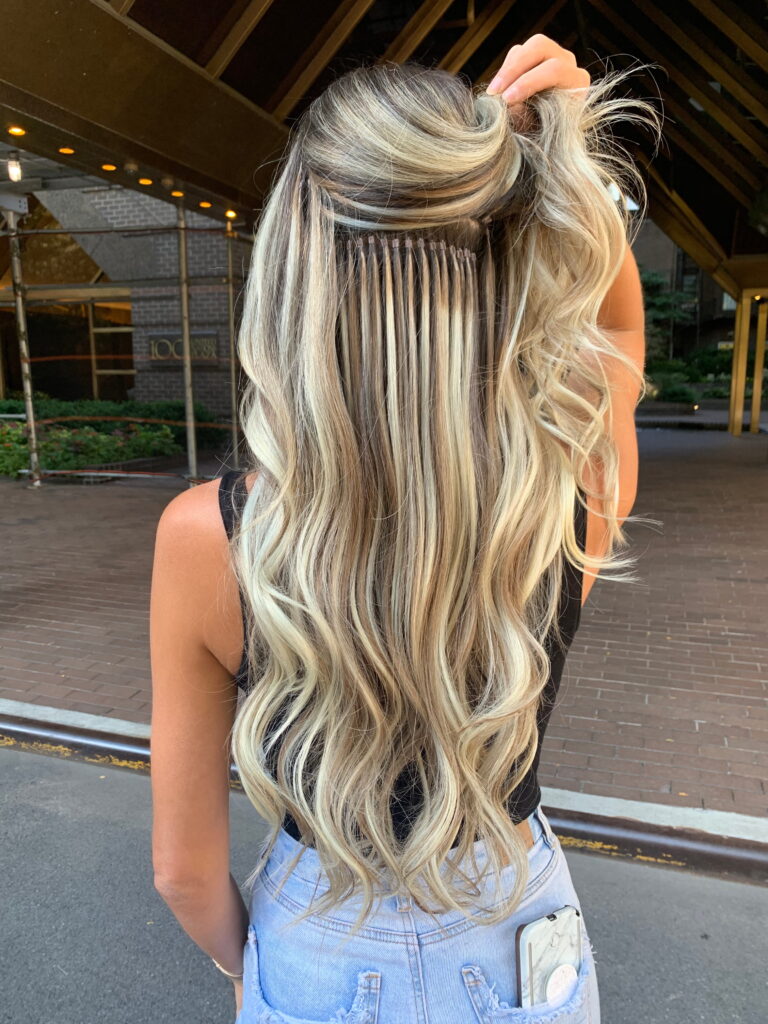
Starting with the basics, what are I-tip hair extensions? I-tips are a strand-by-strand extension method where a specialist takes small bundles of extension hair and attaches them to your natural hair using small beads.
I-tips are one of the only semi-permanent extension methods that don’t use heat, glue, or harsh chemicals to attach extensions to your natural hair. They’re also incredibly lightweight and customizable, which makes them one of the safest methods, especially for women with thin or fine hair.
And we’re not just making claims here. We’ve been in the hair extensions industry for over 10 years, and during that time, we’ve seen women with hair damaged by each and every extension method out there.
This is what makes us so passionate about i-tips. What fuels our obsession is that i-tips blend seamlessly, are completely customizable, and are gentle on your hair. In terms of customization and blends, they’re among the most customizable because the strand-by-strand method allows for that.
Benefits of I-Tip Hair Extensions
There are many reasons why clients choose I-Tip extensions over other methods, including:
- Highly customizable placement and density
- No glue, tape, or heat required
- Natural movement and seamless blending
- Lightweight and comfortable to wear
- Ideal for ponytails, braids, and updos
- Reusable hair for multiple installations
- Suitable for a wide range of hair types
Our clients come to us because they want the most natural-looking extensions that add believable length and volume without compromising their natural hair. Our absolute FAVORITE thing to do is brag about how much our hair extensions actually help your natural hair grow. And yes, it’s a brag–we know. But when your clients keep coming back with healthier, longer natural hair, you can’t help but shout about it.
What Are Clip-In Hair Extensions?
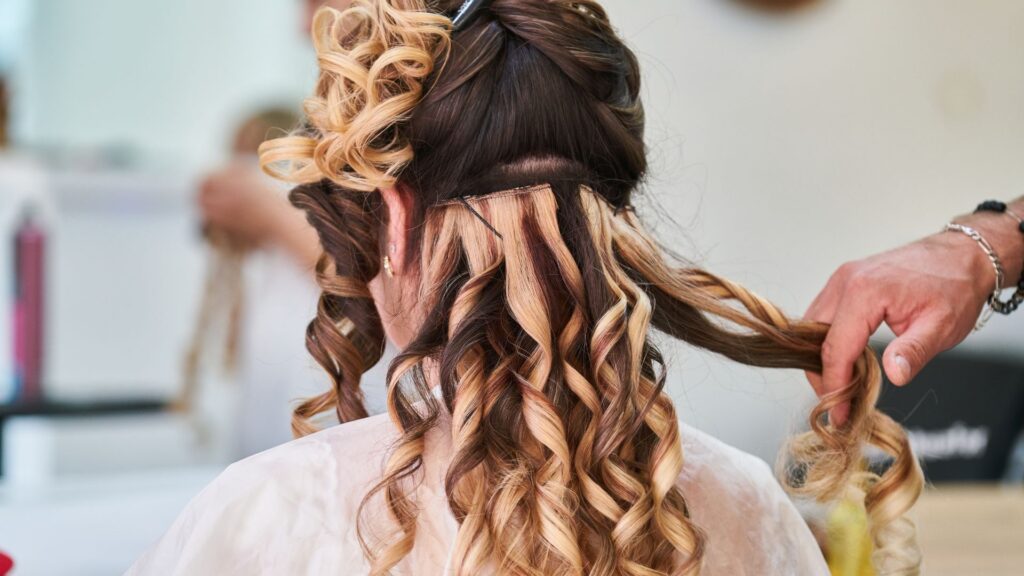
Now, what are clip-in hair extensions? They’re considered to be a temporary extension method, and they’re really the only “do it yourself” method out there. The hair extensions are preattached to clips that you then secure to your hair. Clip-in extensions come in multiple pieces, called wefts (not to be confused with sew-in weft extensions), that vary in width.
Clip-ins are by far the fastest and cheapest way to transform your hair, but they also come with disadvantages, which we’ll cover further down in this post.
Benefits of Clip-In Hair Extensions
There are a few reasons why women might choose clip-in hair extensions:
- Easy to install at home
- A temporary solution or extensions for a specific occasion
- Ability to try extensions before committing to a permanent solution
- Removable
- Typically the most affordable extension method
We would say the real benefit of clip-in extensions is that they can be easily removed if you aren’t looking for a more permanent solution. We imagine most women would start with clip-ins to see if they want to invest in a more luxurious, high-end extension method.
I-Tip Extensions vs. Clip-Ins: The Biggest Differences
Now that you know how both extension methods work, let’s compare them side by side.
1. Installation
One of the big differences between i-tips and clip-ins is how they’re installed. Installation is what drives most of the differences between extension methods. As you already know, i-tips use a small bead to attach hair bundles to your natural hair. This bead is safe, requires no heat, and is easy to remove and replace. Occasionally, bundles will fall out between maintenance appointments; when they do, hold on to them until your next appointment, when we’ll reinstall them.
Clip-ins, on the other hand, aren’t really installed in the same sense. The wefts are attached to clips, which you then secure to your hair whenever you want to wear them.
The verdict: It’s hard to choose a winner here because it depends on whether you want a permanent solution. If you want semi-permanent extensions, then i-tips win because they use no heat, no glue, and no harsh chemicals. If you’re looking for temporary extensions, clip-ins are the solution.
2. Maintenance
With i-tips, you need to come into the salon every 4-6 weeks for maintenance. The exact timeframe depends specifically on how much your natural hair grows. During maintenance, we remove all the extensions, comb out the hair fall, and reinstall them. Extension appointments take no more than an hour, and you can also get a haircut or treatment during these appointments, depending on your wishes.
Clip-ins require no salon maintenance. You do need to take good care of the extensions: always brush them, store them neatly, and never sleep with them in.
Verdict: Clip-ins because they have no maintenance at all.
Learn more about hair extension maintenance in this post.
3. Longevity
With high-quality hair, proper maintenance, and a good at-home care routine, you can reuse your i-tip extensions for up to 12 months. It’s vital to invest in good hair because it makes the difference between long-lasting, seamless extensions and extensions that can’t be reused as long or don’t look as natural.
It’s harder (though not impossible) to get luxury clip-in extensions, mainly because this extension method is designed for mass production. You can’t mass-produce real-human, full-cuticle hair extensions (more on that in this article).
So, if you buy high-quality clip-in extensions and care for them properly, they should last between 6 and 12 months. You can extend the life of your extensions by not wearing them every day and never sleeping in them.
Verdict: With both methods, if you invest in high-quality, real human hair, your extensions should last 12 months.
4. Customization
One thing that makes extensions look natural is a haircut that blends them into your natural hair. This is completely missing from clip-in extensions. Most women buy clip-ins and start wearing them as they come, whereas with i-tips, each installation comes with a haircut to blend everything.
I-tips also have much more customization when it comes to color. Most women’s hair isn’t one color throughout. Our hair has so much natural dimension, and again, that’s missing with clip-ins. When you come into the salon for i-tips, we typically use 2-3 different hair colors and blend them into each bundle, then attach it to your natural hair. This gives you the most natural, seamless look available.
This is usually not done with clip-ins, because you buy them pre-done. The result is more obvious extensions.
Verdict: I-tips 100%. They offer the most customization for color and blend.
5. Styling Versatility
Because of the unique placement of i-tips, you can achieve complete styling versatility. Most women switch from other methods to i-tips because they want to wear their hair up more often. With clip-ins, it’s very hard to style your hair up, in braids or even a half-up hairstyle, because you need to hide the attachment points of the extensions.
This is not the case with our i-tips. We place the extensions so you can fully control your styles. An added benefit of our extensions is that they also help your hair hold its style better. When you curl your hair with our extensions in, the curls hold longer, so you spend less time styling.
Verdict: Again, i-tips 100%. If you want extensions that work with your lifestyle and how you style your hair daily, i-tips are the best choice.
6. Weight & Density
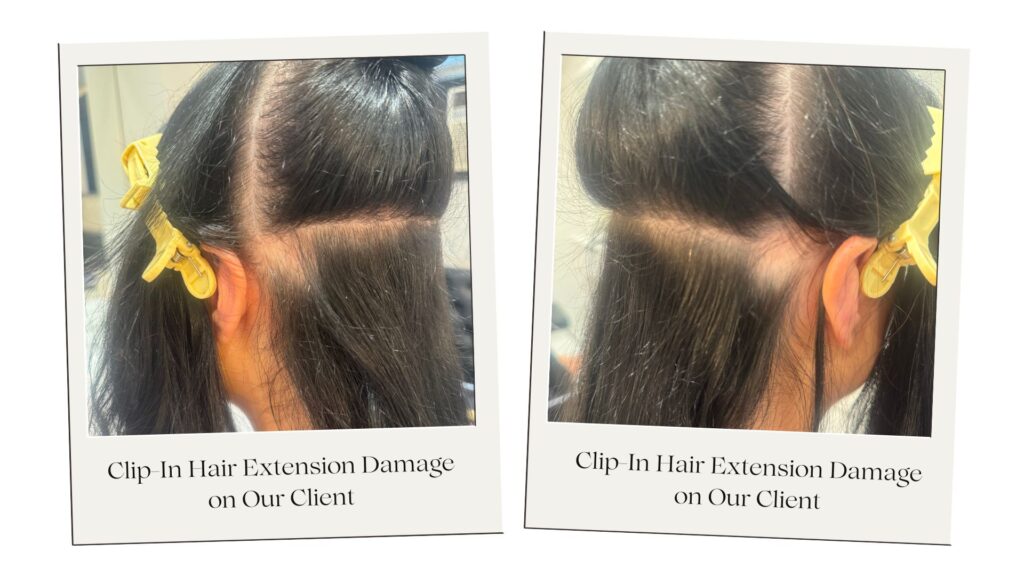
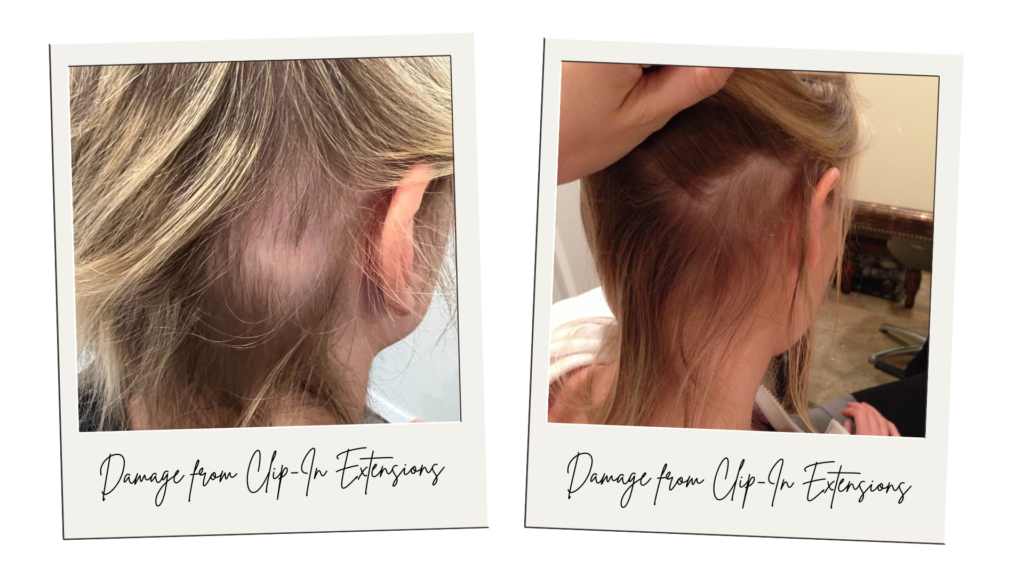
While you can buy small weft clip-ins, you can’t control the density of each section. Because of this, clip-ins can be heavy, and we’ve seen women with bald spots where the clip-ins pulled on their natural hair.
With i-tips, we control the placement, density, and size of the bundles. The result is extensions so lightweight that most of our clients tell us they can’t even feel them in their hair.
Verdict: I-tips, because they give us complete control over placement and density to protect your natural hair.
The Bottom Line
Those are the biggest differences between i-tip extensions and clip-ins. When it comes to styling, weight, and customization, i-tips win every single time. You should find our extension method more comfortable, lighter, and easier to style than any other method, including clip-ins.
At the end of the day, though, it also matters what hair you buy and what salon you choose for your installation (with i-tips).
Which Hair Type Is Best for I-Tips?
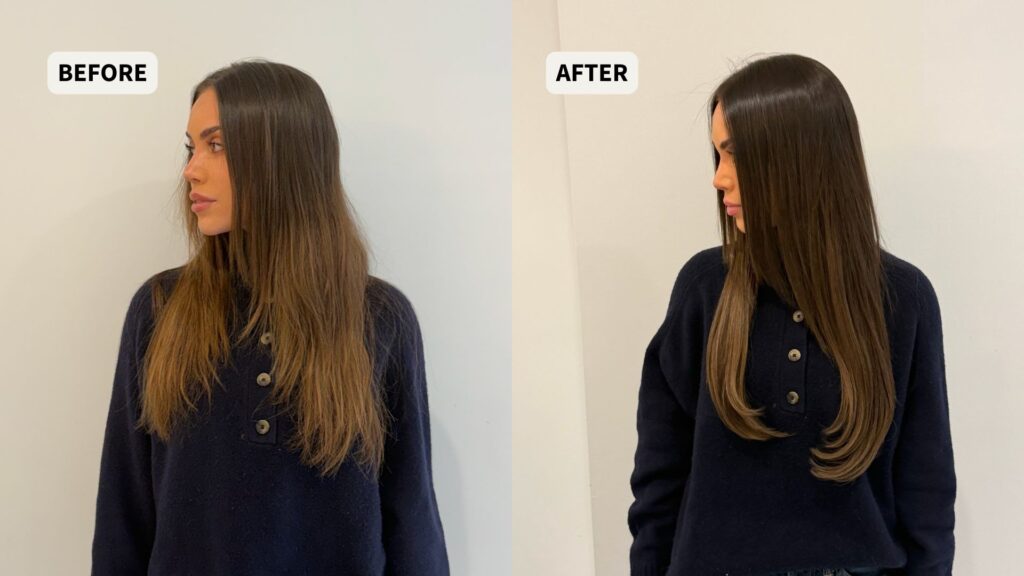
Your hair extension journey should always start and end with your hair type. Yes, your goals, customization, density, and lifestyle play a role, but one of the biggest factors is whether you have thin, fine, textured, or coarse hair. We tell every woman who comes through our salon that your hair and the extension method you choose should never be one-size-fits-all.
I-Tips Are Ideal For:
I-tip extensions are especially well-suited for:
- Fine hair
- Thin hair
- Medium-density hair
- Clients wanting invisible, undetectable extensions
- Clients looking for maximum customization and precision placement
Because i-tips are applied strand by strand, your stylist can work with your natural density rather than against it. This makes them particularly effective for creating fullness without adding unnecessary weight or bulk, especially in finer hair types.
For clients concerned about extensions being visible or feeling heavy, i-tips often provide the most natural-looking and comfortable result.
Which Hair Type Is Best for Clip-Ins?
Unfortunately, clip-ins tend to be a more ‘one-size-fits-all’ extension method, which, as we just said, we recommend avoiding. If you have medium-to-thick hair, you might be able to get away with clip-ins that match that density and don’t cause bald spots; however, if you have thin hair, we wouldn’t recommend this method.
It’s also very hard to match clip-ins to textured or curly hair, or hair with a lot of dimension. You won’t be able to find the customization you’re looking for with this method.
Clip-Ins Are Often Better For:
- Medium-density hair
- Clients who want a temporary solution
- Clients who don’t have dimensional hair
Of course, neither extension method is inherently better. So much of the decision depends on your hair type, goals, budget, and lifestyle. However, for the widest range of women, I-tips win, simply because they are safe on your natural strands.
If you want fast results or temporary results, then we’d recommend clip-ins. If you want fast volume, we’d actually recommend neither of these methods. I-tips add believable, natural volume, but if you want lots of added volume, we recommend this guide comparing i-tips to wefts, another popular hair extension method.
At Olivia Christensen Salon, we focus on creating results that feel seamless, sustainable, and fully tailored to each client. In many cases, that means recommending i-tip extensions for their flexibility and natural finish, but we always tailor the consultation to find the best fit for you.
Why We Prefer I-Tips for Luxury Hair Extensions
While we normally have a lot of back-and-forth in these comparison guides, when it comes to i-tip extensions vs. clip-ins, i-tips win every time. We’d recommend clip-ins only if someone wanted a temporary solution they could add to their hair themselves, or if they didn’t have the budget to invest in a more permanent solution.
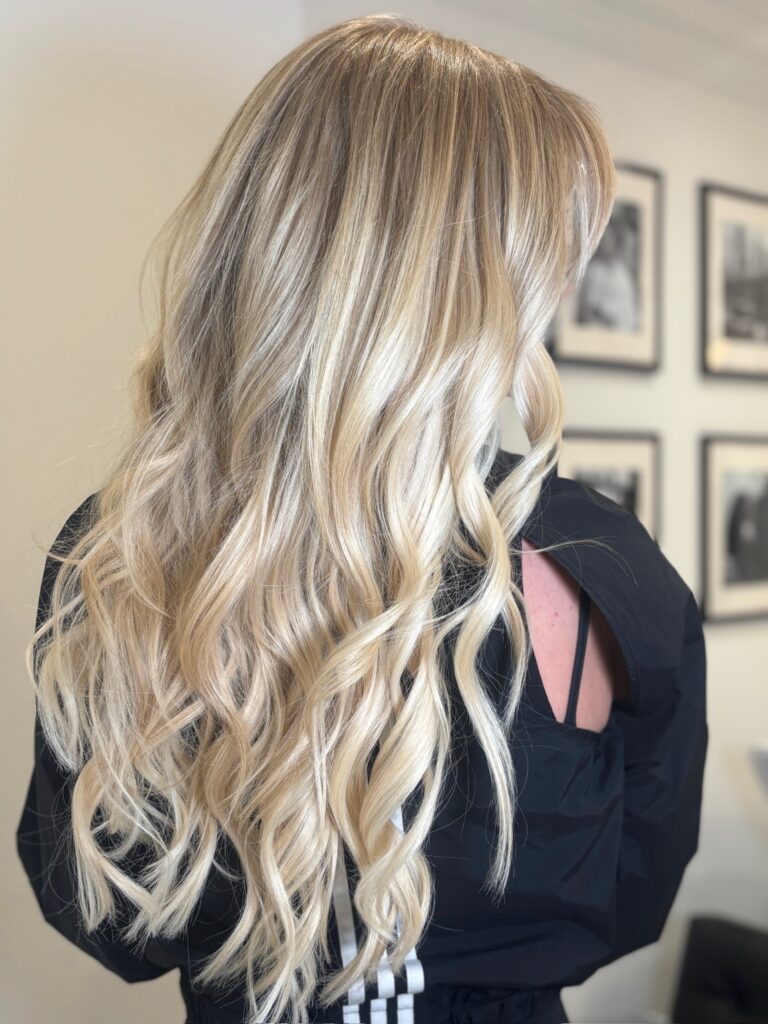
The reason we’re so passionate about recommending i-tip extensions is that they are safe for all hair types–and we do mean all hair types. We install and remove them without heat, glue, or harsh chemicals. They are lightweight and completely customizable to your hair type, density, length, and lifestyle.
We cannot tell you how many women come into our salon with a bob and walk back out with 22 seamless inches. And we love that you can reuse the hair for up to 12 months. So yes, you have to come in for regular maintenance appointments, but that means we get to see you more and keep your hair in great shape.
Hair growth is one of the most underrated reasons women choose our method again and again. If you’re unsure whether you can grow your hair while wearing extensions, read this article next.
All in all, these two methods share almost no similarities, and at Olivia Christensen Salon, i-tips are the luxury, high-end result we’re here to help our clients achieve.
Common Myths About I-Tip Extensions
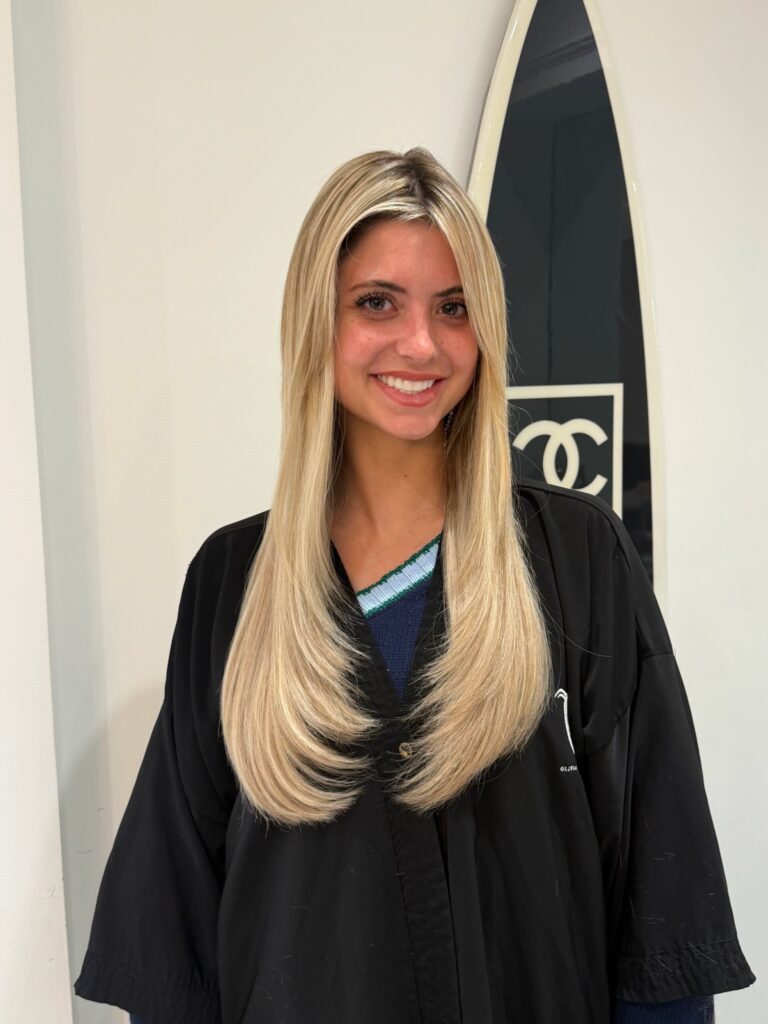
We know there are a lot of myths about i-tips, and we try to cover them in every post because we think you should know the facts, no matter what method you choose.
Myth #1: They Damage Your Hair
When installed incorrectly, every hair extension method can damage your hair. That’s why it is so important to work with a skilled professional at a salon that specializes in extensions. That’s why you should choose a method that uses no heat, glue, or chemicals during installation and removal, because that’s what will protect your hair in the long run.
When i-tips are installed correctly, they do not damage your hair. In fact, they protect your hair and promote natural hair growth—more on that in this article.
Myth #2: They’re High Maintenance
Hair extensions are a high-maintenance way to be low maintenance. Yes, with i-tips you need to come into the salon every 4-6 weeks for maintenance appointments, but those appointments take less than an hour, and they can last up to a year. So it’s a win-win for us.
Plus, hair extensions make styling easier and hold your style longer, which means you’re actually more low-maintenance than before, but with better hair.
Myth #3: They Fall Out Easily
In reality, hair extensions don’t simply “fall out” when installed and cared for properly. Most issues come from product use and maintenance habits, not the extensions themselves.
To keep your extensions secure, avoid heavy, oil-based products near the bonds, and use a gentle, extension-safe shampoo and conditioner. Brushing carefully with the correct tools also plays a key role in maintaining a strong, long-lasting hold.
Occasionally, a strand may loosen or come out, but this is rare. If it does, there’s nothing to worry about. Bring it to your next appointment, and we can easily reinstall it during your maintenance visit.
So, Are I-Tip Extensions Better Than Clip-Ins?
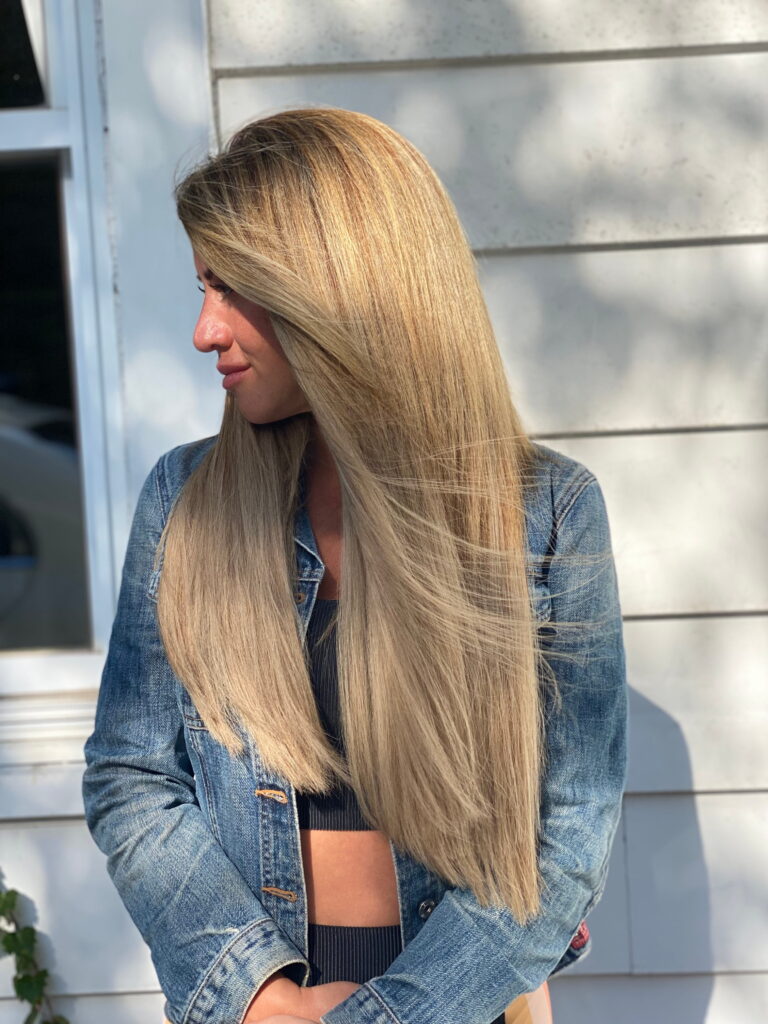
The answer to this comparison is actually pretty simple. For us, I-Tip extensions are better than clip-ins. They give you full customization and natural-looking extensions you don’t have to fuss with every day.
If you want:
- Maximum customization
- Natural movement
- Lightweight wear
- Invisible results
- Luxury hair that lasts up to 12 months
Then i-tip extensions are the better choice.
We recommend i-tips only if you’re looking for a very temporary solution, or if you want to test extensions before investing in a more semi-permanent option.
If you’d like to learn more about our luxury i-tip extension method, book a consultation with our founder, Christina, who can help you find the best solution for your needs.
FAQs
Are i-tip extensions better for thin hair?
Yes, absolutely. We can place the extensions to protect your natural hair and keep your movement natural. We won’t overload your texture or density; instead, we customize the experience to match your needs best. We also don’t use heat, glue, or chemicals that can further damage your already fragile hair.
Do i-tip extensions damage your natural hair?
When installed and maintained correctly by an experienced stylist, i-tip extensions should not damage your natural hair. Most issues come from improper installation, incorrect tension, or poor at-home care, not the method itself.
How long do i-tip extensions last?
As we’ve said, the hair itself can last up to a year with proper care, with maintenance appointments every 4-6 weeks depending on how fast your natural hair grows. During those appointments, we actually fully remove the extensions, comb out any hair fall, and reinstall them.
And selfishly, we love seeing you every 6 weeks so we never miss an update on your life.
Are Clip-ins or I-tips more comfortable?
I-tips should be more comfortable because they’re a strand-by-strand extension method. This means we can place the bundles around your head, evenly distributed so you can’t even tell they’re there.
Can you wear your hair up with i-tip extensions?
Absolutely. And we’ll customize them so you can wear your hair however you normally would. The goal with i-tips is undetectable, natural-looking hair. You can wear your hair up, down, half up, in braids, slicked back, curled, straightened, etc.
The big difference here is that you can’t really wear your hair up with clip-ins. They are much harder to style.
Which extensions look the most natural?
Again, I-tips because they are completely customizable and clip-ins are not. Clip-ins come pre-made, which means they’re created for a mass market. Our extensions are created for you, in the salon. Which means they’re going to look more natural every single time.
Conclusion
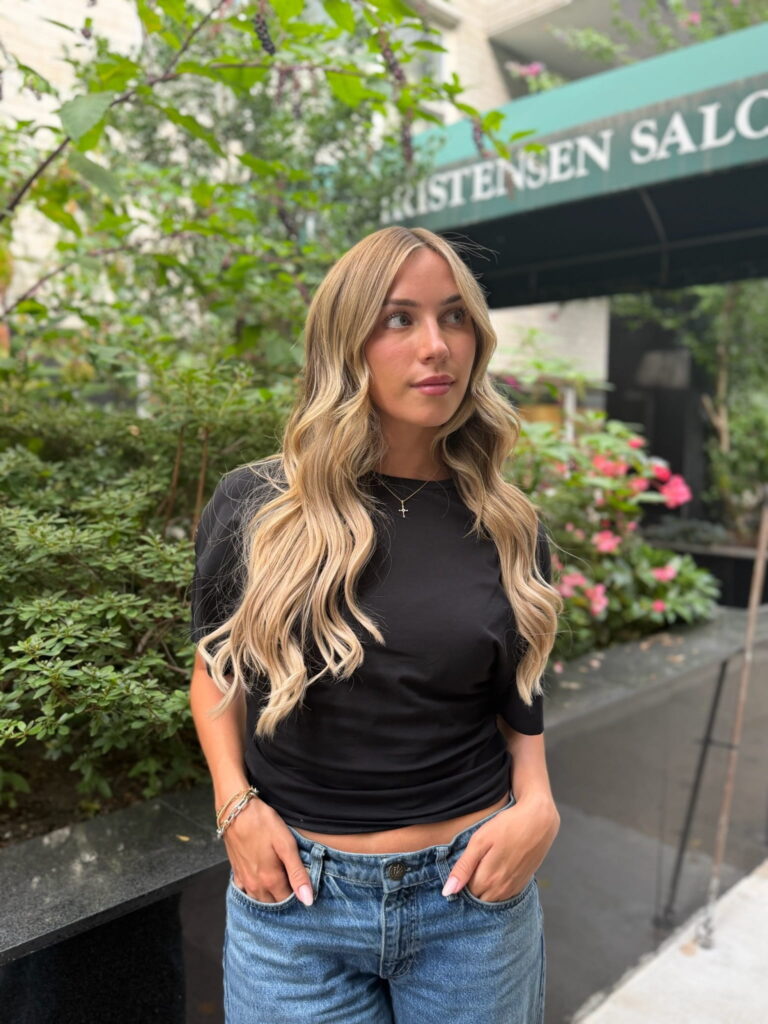
We’ve covered a lot in this post, and we’re happy for the main takeaway to be that i-tip extensions are better than clip-ins, in every way. Honestly, we’re not afraid to say that, because we believe it wholeheartedly. I-tip extensions are completely customizable in color, placement, density, and length.
They are blended to match your natural hair, something you often don’t get with clip-ins. Yes, you could take your clip-ins to the salon and have the stylist cut and dye them to match your hair, but when your hair grows, you’ll have to do that again, and again. So while they might feel like the easier solution, they’re not.
There’s a reason we’re so passionate about i-tips. They are the luxury hair extension solution that works for most women. If you have any further questions, feel free to ask us! This is a topic we love to talk about.
At Olivia Christensen Salons, our ultimate goal is to help restore your confidence with hair extensions so seamless that even you can’t tell where your natural hair ends and your extensions begin. And yes, while i-tips require more frequent trips to the salon, that just means more time we get to spend with you, taking care of your hair.
Book your consultation and start your hair journey with us. We can’t wait to see you in the salon.